
Unbiased headlines. Facts, not spin.
Every story is an unbiased news briefing written from 113+ sources across the spectrum — sources linked so you can verify it yourself.
 politics
Major Story (7/10)
Event date: September 21, 2026
politics
Major Story (7/10)
Event date: September 21, 2026
Missouri Redistricting Fight Hits Supreme Court for Third Time in Three Weeks as Absentee Voting Already Underway
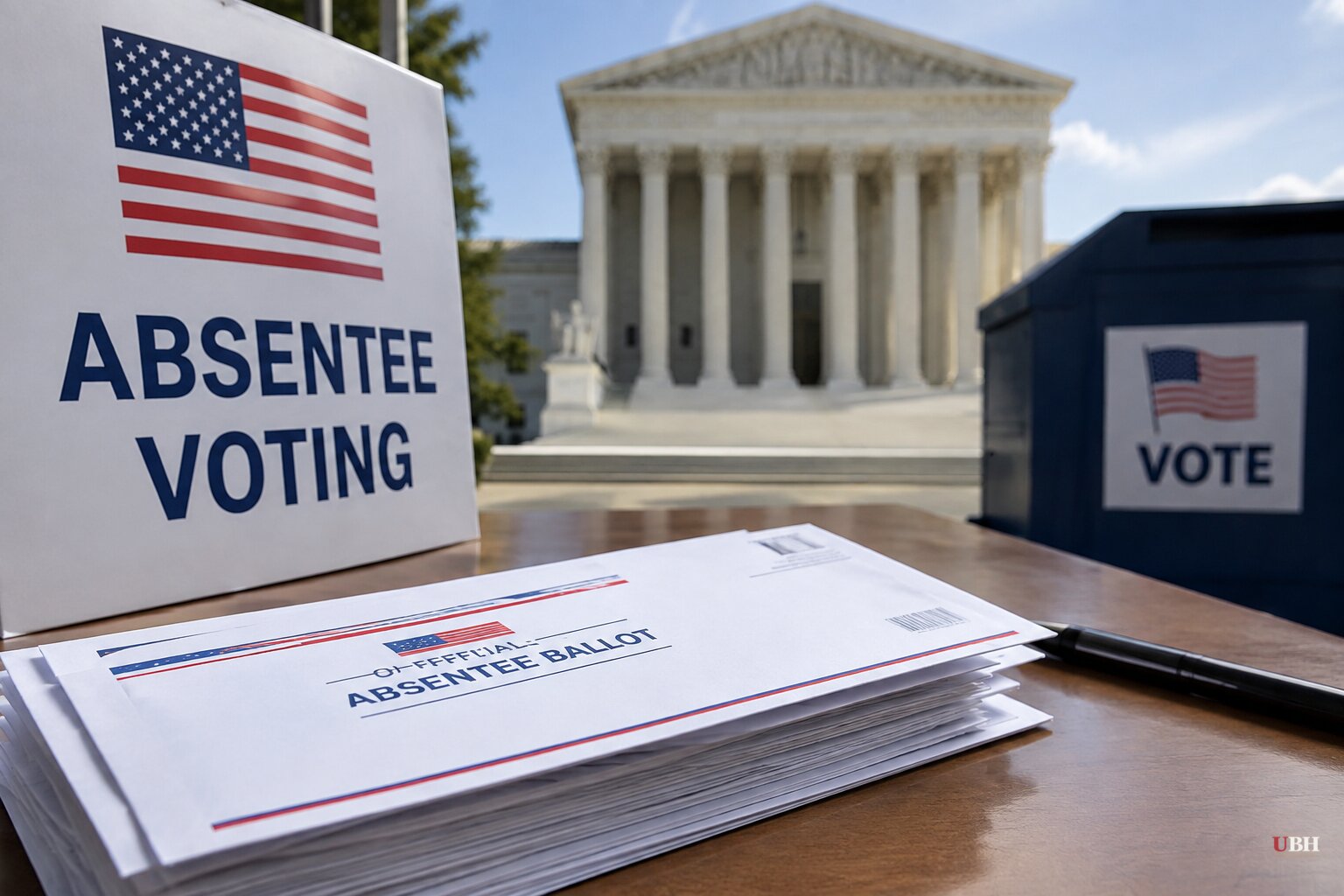
Third Time's the Charm?
Missouri can't figure out which congressional map it's using for the Nov. 3 election, and voters are already casting ballots while the courts fight it out.
Late Tuesday, Sept. 22, the U.S. Supreme Court agreed to review the case for the third time in three weeks, according to Just The News. Justice Brett Kavanaugh, who handles emergency appeals from Missouri, ordered Secretary of State Denny Hoskins and two Republican congressional candidates to respond by Wednesday afternoon.
This is the same court that has already sided against the GOP-drawn map twice this month, on Sept. 8 and again days later, according to Citizens Voice, which republished Associated Press reporting from Jefferson City. Both times, Kavanaugh let stand a Missouri Supreme Court ruling requiring the state to use its 2022 districts.
How We Got Here
The Missouri Legislature passed a new congressional map in 2025 at President Trump's urging, aiming to help Republicans flip Democratic Rep. Emanuel Cleaver's Kansas City-based 5th District, according to CNN. Cleaver won more than 60% of the vote there in 2022 under the old lines. The new map would push Missouri from a 6-2 Republican split to 7-1.
Opponents organized a referendum petition against the map, gathering signatures by December 2025. Secretary Hoskins didn't reject the petition until Aug. 4, 2026, the same day Missouri held its primary using the new districts, according to Citizens Voice. The Missouri Supreme Court ruled Sept. 3 that Hoskins was wrong: the referendum petition blocked the 2025 map from ever legally taking effect, retroactive to December, meaning the August primary was run under a map that wasn't actually in law. The court ordered the state to use the 2022 map for November.
Then a three-judge panel of the 8th U.S. Circuit Court of Appeals, made up of Judge James Loken and Trump appointees David Stras and Justin Smith, ruled Monday, Sept. 21, that the U.S. Constitution doesn't allow Missouri to switch maps between a primary and general election, according to PBS. The panel pointed to Article I, Section 2 and argued that voters who cast primary ballots under the 2025 map are entitled to a continuous constituency through the general election. Democracy Docket reported the panel cited estimates from the conservative Club for Growth that roughly 1.4 million Missourians live in different districts under the two maps, and about 284,000 primary voters would end up with a different district for November if the state reverts to 2022 lines.
Voter continuity between primary and general elections is a legitimate concern, and the 8th Circuit panel wasn't inventing it out of thin air.
But the Clock Already Ran Out
The problem, according to People Not Politicians, the PAC that organized the referendum: overseas and military absentee ballots using the 2022 map were already mailed last week, and general absentee voting, both by mail and in person, began Tuesday, Sept. 22, the same day the appeals court's ruling came down, according to the Missouri Independent. "Ballots using the 2022 map have been printed and mailed... Those ballots cannot be reassigned to new districts now," the group's attorneys wrote in their Supreme Court filing.
The Missouri Association of County Clerks and Election Authorities told the 8th Circuit that switching maps at this point would be "practically impossible" and cost hundreds of thousands of dollars, according to PBS. The appeals panel disagreed, pointing to the Sept. 22 start date for general absentee voting as proof there was still time, and stayed its own injunction until Sept. 28 to let the Supreme Court weigh in.
What Happens Next
The 8th Circuit's order requiring the 2025 map doesn't take effect until Sept. 28 unless the Supreme Court intervenes again. University of Chicago law professor William Baude told CNN it's "a hundred to one" the justices reject the GOP map a third time, calling the whole saga "a taste of what's to come" as more mid-decade redistricting fights land at the court.
CNN's framing, casting this as an "extraordinary push by Republicans" after the court "unanimously rejected" the map "less than two weeks ago," reflects one read of the record. The 8th Circuit's panel, which includes two Trump appointees and one George H.W. Bush appointee, grounded its ruling in a specific constitutional theory about primary-to-general continuity, not raw partisanship. Whether that theory survives Supreme Court scrutiny, and whether it can be squared with a state constitution that lets citizens block legislative maps by referendum, is exactly what the justices now have to sort out.
Hoskins and the two Republican candidates in the case, U.S. Rep. Bob Onder and state Sen. Rick Brattin, are due to file responses by Wednesday afternoon. Whatever the Supreme Court decides, Missouri's Nov. 3 ballots are already in voters' hands, and changing the rules now means someone's vote gets counted in a district they didn't choose.
Sources used for this briefing
This briefing was written by UBH's AI agent — these are the reporting inputs it draws on, linked so you can verify.


