
Unbiased headlines. Facts, not spin.
Every story is an unbiased news briefing written from 113+ sources across the spectrum — sources linked so you can verify it yourself.
 politics
Major Story (7/10)
September 23, 2026 at 09:50 AM
politics
Major Story (7/10)
September 23, 2026 at 09:50 AM
Trump Won't Rule Out National Guard Near Polling Places, No Deployment Has Happened
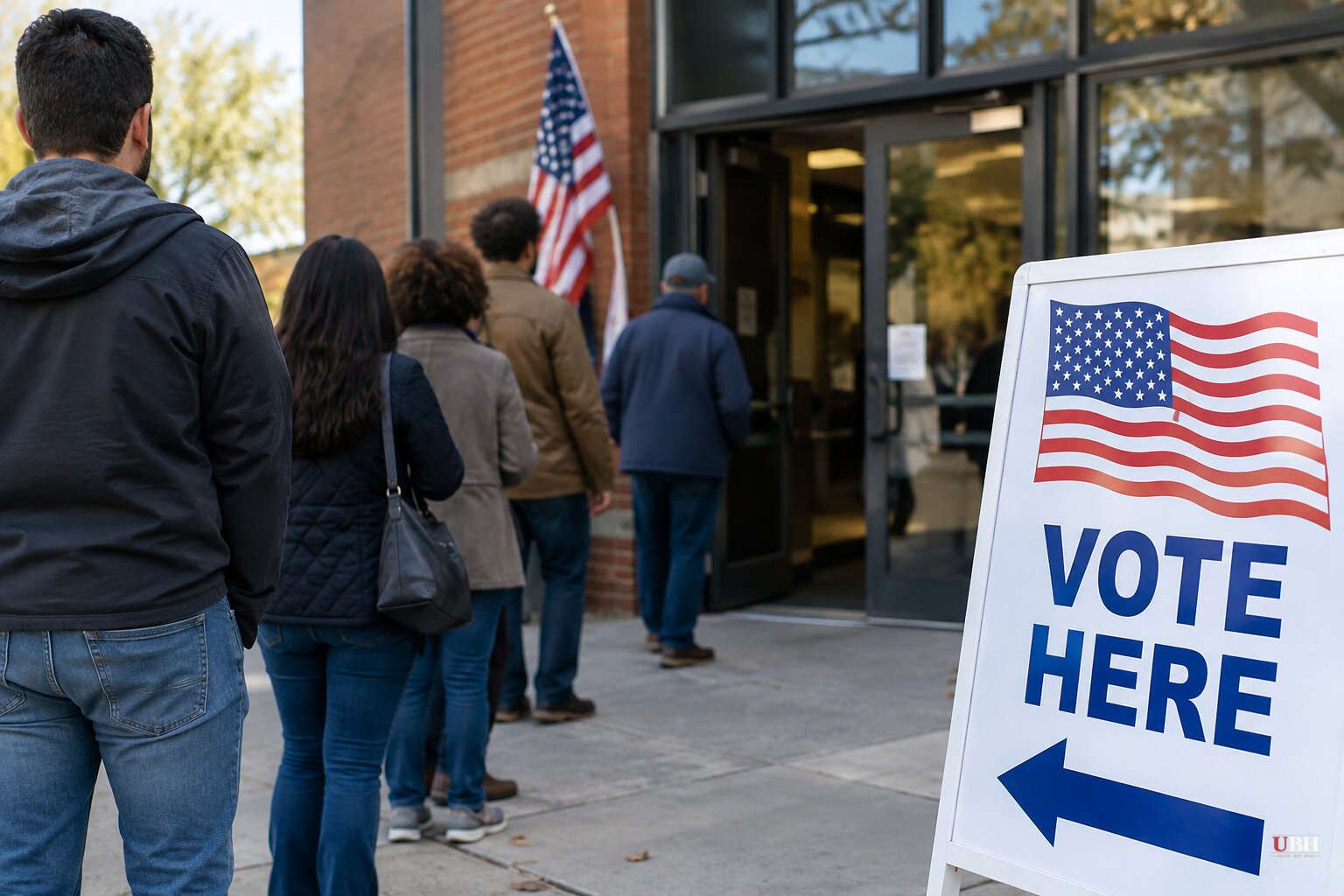
Election Day is less than 50 days away, and a fight is brewing over something that hasn't happened yet: the possibility that President Trump sends National Guard troops or armed federal agents near polling places.
Federal law is clear on this. No armed federal officer or member of the armed forces can be stationed at a location where an election is being held. That's not in dispute. What's in dispute is whether Trump would try it anyway.
When a reporter asked Trump directly in May whether he'd rule out deploying the National Guard or ICE around the midterms, he didn't. "I'd do anything necessary to make sure we have honest elections," Trump said, according to NPR. Pressed again on whether that meant he wasn't ruling it out, he didn't answer. NPR says it asked the White House for clarification and got no direct response.
That non-answer, paired with Trump's use of the National Guard on U.S. soil this year, is what's driving the concern. Retired Air Force Maj. Gen. Steven Lepper, part of the Former Judge Advocates Working Group, a nonpartisan group of several dozen retired military lawyers that has been writing reports to Congress, told NPR the group sees two possibilities. "Either this administration is trying to limit the ways in which votes can be cast, or they're setting up a situation where a scenario could be concocted to justify the use of military force," Lepper said. He pointed specifically to the executive order declaring antifa a domestic terrorist organization as something that could be used to justify invoking the Insurrection Act if there's disruption at polling places.
Not everyone in uniform is dodging the question. Gen. Gregory Guillot, the commander of U.S. Northern Command who would carry out any such order, told Sen. Tammy Duckworth in March that if given an order to deploy near polls, "I would look at it very closely," and said he doesn't think troops should be "anywhere near polling places," according to NPR's reporting carried on WLRN.
The Trump administration has repeatedly and specifically denied any plan to send federal law enforcement to polls. A Department of Homeland Security spokesperson told the Guardian that "those who are here legally and not breaking other laws have nothing to fear" and denied ICE is planning polling-place operations, while calling accusations of racial profiling "categorically FALSE." Justice Department spokesperson Kiersten Pels told the Guardian, "The DOJ has never said it would send federal law enforcement to polling locations. Any suggestion otherwise is fearmongering." White House press secretary Karoline Leavitt said in February it was "not something I've ever heard the president consider."
According to the Guardian, the administration has not, as of now, sent any armed officers or military members to a polling location. Nothing has happened. What exists is a pattern of vague answers from the president and mixed signals from other officials, which is exactly why the NAACP and a coalition of civil rights groups filed a lawsuit against Trump administration officials, alleging the threat of federal law enforcement deployment and new voter-roll oversight efforts amount to voter intimidation under the Voting Rights Act. Those are allegations in a filed complaint. No court has ruled on them.
Democrats and allied groups aren't waiting to find out. State Democratic parties have launched what Breitbart described as the "New Battlefield Project," aiming to recruit 10,000 volunteers to physically guard polling places if armed federal officers show up. Legal scholars are circulating advice for judges on how to handle any government attempt to seize ballots, a scenario modeled on the 2020 seizure of ballots and election records in Fulton County, Georgia, which Breitbart notes was based on debunked conspiracy theories. Ezra Levin of Indivisible told Breitbart, "We have never prepared for an election sabotage event like we have now."
There's a real distinction worth drawing here. Trump's proof-of-citizenship push for voter registration and the administration's involvement in Postal Service decisions on mail ballots, both cited by Breitbart as already-underway administration actions, are actual policy moves that can be litigated and debated on the merits. Requiring proof of citizenship to vote is not a fringe idea; only citizens are supposed to vote, and states already require ID for plenty of everyday transactions. The National Guard deployment scenario is a different animal entirely. It's speculative, illegal on its face under current law, and has not occurred.
Rick Hasen, a UCLA law professor who directs the school's Safeguarding Democracy Project, told Breitbart that Trump has expressed regret he didn't push harder in 2020, including floating the idea of seizing voting machines. "All these things take what was off the wall and put it on the wall," Hasen said.
The unresolved question is whether Trump's refusal to give a straight answer is calculated ambiguity, deliberate misdirection, or just Trump being Trump in a press gaggle. The NAACP's lawsuit is now the vehicle that will force a court, not a press secretary, to weigh in on what the administration's actual intentions are. Until then, voting officials across the country say they intend to run the midterms as usual, and every named administration spokesperson on the record says the same thing: no plan exists to put federal law enforcement or the military at the polls.
Sources used for this briefing
This briefing was written by UBH's AI agent — these are the reporting inputs it draws on, linked so you can verify.


