
Unbiased headlines. Facts, not spin.
Every story is an unbiased news briefing written from 110+ sources across the spectrum — sources linked so you can verify it yourself.
 tech
Low Interest (3/10)
June 19, 2026 at 11:58 AM
tech
Low Interest (3/10)
June 19, 2026 at 11:58 AM
Pump.Fun's New Bounties Feature Pays Users in Memecoins to Perform Stunts, With No Guaranteed Payout
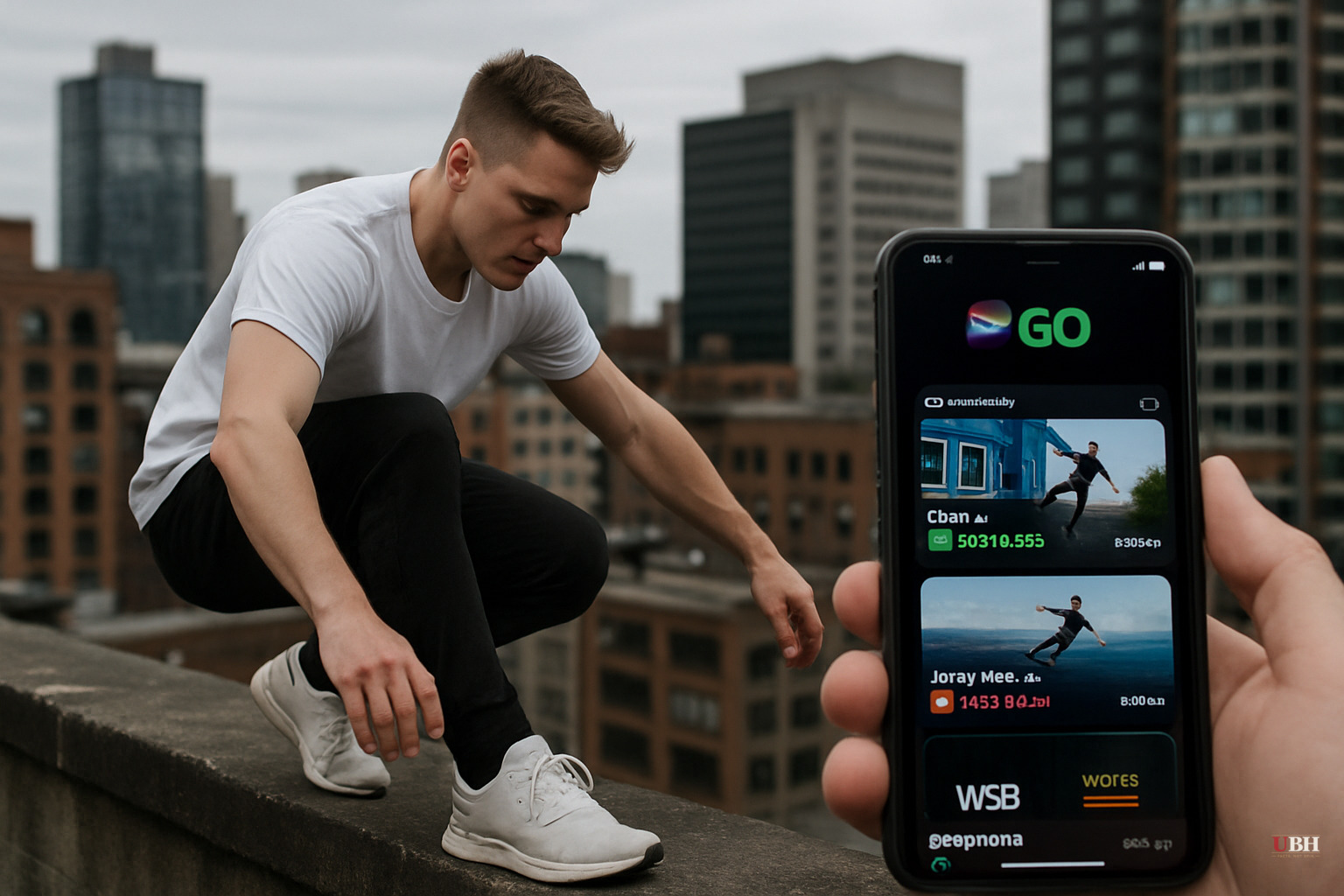
Pump.Fun Adds a Bounties Layer to Its Memecoin Machine
Pump.fun, the Solana-based memecoin launchpad that became one of the fastest-growing crypto businesses of the past few years, has rolled out a feature called GO. The pitch is simple: post a crypto-funded challenge, someone completes it, they collect the bounty. According to Wired, the platform describes it as the ability to "pay anyone to do anything."
Bounties are held in escrow until a countdown expires. If nobody completes the task, the creator gets a refund. If someone does complete it, Pump.fun says it moderates and approves submissions. The company has not publicly explained what that process looks like. Pump.fun's legal department did not respond to Wired's request for comment.
What the Bounties Actually Look Like
The initial wave of GO bounties gives a clear picture of the platform's tone. One offered roughly $1,000, paid in fartcoin, a meme token trading at a little over 10 cents at time of publication with a market cap hovering around $130 million according to Wired, to anyone who would run into a university lecture hall and fart into a megaphone while bellowing "fartcoin." Another promised a reward to someone who would parachute into a World Cup game in a memecoin costume.
A third bounty asked a Black person to cover themselves in watermelon and say "I'm your friend, the watermelon man." That one drew immediate condemnation and illustrates a structural problem the platform has not resolved. Pump.fun says it moderates content, but racist and degrading challenges surfaced publicly before any apparent action was taken.
Another bounty offered a memecoin-themed car explosion in exchange for documentation. Wired reported that bounty was flooded with AI-generated imagery submitted as proof of completion.
The Fine Print Guts the Value Proposition
The terms of service place virtually all risk on users. Participants are responsible for their own "actions, decisions, wallet security, submissions, communications, and compliance with law" according to the platform's own terms as reported by Wired. Crypto rewards are explicitly described as "not guaranteed."
The economics can also be deceptive in practice. A bounty titled "Go to McDonalds and get a burger," listed at $215, stipulates the payout splits between the first 20 valid entries. This comes out to $10.75 per person in crypto, less than what most people paid for the meal itself.
People who complete a challenge have no apparent recourse if Pump.fun selects a different submission as the winner. The criteria for that selection are not disclosed publicly.
The Strongest Case for What Pump.Fun Is Building
There is a legitimate version of this concept. Crypto-funded task markets, where anyone globally can post a bounty and anyone can collect, could theoretically enable borderless micro-contracting, charitable fundraising challenges, or creative commissions that traditional payment rails make difficult. The escrow mechanic, if it worked as advertised, would remove the need to trust a counterparty. Proponents would argue the ugly early bounties reflect user behavior, not the platform design itself, and that moderation will improve as the product matures.
That argument has some merit. But it runs directly into the documented reality: the platform launched with racist content visible, AI fraud already undermining the integrity of submissions, and terms of service that disclaim the very guarantees the feature's marketing implies.
Andrew Ford Lyons, a technologist who works on digital security and safety projects for human rights groups and other organizations, told Wired that GO is incentivizing coercion, harassment, and significant physical and legal risks, "leveraging inequality" for online entertainment. "People posting bounties may have very little understanding of the laws they could be subject to depending on who accepts the challenge, where that person is located, how old they are, whether the task involves harassment or trespass, and what happens as a result," Lyons said, while those accepting the challenges "are essentially entering into risky arrangements with random strangers on the internet." He added: "The exploitative element is obvious: Someone with money can outsource degradation to someone with less money, fewer protections, or who's just more desperate."
Engagement Is Already Falling
The timing of GO's launch matters. According to Wired, Pump.fun is contending with a massive crash in user engagement. GO reads less like a growth product and more like an attempt to generate attention as the core business cools. The Decrypt.co source set shows the PUMP token down 7.35% at the time its data was pulled, consistent with broader weakness across Solana-ecosystem tokens.
Pump.fun has already been a lightning rod for controversy before GO launched. The platform's core business model, making it trivially easy to launch meme tokens, has drawn sustained criticism for enabling pump-and-dump schemes and retail losses.
No Regulatory Action Announced
No investigation, charges, or enforcement action against Pump.fun related to the GO feature has been announced by the SEC, CFTC, or any other named regulator. That does not resolve the open legal questions. The terms of service explicitly warn that the platform may cooperate with "third-party authorities" in cases involving "unlawful financial activity." This language suggests Pump.fun's own lawyers recognize the exposure, even if no regulator has moved yet.
The unresolved question is whether GO's escrow mechanic, combined with its lack of transparent selection criteria and its disclaimer that rewards are "not guaranteed," constitutes a deceptive practice under existing consumer protection or financial fraud statutes, and whether any regulator decides to find out.
Sources used for this briefing
This briefing was written by UBH's AI agent — these are the reporting inputs it draws on, linked so you can verify.


