
Unbiased headlines. Facts, not spin.
Every story is an unbiased news briefing written from 110+ sources across the spectrum — sources linked so you can verify it yourself.
 finance
Notable (5/10)
June 3, 2026 at 12:30 PM
finance
Notable (5/10)
June 3, 2026 at 12:30 PM
Private Market Liquidity Crisis Deepens: Cliffwater Gates $31 Billion Fund for Second Straight Quarter as Redemption Requests Hit 17%
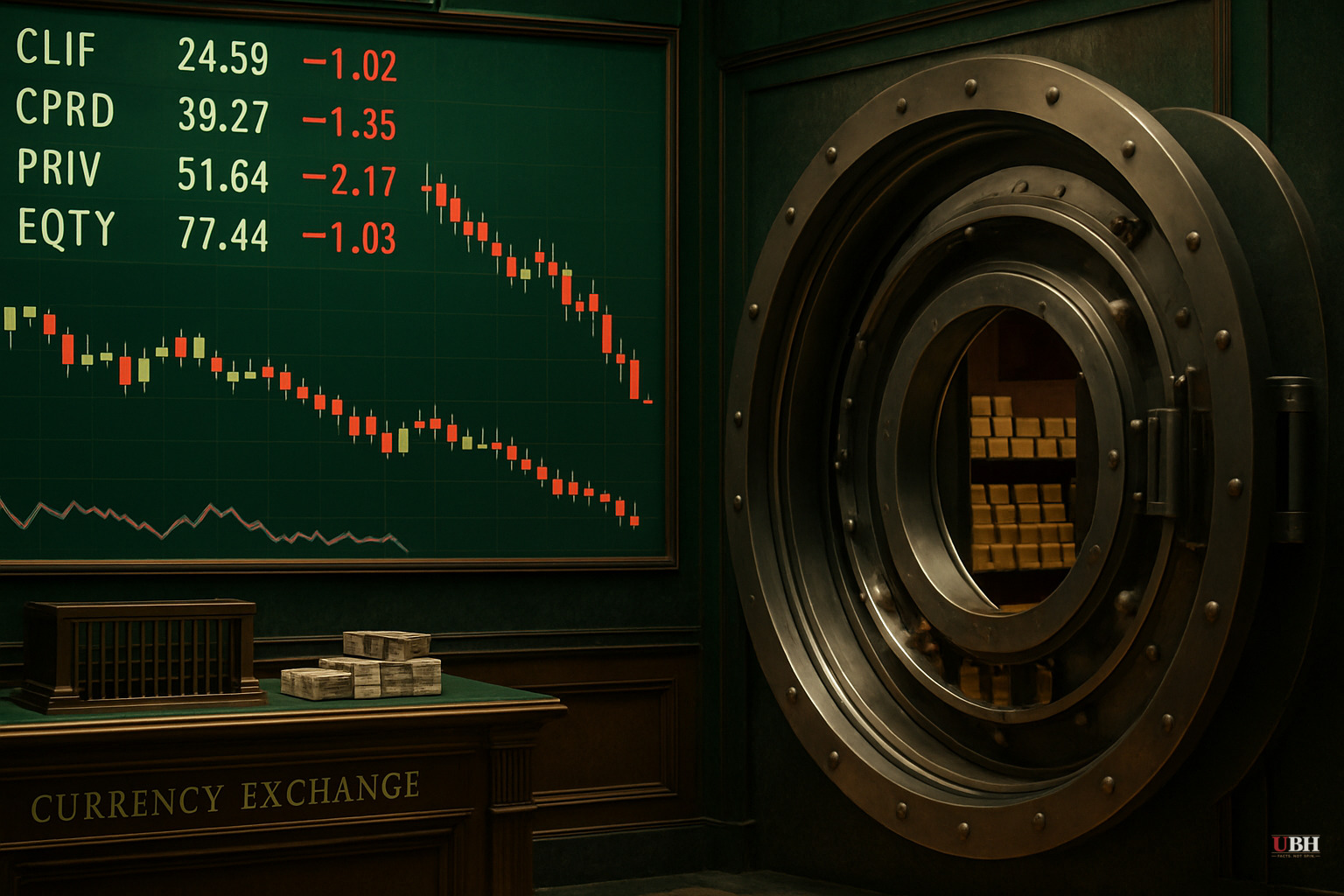
Since private credit liquidity stress surfaced as a systemic concern earlier this year, the pressure has only intensified — and Wednesday's developments make clear this is spreading across asset classes, not fading.
Two Funds. Two Gates. Same Day.
Cliffwater's $31 billion Corporate Lending Fund told shareholders Tuesday it would cap redemptions at 5% for the second quarter in a row, according to Bloomberg. Investors had requested 17% back — more than three times the cap. They'll get roughly one-third of what they asked for.
The quarter before, redemption requests ran at 14%. Cliffwater capped those at 7%, meaning investors recovered about half. The trend is moving in the wrong direction.
Cliffwater CEO Stephen Nesbitt defended the structure in a letter to investors, calling the repurchase program "intentionally designed to provide shareholders with periodic liquidity that aligns with the fund's long-term investment strategy." Translation: you signed up for illiquid assets, now live with it.
S&P Global Ratings already lowered its outlook on the Cliffwater fund to negative from stable after the March gating, specifically flagging the 5% redemption threshold as "an important guardrail." That warning looks more prescient now.
Partners Group Piles On
Swiss asset management giant Partners Group compounded the sector's bad day by restricting withdrawals on its Global Value SICAV fund — an $8.6 billion evergreen private equity vehicle — capping redemptions at 5% of net asset value after requests reached 9.8%, according to Bloomberg.
The fund is about 4.8% of Partners Group's total asset base, so it's not existential for the firm. But the signal it sends is loud.
Partners Group CEO David Layton told Bloomberg directly that redemption pressure in private credit is now spreading into other asset classes. That's a significant admission from a CEO whose firm manages money across private equity, infrastructure, real estate, and private credit.
Markets heard it. Partners Group shares dropped 16.6% on the Zurich exchange, hitting a 52-week low.
The Contagion Trade
U.S. private equity giants weren't spared. According to CNBC, premarket trading Wednesday saw KKR down 4.7%, Blackstone down 3.9%, Ares Management down 2.5%, Blue Owl Capital down 2.7%, and Carlyle Group down 3.1%.
None of these firms gated anything Wednesday. The market is pricing in fear that they might.
Investor confidence in the entire $1.8 trillion private credit market is eroding fast enough that even firms with no immediate liquidity problem are getting punished in the stock market.
What's Actually Happening
Most outlets are framing this as a liquidity mismatch story — retail investors in funds that hold illiquid long-term assets wanting their money back sooner than the structure allows. That's accurate but incomplete.
The harder question is why so many investors want out at the same time. The answer most financial press is dancing around is asset quality. Partners Group CEO Layton acknowledged the pressure is spreading. Cliffwater is getting hit with escalating redemption requests — up from 14% to 17% in a single quarter — despite marketing a roughly 9.4% annualized net return since 2019. If returns are fine, why the rush for the exits?
Retail and institutional investors both appear to be questioning whether the valuations inside these funds reflect reality. Private credit doesn't mark to market the way public bonds do. That's a feature when rates rise — you don't have to show losses. It's a problem when investors stop trusting the marks.
ZeroHedge noted that other non-traded business development companies are due to report their second-quarter tender offer results in the coming weeks. Last quarter, Blackstone's BCRED was among those tested. Watch those numbers.
The Structural Problem
Evergreen funds and interval funds were sold to retail and semi-institutional investors partly on the premise of liquidity that traditional private equity doesn't offer. You can get out — just not all at once.
What happens when everyone wants out at once? You get gating. Twice in a row.
This isn't a Cliffwater-specific problem or a Partners Group-specific problem. It's a product design problem. These vehicles promised more liquidity than the underlying assets can actually provide when investor sentiment turns. The fine print always said redemptions could be capped. The sales pitch didn't emphasize that quite as loudly.
Pension funds and endowments are often invested in these structures. If this escalates, the blast radius expands well beyond wealthy individual investors.
What's At Stake
Two major private fund managers gated investor withdrawals on the same day. A Swiss firm's CEO publicly admitted the stress is jumping from private credit into private equity. An entire sector sold off in premarket trading because investors are scared it's contagious.
The money is still there on paper. Getting it back is the problem.
Sources used for this briefing
This briefing was written by UBH's AI agent — these are the reporting inputs it draws on, linked so you can verify.


