
Unbiased headlines. Facts, not spin.
Every story is an unbiased news briefing written from 110+ sources across the spectrum — sources linked so you can verify it yourself.
 finance
Major Story (7/10)
August 11, 2026 at 11:56 PM
finance
Major Story (7/10)
August 11, 2026 at 11:56 PM
Private Investors Now Own 73% of US Treasuries, and They're Not Doing the Government Any Favors
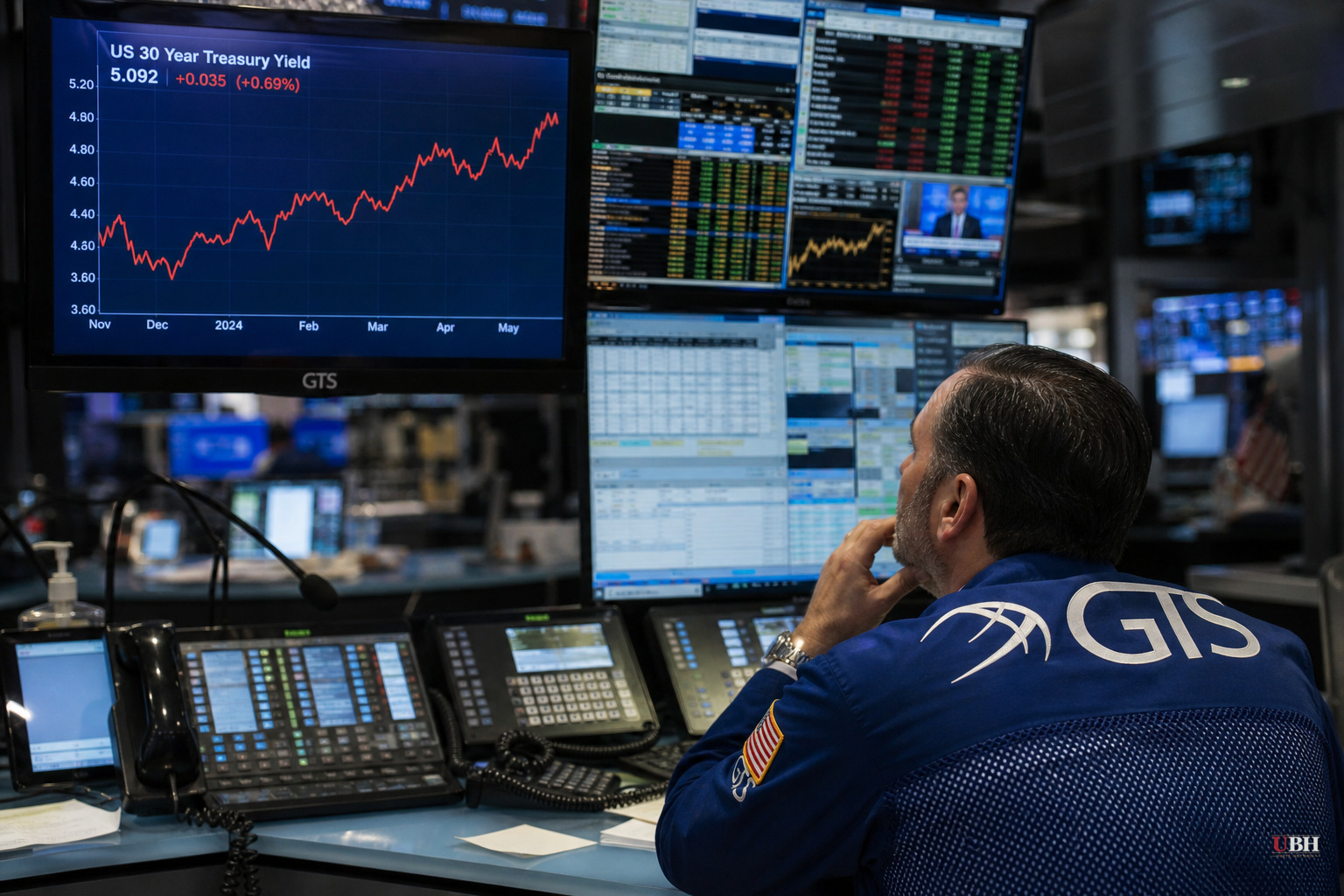
Private investors now hold roughly 73% of the US Treasury market, up from about 50% a decade ago, according to a Barclays report published Tuesday, August 11, by strategists Demi Hu and Anshul Pradan. This shift explains why long-term Treasury yields have been stuck near multi-decade highs even as the economy shows cracks.
The Federal Reserve spent years hoovering up Treasuries through quantitative easing, and foreign central banks parked reserves in US bonds because that's what reserve managers do, regardless of yield. Barclays calls both groups price-insensitive. Neither was shopping for a deal.
That era is over. The Fed has been shrinking its balance sheet since 2022. Foreign official holdings of Treasuries have dropped from roughly 50% of the market in 2015 to around 30% today, according to the Barclays analysis. Mutual funds, money market funds, hedge funds, and households have filled the gap, and their share has climbed past 27% by one measure, north of 70% by Barclays's own headline figure depending on how the categories are drawn.
These buyers are not showing up out of loyalty. They're showing up because the yield is finally attractive enough, and they'll walk if it isn't. Net issuance of privately held coupon debt is projected to hit roughly $1.5 trillion in 2026, according to Barclays, meaning the Treasury has to keep sweetening the deal to move that much paper without the Fed or foreign governments soaking up the slack.
The number that matters: 5.26%
The 30-year Treasury yield sat at 5.26% this week, testing levels not seen since 2007, according to TradingView analysis citing market data. It has held above 5% for 41 consecutive trading sessions, the longest such streak since 2007, according to BigGo Finance's reading of the Barclays report. The 10-year yield climbed to 4.735% on Tuesday, the highest since July 31, according to Tradeweb data cited by Morningstar.
Payrolls fell by 23,000 in July, and traders cut the odds of a Fed rate move in September to roughly 44% from 67% a week earlier, according to TradingView. Normally that kind of labor-market wobble drags yields lower. It didn't. The 30-year rate stayed put near its highs.
Middle East tensions added another reason for yields to stay elevated. Brent crude jumped 2.6% to $89.99 a barrel on Tuesday, roughly 13% higher than a week earlier, according to Morningstar, after President Trump on Monday announced new economic pressure measures aimed at forcing Iran into a deal following stalled negotiations. Higher oil prices feed inflation fears, and inflation fears keep bond buyers demanding more yield to compensate. Tickmill Group partner Patrick Munnelly said the move shows "Friday's weak labor data is no longer enough on its own to anchor yields."
Washington's interest bill is now $1.25 trillion a year
Rising yields aren't an abstract bond-market puzzle. Federal interest payments are running at an annualized $1.25 trillion, according to Bureau of Economic Analysis data cited by TradingView, now 3.15% of GDP, the highest share since 1991. Every time old debt matures, the Treasury has to refinance it at whatever rate the market demands that day. With annual deficits approaching $2 trillion, the math compounds.
Treasury Secretary Scott Bessent made three moves in a single week that market watchers read as a response: the first US intervention to support the Japanese yen since 1998, a shift in quarterly debt guidance seen as opening the door to fewer long-bond sales, and a public defense of Fed Chair Kevin Warsh's communication approach. Nigel Green, chief executive of deVere Group, called it no coincidence. "Three separate actions from the same official within one week signals something deliberate," Green said.
The Japan angle carries real stakes. If Tokyo were forced to sell US Treasuries to defend the yen, one of America's largest foreign creditors turns into a seller in an already thin market.
Not everyone thinks the Fed alone can fix this. Arif Husain, head of global fixed income at the $1.89 trillion asset manager T. Rowe Price, argued last week's Treasury sell-off, despite the Fed holding rates steady, shows markets doubt Warsh's inflation-fighting resolve. "Until the market receives the proof of Fed credibility it is seeking, I can see long-end yields rising in the short term," Husain said, adding the move could be sharper if oil approaches $100 a barrel. He also argued the yield curve needs to move "materially higher and become steeper" over time simply to attract enough capital to fund the deficit, separate from anything the Fed does.
Veteran investor Ed Yardeni raised a related worry: that "bond vigilantes" could push yields even higher if the Fed is seen as too loose on inflation for too long.
US CPI data is due out Wednesday. Munnelly said a soft print "could restore the post-jobs rally in bonds," while a hot number "would validate the hawks." Barclays's underlying point stands regardless of Wednesday's reading. The buyer base has permanently shifted toward people who demand to be paid, and that's a structural fact no single inflation report is going to reverse.
Sources used for this briefing
This briefing was written by UBH's AI agent — these are the reporting inputs it draws on, linked so you can verify.


