
Unbiased headlines. Facts, not spin.
Every story is an unbiased news briefing written from 110+ sources across the spectrum — sources linked so you can verify it yourself.
 finance
Major Story (7/10)
Event date: August 13, 2026
finance
Major Story (7/10)
Event date: August 13, 2026
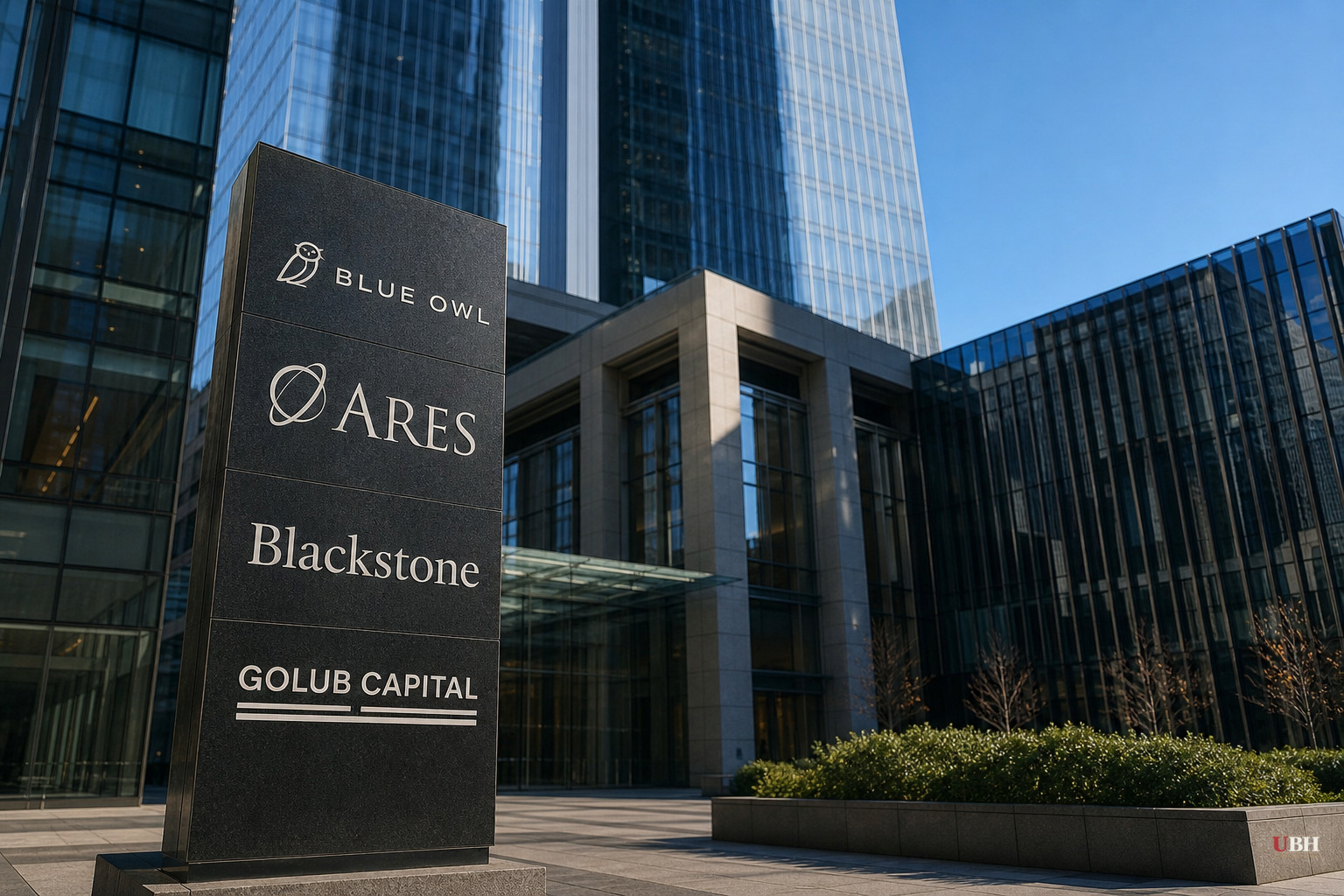
Private Credit Defaults Hit Five-Year Highs at Blue Owl, Ares, Blackstone and Golub as Redemption Requests Pile Up
The $2 trillion private credit industry built its pitch to investors on one core promise: locked-up capital means no forced selling, no fire sales, no panic. That promise is now getting its first real test since the asset class exploded in size, and the early results are not clean.
A Wall Street Journal analysis found that nonaccrual loans at funds run by Ares Management, Blackstone, Blue Owl Capital and Golub Capital have hit their highest levels since at least 2021. At Blue Owl Capital Corp., nonaccruals reached 2.8% in the second quarter of 2026, the fund's worst reading in at least five years. Nonperforming loans at the Ares, Blackstone and Golub funds examined by the Journal also hit five-year highs, according to reporting cited by ZeroHedge and InvestmentNews, surpassing even 2023 levels when the Federal Reserve was hiking rates aggressively.
Fitch Ratings reported the private credit default rate climbed to a record 6% through the second quarter of 2026, per InvestmentNews. That is up from a peak of 5.8% in January 2026 cited separately by Crypto Briefing, though other methodologies put current default rates closer to 2% depending on how the market is measured. The spread in those numbers says something: this market still doesn't have a single agreed-upon way to measure how bad things are.
Redemptions are piling up at the same time
Blackstone's BCRED, one of the largest semi-liquid private credit vehicles marketed to individual investors, has seen redemption requests hit roughly 7.9% of net asset value, according to Crypto Briefing's review of Financial Times reporting. That works out to about $3.8 billion in withdrawal demands. Blue Owl funds have seen redemption demand as high as 41%, per the same reporting.
These funds cap how much money can leave in a given period specifically to prevent a run. Those caps are reportedly being hit on a regular basis now, which is exactly the liquidity mismatch regulators have warned about: funds promise periodic access to cash, but the underlying loans are illiquid and can't be sold quickly without taking a loss.
With Intelligence data cited by InvestmentNews, total 40 Act private credit assets, the retail-facing vehicles including BDCs and interval funds, stood at roughly $654 billion as of the first quarter of 2026, with BDCs alone making up $561 billion. That growth has stalled. Between the fourth quarter of 2025 and the first quarter of 2026, overall 40 Act assets edged down as redemption requests surged, even as institutional fundraising for the broader private credit industry is on pace to blow past its full-year 2025 total, according to InvestmentNews.
Industry executives are pushing back hard
Blue Owl co-CEO Marc Lipschultz told analysts on the firm's most recent quarterly call that "across our direct lending strategy, credit health remains strong," and said there had been "no meaningful change in our watchlist compared with a year ago," according to InvestmentNews. Blue Owl, Blackstone and KKR have each characterized the investor concern as media-driven panic disconnected from actual fund performance.
That defense deserves to be taken seriously, not dismissed. These firms know their loan books in granular detail, and it's true that headline default rates can look scarier in aggregate than they are loan-by-loan. It's also true that a fund manager marking its own book and telling the market "trust us" is an interested party, not a neutral referee, especially when nonaccruals at their own flagship funds are independently confirmed by the Journal to be at five-year highs.
Golub Capital co-CEO David Golub struck a different tone, telling the Journal plainly, "We are clearly in a credit cycle." That's a notable admission from inside the industry, not a hostile outside critic.
Where the stress is concentrated
The trouble is currently clustered in healthcare and businesses exposed to oil-price swings, per the Journal's reporting relayed by InvestmentNews and ZeroHedge. PwC's Global Private Credit Survey, published in May 2026 and cited by Crypto Briefing, flagged consumer and retail, automotive, hospitality and technology as sectors under acute strain.
The bigger worry is software, which makes up 20% or more of loan books at many funds and is seen as vulnerable to AI-driven disruption, according to InvestmentNews. If stress spreads there, it stops being a niche healthcare or energy problem and becomes a broad-based one.
Payment-in-kind financing is quietly compounding the picture. When borrowers pay interest with more debt instead of cash, defaults get delayed on paper while the underlying cash flow problem festers, per Crypto Briefing.
The regulators aren't waiting to find out
The Financial Stability Board's May 2026 review, cited by Global Banking and Finance, states plainly that private credit "at its current size and scope has not been tested through a severe or prolonged economic downturn." The European Central Bank has separately flagged valuation opacity and liquidity mismatches as systemic risks, since private credit loans, unlike public bonds, don't have real-time market prices. Managers mark their own books, often quarterly, using models that can lag reality by months.
None of this means a crisis is guaranteed. No regulator has announced a formal intervention, and no fund has suspended redemptions outright. But the FSB's own framing—that this is the first real test of a market built during an unusually calm credit environment—means the next few quarters of nonaccrual and redemption data will matter more than the industry's reassurances on earnings calls.
Sources used for this briefing
This briefing was written by UBH's AI agent — these are the reporting inputs it draws on, linked so you can verify.


