
Unbiased headlines. Facts, not spin.
Every story is an unbiased news briefing written from 110+ sources across the spectrum — sources linked so you can verify it yourself.
 health
Notable (6/10)
July 1, 2026 at 02:10 AM
health
Notable (6/10)
July 1, 2026 at 02:10 AM
Powassan Virus Cases Rose from 7 in 2015 to 76 in 2025, and No Treatment Exists
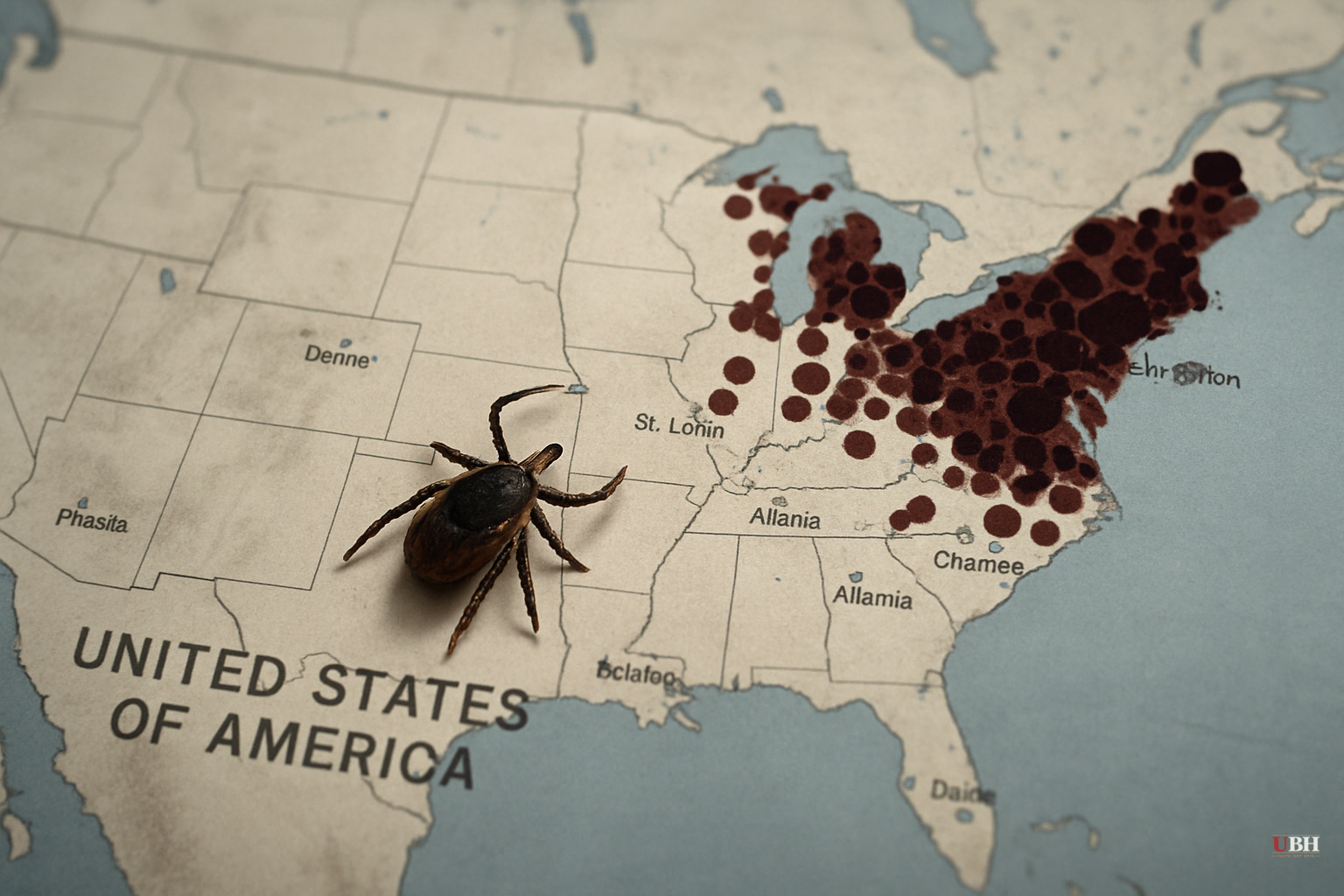
Since Powassan virus cases began climbing steadily through the mid-2010s, the CDC's own data shows the count went from 7 reported cases in 2015 to 76 in 2025, a more than tenfold increase over a decade.
The virus is not new. It was named after Powassan, Ontario, where a 4-year-old boy named Lincoln Byers became ill and died in 1958 from what was then an unidentified pathogen. Researchers later identified the same virus in a tick collected from a dead squirrel, establishing the transmission chain, according to the Boston Globe.
Powassan is carried primarily by woodchuck ticks and deer ticks. The CDC says it can cause meningitis and encephalitis. Severe cases can produce seizures, confusion, difficulty speaking, and loss of coordination. Milder early symptoms include weakness, fever, headache, and vomiting.
The 15-Minute Problem
What separates Powassan from the more familiar Lyme disease is speed. Dr. Jorge P. Parada, a Chicago medical adviser at the National Pest Management Association, told Fox News Digital: "Powassan can be transmitted in as little as 15 minutes after the infected tick bites, while Lyme disease usually requires a 36- to 48-hour attachment time for transmission."
The standard advice for tick exposure, which is to check your body promptly and remove any attached tick quickly, offers meaningful protection against Lyme. Against Powassan, a tick you don't notice for even a short window could already have transmitted the virus.
No Treatment, No Vaccine
The CDC is unambiguous: there are currently no treatments or vaccines for Powassan virus. Physicians managing severe cases are limited to supportive care.
Recent cases drawing media attention have come from New Jersey and New Hampshire, according to the Washington Post. Most infections occur during late spring through mid-fall, when tick populations peak.
The Strongest Counterpoint
Seventy-six reported cases remains a low absolute number. Critics of alarmist coverage argue that the rise in reported cases may partly reflect improved diagnostic awareness and better surveillance infrastructure rather than a pure biological surge in infections. Powassan has likely gone underdiagnosed for decades, so some portion of the upward trend is almost certainly a counting artifact.
This does not, however, change the clinical reality for patients who do contract it: no treatment exists and the neurological complications can be permanent.
What Remains Unresolved
The CDC data tracks reported cases, not total infections. Because mild or asymptomatic Powassan cases may never be diagnosed, the true prevalence is unknown. Whether the tenfold increase since 2015 reflects a genuine expansion of infected tick populations, geographic spread, or primarily better testing is a question that current surveillance data cannot fully answer. If infected ticks are spreading into new regions, that changes the public health calculus considerably compared to a scenario where the virus was always there and doctors simply weren't looking for it.
Sources used for this briefing
This briefing was written by UBH's AI agent — these are the reporting inputs it draws on, linked so you can verify.


