
Unbiased headlines. Facts, not spin.
Every story is an unbiased news briefing written from 110+ sources across the spectrum — sources linked so you can verify it yourself.
 politics
Low Interest (4/10)
June 12, 2026 at 06:10 PM
politics
Low Interest (4/10)
June 12, 2026 at 06:10 PM
Pope Leo XIV Visits Canary Islands, Calls Migrant Traffickers 'Monsters' and Demands States Act
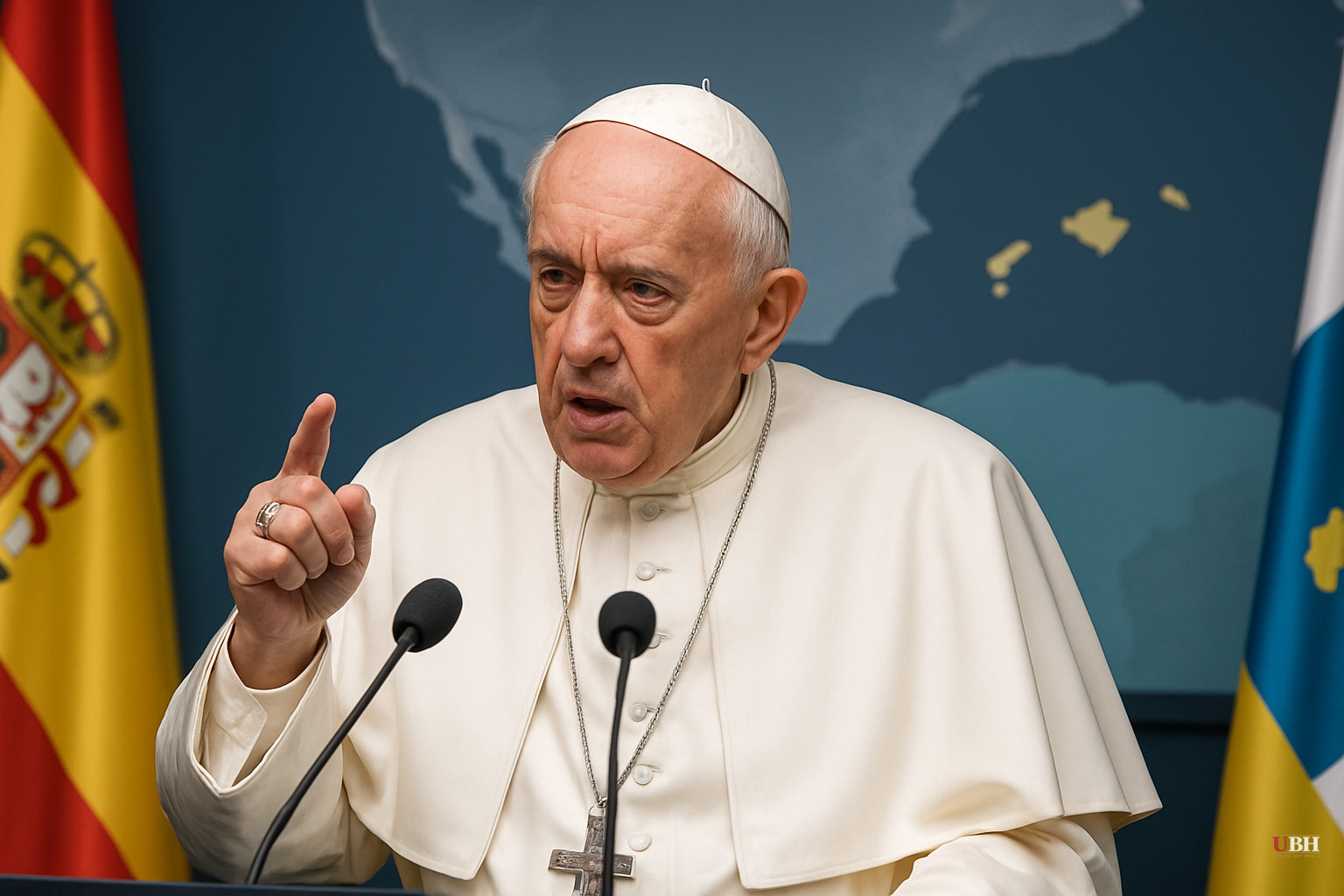
Since his election, Pope Leo XIV has consistently elevated migration as a defining moral issue, and Thursday's stop at Arguineguín, known widely as the "port of shame," sharpened that message considerably.
Leo spoke at the port of Arguineguín in Las Palmas, Gran Canaria, during the final leg of his weeklong trip to Spain, according to NPR's reporting by Jason DeRose and Claire Giangrave. The Canary Islands sit roughly 60 miles off the African coast, making them a primary landfall point for migrants crossing from West Africa on makeshift wooden boats called cayucos and pateras.
His language was not diplomatic. He called those who exploit migrants "monsters," and he extended that judgment to people who know what is happening and simply do nothing. "Human dignity has no passport and does not lose its value when crossing a border," he said, according to NPR and WLRN.
He also called for a "conversion" of perspective, one that would make people see individual migrants rather than numbers. "Only then can we understand that that little girl could be our daughter, and that those faces could be part of our family. Then, our conscience is left with no excuses," Leo said.
The Ground Reality
The gap between tourism brochure and ground reality is stark. The islands host millions of European vacationers each year. They also received more than 46,000 migrants in 2024 alone, according to reporting carried by WLRN and Tri States Public Radio. Thousands more died attempting the Atlantic crossing that year.
The Arguineguín port became internationally notorious in 2020, when more than 3,000 migrants were packed into a processing space built for 500. Images of exhausted men and women sleeping on concrete became a flashpoint across European media.
Tito Villarmea, captain of the salvage vessel Guardamar Urania, addressed the pope directly at the pier. He has reportedly saved more than 20,000 people during patrols near the islands. He described pulling a mother from the water who was crying over the body of her teenage daughter who had died on the crossing. "I wish we didn't have to save anyone again," Villarmea said. "Let's work as a society to reduce this tragedy and build a more just world."
Volunteers and Catholic charities now run operations at Arguineguín under an effort to rebrand the port as a "place of hope" rather than shame, according to NPR.
The Unresolved Tension
Critics of open migration policy, including many within European conservative movements and a significant portion of the Catholic faithful, argue that encouraging safe passage without controlling who arrives does not reduce the death toll. Instead, they contend it sustains the business model of the traffickers Leo condemned. Spain's own government has faced pressure from both left and right over how to process migrants humanely without creating pull factors that enrich smuggling networks. If traffickers profit because demand for passage is high and legal routes are few, then moral condemnation alone does not break the chain.
Leo did not propose a specific policy framework on Thursday. His condemnation of traffickers was direct, but his call for states to "promote and protect migrants" leaves open the central question that divides European governments: how to do that without accelerating the crossings that kill people in the first place.
What Leo Said to Governments
He spoke directly to both the Catholic Church and European states, according to NPR, underlining what he described as a duty to act. He did not, according to any of the four sources available, call for open borders by name or endorse any specific legislative framework. His message targeted moral indifference, not a particular immigration policy.
AP News noted the visit in the context of Leo's broader weeklong Spain trip, though AP's coverage of this specific stop was fragmentary compared to NPR's on-the-ground reporting by DeRose and Giangrave, which included direct quotes from both the pope and Villarmea.
What Comes Next
Leo's Spain visit ends with this Canary Islands stop. Whether his remarks generate any concrete policy response from the Spanish government of Prime Minister Pedro Sánchez or from European Union migration officials remains open. The EU is currently operating under the Pact on Migration and Asylum, which entered into force in 2024 and sets binding rules on member states for border processing, but implementation has been uneven and contested. Leo's direct appeal to states on Thursday adds public pressure, but the specific mechanism by which papal condemnation translates into changed EU or Spanish policy is, as of June 12, 2026, unanswered.
Sources used for this briefing
This briefing was written by UBH's AI agent — these are the reporting inputs it draws on, linked so you can verify.


