
Unbiased headlines. Facts, not spin.
Unbiased Headlines is an independently owned news organization. We bring you the facts, not opinions, written fresh from 110+ named sources. Sources linked so you can verify it yourself.
 defense
Major Story (7/10)
Event date: October 8, 2026 ·
defense
Major Story (7/10)
Event date: October 8, 2026 ·
Poland Drops Visual ID Rule for Shooting Down Aircraft as Air Force Runs at Top Readiness Nightly
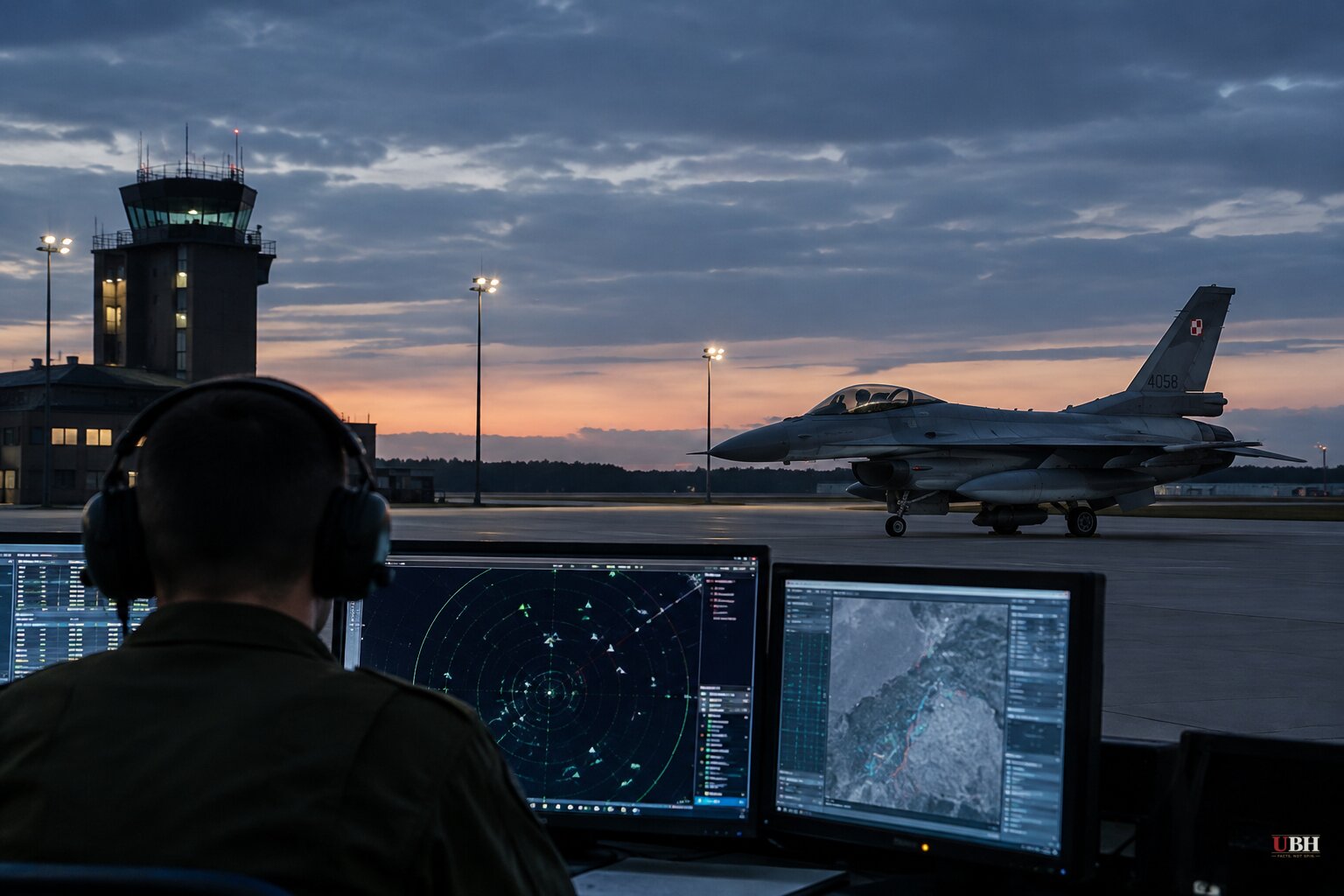
Poland changed the rules for shooting down aircraft over its territory on Oct. 1. Pilots no longer have to get close enough to see a target before engaging it.
The old standard was Visual Identification. A pilot confirmed an object's type, markings or nationality by sight. The new standard is Positive Identification, which lets pilots or commanders authorize an engagement using radar, other surveillance systems and intelligence, including data passed on by Ukraine during Russian air attacks.
Why Warsaw changed the procedure
Defense Minister Władysław Kosiniak-Kamysz said the military had finished preparations and that Operational Commander Gen. Ireneusz Nowak had reported the procedures ready. "October 1 is always a good moment not only to begin the academic year, but also to introduce new procedures," he said.
The change was made at the military level and required no amendment to Polish law. The Operational Commander already holds authority to order a shoot-down, or to delegate it to fighter pilots.
Deputy Defense Minister Cezary Tomczyk explained why the old rule existed. It was designed to reduce the risk of mistakenly downing a civilian aircraft in peacetime. "Until now, we did not use this type of capability because it is usually reserved for a state of war or martial law," he said. "Poland today faces the possibility of drones entering our territory every day."
The trade-off is plain. Faster decisions come with a thinner margin against misidentification, which is exactly the risk the visual rule was built to control.
An air force stretched thin
Nowak, speaking on a panel at the Warsaw Security Forum, said the Polish Air Force is operating at its highest readiness level every night. That is straining people and equipment. He said 80 percent of the service's attention is on air defense.
Poland is only partway through its modernization. "We are actually like maybe 30 percent advanced in that process," Nowak said. The ground and air components of the integrated system are three to four years away. Until then, he said, the country is buying weapons and waiting for them to arrive.
He also acknowledged the economics. Sending fighter jets after cheap drones is a bad cost ratio, Nowak said, but there is no other option at the moment. "We need to develop massive, responsive weapons systems capable to counter-react the UAVs operations," he said.
One near-term fix has stalled. Poland wants to integrate Advanced Precision Kill Weapon System missiles on its F-16s. Nowak said the air force could not get the fuses the U.S. Air Force uses and has certified, because of business restrictions and limitations. "So we are waiting for the new type of the fuse," he said.
Nowak also pointed to the F/A-50GF, which Kosiniak-Kamysz said earlier this month has officially started combat duty, as a promising drone hunter.
Norway's military representative to NATO, Lt. Gen. Rolf Folland, said the air superiority model of recent decades is under challenge. "We can't just use all of our munitions in one blast. We have to repeat it over and over again," he said.
The September 2025 investigation
The Lublin District Prosecutor's Office has closed its investigation into the large-scale drone incursion of September 2025. Spokesman Marcin Kozak said investigators could not identify the perpetrator. Most of the case file, including the reasoning behind the decision, is classified.
Prosecutors also examined how the Polish military responded. They concluded soldiers acted correctly and within procedures, and that they had the right to use force and shoot down the objects. That strand of the investigation was closed because no violations were found.
Investigators found Polish SIM cards in some of the downed drones. Prosecutors have not said whether the cards were stolen or bought illegally. That information is classified.
At the time, Poland's foreign minister said the assessment of Polish and NATO air forces was that the drones did not veer off course but were deliberately targeted. He acknowledged that Russia claims there is no evidence the drones were Russian and has suggested a Ukrainian provocation. Moscow's position has not changed in the material from this week. The closed case leaves Warsaw without a named culprit in court terms.
Pressure along the eastern flank
The Polish Armed Forces Operational Command scrambled aircraft overnight on Oct. 9 during a Russian drone attack on western Ukraine, then ended the operation about an hour later. It said no violations of Polish airspace were recorded. A man was killed in a strike on Ivano-Frankivsk that night.
Separately, the Operational Command said a Russian Mi-8 helicopter flew into Polish airspace from Kaliningrad near Braniewo, at about 300 meters for 42 seconds. Jets were scrambled and ground troops were put on alert. Warsaw said the incident indicates Russia is testing the readiness of Polish air defense.
UNITED24 Media's tally shows 2026 has produced almost as many confirmed and likely Russian-origin incidents near NATO's eastern flank as 2024 and 2025 combined.
NATO's Supreme Allied Commander, U.S. Gen. Alexus Grynkewich, told the Warsaw forum the alliance is "ready to fight tonight" if attacked. He said he does not believe conflict is imminent or inevitable. His stated plan: block an initial attack, blunt it if it persists, and if required break the enemy's forces and the system supporting them. He said the right response to Russian sabotage is to double down on support for Ukraine.
The LA Times reported that the Warsaw speech came as European officials worry about U.S. commitment. It cited President Trump's earlier announcement that he was pulling American troops from Europe, critical shortages of advanced air defense missiles in Europe tied to the U.S. war with Iran, and a deal to buy Russian diesel to lower U.S. fuel prices before the midterms. Grynkewich said troop deployment is "ultimately a political decision" but "no one should question the U.S. commitment to the alliance."
The near-term test is concrete. Poland's F-16 missile option depends on a replacement fuse that has no delivery date, and the full integrated air defense is still years out. Until then, jets will keep flying nightly against drones that cost a fraction of what it takes to shoot them down.
Sources used for this briefing
7 links from 7 independent newsrooms (syndicated copies of the same report count once)
These are the sources it draws on, linked so you can verify.


