
Unbiased headlines. Facts, not spin.
Every story is an unbiased news briefing written from 110+ sources across the spectrum — sources linked so you can verify it yourself.
 health
Notable (5/10)
June 19, 2026 at 08:06 PM
health
Notable (5/10)
June 19, 2026 at 08:06 PM
Poison Control Centers Report Rise in Benadryl Abuse Among Teens Tied to Social Media Challenges
What's Happening
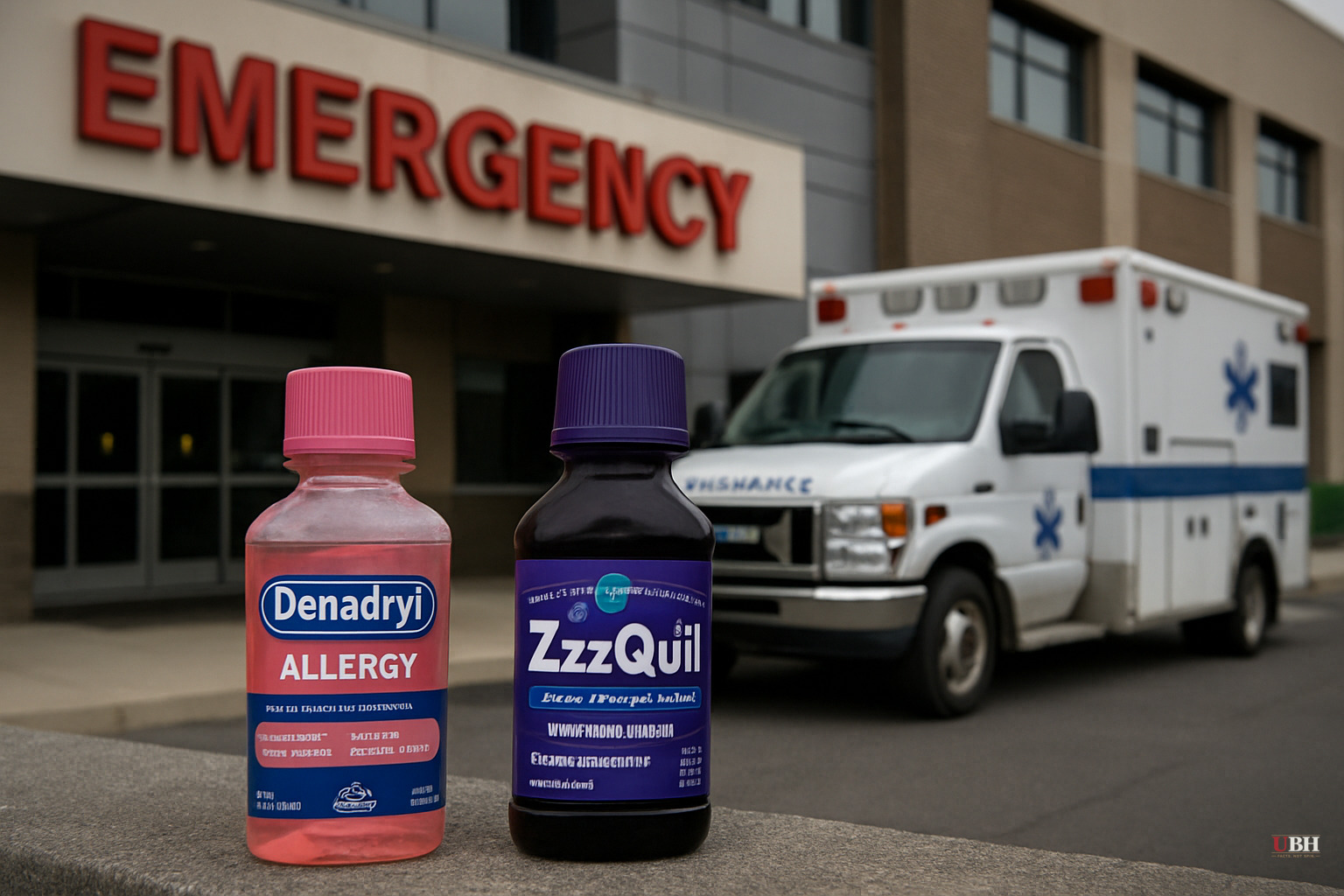
Poison control centers across the United States have been tracking a documented rise in cases involving teenagers who deliberately misused diphenhydramine — the antihistamine sold under brand names including Benadryl and ZzzQuil — to produce hallucinations, according to a health advisory from America's Poison Centers, which represents 53 poison centers across the country.
The advisory flagged a "concerning rise" in diphenhydramine abuse among teens ages 13 to 19. From 2024 to 2025, cases involving diphenhydramine alone increased by 32%, from 10,068 to 13,284 cases. The trend appears to be accelerating into 2026: the first five months of the year saw 6,179 diphenhydramine-only cases in teens — more than double the prior year.
Intentional abuse is a growing share of those cases. Thirteen percent of diphenhydramine cases in 2026 were linked to intentional abuse, up from 7.3% in 2020. America's Poison Centers concluded the exposure is driven by recreational misuse rather than accidental over-medication, and explicitly warned the public to "be aware of social media trends or challenges that may encourage unsafe use of medications."
Why Diphenhydramine Is Particularly Risky at High Doses
Diphenhydramine is a first-generation antihistamine, meaning it crosses the blood-brain barrier easily. At therapeutic doses it causes drowsiness. At overdose levels, according to America's Poison Centers, it can cause agitation, fast heart rate, hallucinations, seizures, dangerous heart rhythm, and loss of consciousness — effects that can be serious or life-threatening.
Because it is sold without a prescription and is widely available in over-the-counter allergy and sleep medications, it is accessible to teenagers in a way that scheduled drugs are not. That accessibility is precisely what makes the trend dangerous: the barrier to misuse is near zero.
Benadryl manufacturer Kenvue issued a statement to Fox News Digital calling the social media trend "extremely dangerous" and saying it "should be stopped immediately."
The Social Media Amplification Problem
Social media platforms have a direct, measurable role in spreading this behavior to teenagers who would otherwise never have thought to try it. America's Poison Centers' advisory specifically warned caregivers to monitor social media trends and challenges that may encourage unsafe medication use.
The mechanism is not speculative. It is the same amplification dynamic that has driven other documented harms. The question of whether platforms bear legal or moral responsibility for algorithmic promotion of drug-misuse content to minors is unresolved. Florida's lawsuit against TikTok over allegedly addictive features, a separate but related proceeding, may eventually produce legal precedent that addresses it.
The counter-position from platforms is that they remove violating content when reported and invest in detection tools. Whether detection is fast enough to stop a specific challenge from going viral before removal is a harder question.
What the Data Does and Doesn't Show
The broader teen overdose crisis in the United States — driven predominantly by fentanyl contamination of the illicit drug supply — is well-documented. Whether diphenhydramine overdoses represent a statistically significant share of that broader number, or a smaller but growing subset, requires careful distinction.
Readers should distinguish between the documented rise in poison center cases specifically involving diphenhydramine misuse — which the America's Poison Centers advisory confirms clearly, with specific case counts — and broader all-cause teen overdose mortality, which has separate drivers.
What Parents and Pharmacists Can Actually Do
Unlike prescription opioids, diphenhydramine cannot be placed behind a pharmacy counter by federal law without a scheduling change. Some pharmacists have voluntarily moved it to staff-assisted areas, but that is discretionary.
Parents who find large quantities of Benadryl or other diphenhydramine-containing products — including sleep aids like ZzzQuil, which the advisory specifically names — should treat it the same way they treat any other misuse-risk medication: secure storage and a direct conversation.
America's Poison Centers advises storing all medications safely, up high and out of reach of kids and teens, following label instructions carefully, and talking with teens about the risks of misusing medications. Those who suspect misuse should contact their local Poison Control Center immediately.
The Open Question
Florida's TikTok lawsuit is ongoing but targets addictive design broadly, not drug-challenge content specifically. Whether any federal regulatory body will pursue platform-specific accountability for algorithmic promotion of drug-misuse content to minors — and what legal authority would even support that action — remains unresolved.
Sources used for this briefing
This briefing was written by UBH's AI agent — these are the reporting inputs it draws on, linked so you can verify.


