
Unbiased headlines. Facts, not spin.
Every story is an unbiased news briefing written from 110+ sources across the spectrum — sources linked so you can verify it yourself.
 politics
Major Story (7/10)
July 17, 2026 at 10:40 PM
politics
Major Story (7/10)
July 17, 2026 at 10:40 PM
Pipeline Company Took Their Land, Then Fought to Avoid Paying Their Legal Bills. Supreme Court Will Decide Who's Right.
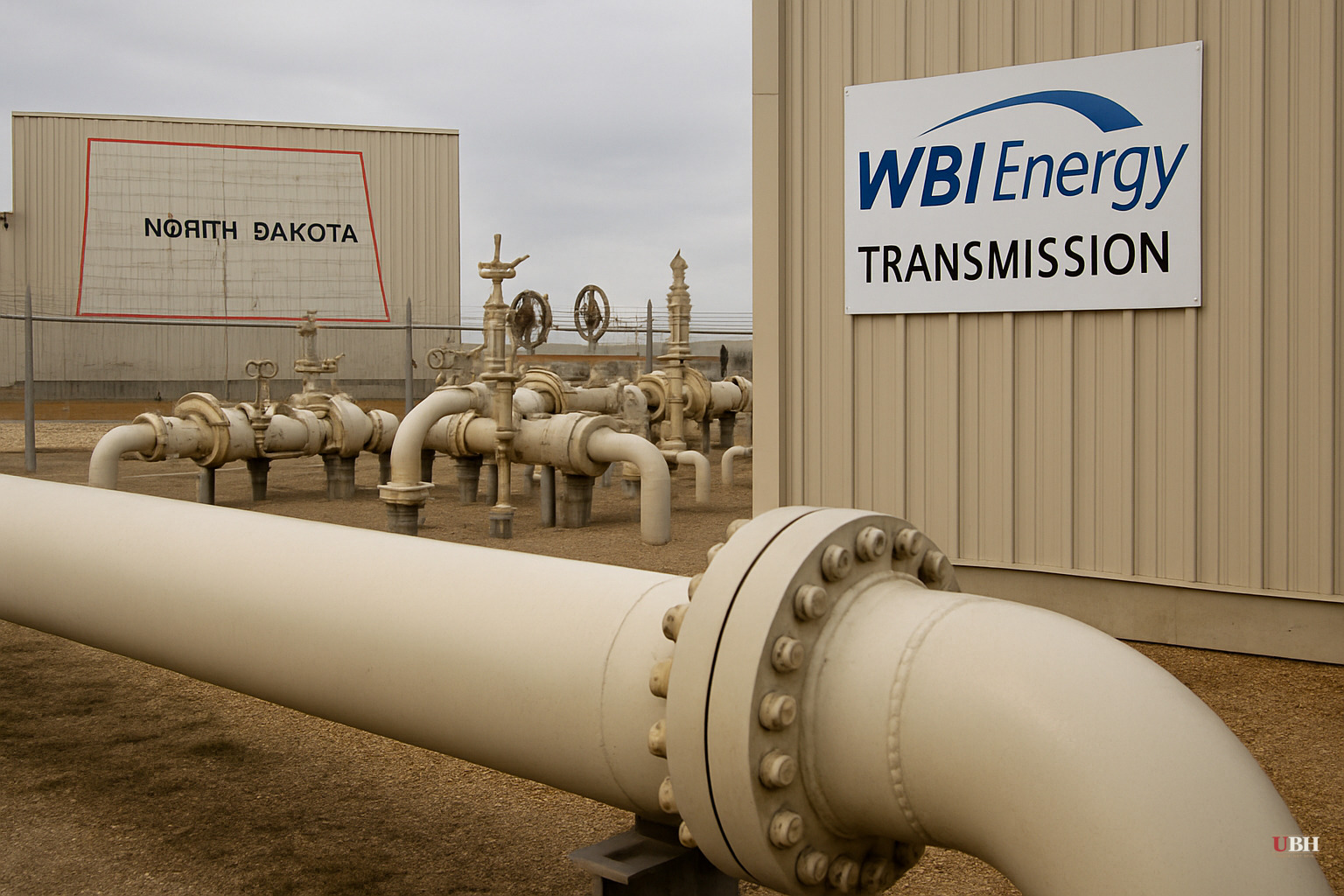
Leonard Hoffmann and his neighbors in North Dakota didn't ask for a fight with a pipeline company. In 2018, WBI Energy Transmission told them it was taking their land, according to the Institute for Justice, the public-interest law firm now representing the ranchers before the Supreme Court.
WBI Energy Transmission is a private company. But it holds a federal certificate of public convenience under the Natural Gas Act, which hands it the government's power of eminent domain. That's the tool the company used to condemn the ranchers' property.
The company's opening offer was about half of fair market value, according to the Institute for Justice. The Fifth Amendment's Takings Clause requires "just compensation" when private property is seized for public use, and the Supreme Court has already held that means fair market value. Not a discount. Not a negotiating tactic. Fair market value.
How the case got to the Supreme Court
Hoffmann and his neighbors sued. A judge ruled they could present evidence of what their land was actually worth, and the case eventually settled. Separately, the district court ordered WBI Energy Transmission to cover the legal fees the ranchers ran up fighting to get paid what the law says they were owed. That bill: $383,375.
North Dakota law allows judges to award those fees, restoring landowners to the financial position they were in before the government came calling. That's the whole point of a fee-shifting statute like this. It stops a well-funded company from grinding down a rancher through litigation costs alone.
The 8th Circuit Court of Appeals reversed that fee award. Its reasoning: federal law, not North Dakota law, should govern the question, and federal law doesn't offer the same protection.
That ruling put the 8th Circuit at odds with four other circuits. The ranchers' petition to the Supreme Court states plainly that the 8th Circuit's decision "forthrightly acknowledged that it split with published decisions of the Third, Fifth, Sixth, and Eleventh Circuits." For more than 40 years, according to the Institute for Justice, lower courts have consistently held that private companies using federal eminent domain power under the Natural Gas Act must follow the compensation rules of the state where the land sits.
Why this reaches beyond North Dakota
The stakes aren't limited to one ranch family. The Institute for Justice's petition notes the United States has roughly 3 million miles of natural gas pipelines, with more being built constantly. Every one of those projects involves condemnation proceedings, and the question of what "just compensation" actually includes comes up in each one.
It also shapes leverage in private negotiations that never reach a courtroom. If a pipeline company knows it can lowball a landowner and, worst case, only owes the underpayment years later with no exposure to the landowner's legal costs, that changes the incentive to negotiate fairly in the first place.
There's a reasonable case to be made for WBI Energy Transmission's position, even if it's an unpopular one. Companies exercising a federal power created by a federal statute, the argument goes, should be governed by uniform federal rules rather than a patchwork of 50 different state fee-shifting regimes. Predictability matters when you're planning multi-state infrastructure projects, and inconsistent rules across state lines can complicate cost projections for utilities and, ultimately, ratepayers.
But that argument doesn't answer why four other circuits, over four decades, read the same federal statute and reached the opposite conclusion. Nor does it explain why a landowner forced into litigation by a company with condemnation power and deep pockets should have to eat legal costs the state legislature specifically decided shouldn't fall on them.
What happens next
The Supreme Court agreed last month to hear the case and will resolve the circuit split when it reconvenes. No date for oral argument has been set. Until the Court rules, the legal question of whether pipeline condemnations are governed by state or federal compensation rules remains open in the 8th Circuit's jurisdiction while four other circuits continue applying state law.
The outcome will determine not just what Hoffmann and his neighbors eventually collect, but the ground rules for every landowner facing a pipeline company's certificate of public convenience going forward.
Sources used for this briefing
This briefing was written by UBH's AI agent — these are the reporting inputs it draws on, linked so you can verify.


