
Unbiased headlines. Facts, not spin.
Every story is an unbiased news briefing written from 110+ sources across the spectrum — sources linked so you can verify it yourself.
 health
Notable (5/10)
July 3, 2026 at 08:38 PM
health
Notable (5/10)
July 3, 2026 at 08:38 PM
Philadelphia Cancels July 4th Parade Entirely as Heat Dome Grips the East Coast on America's 250th Birthday
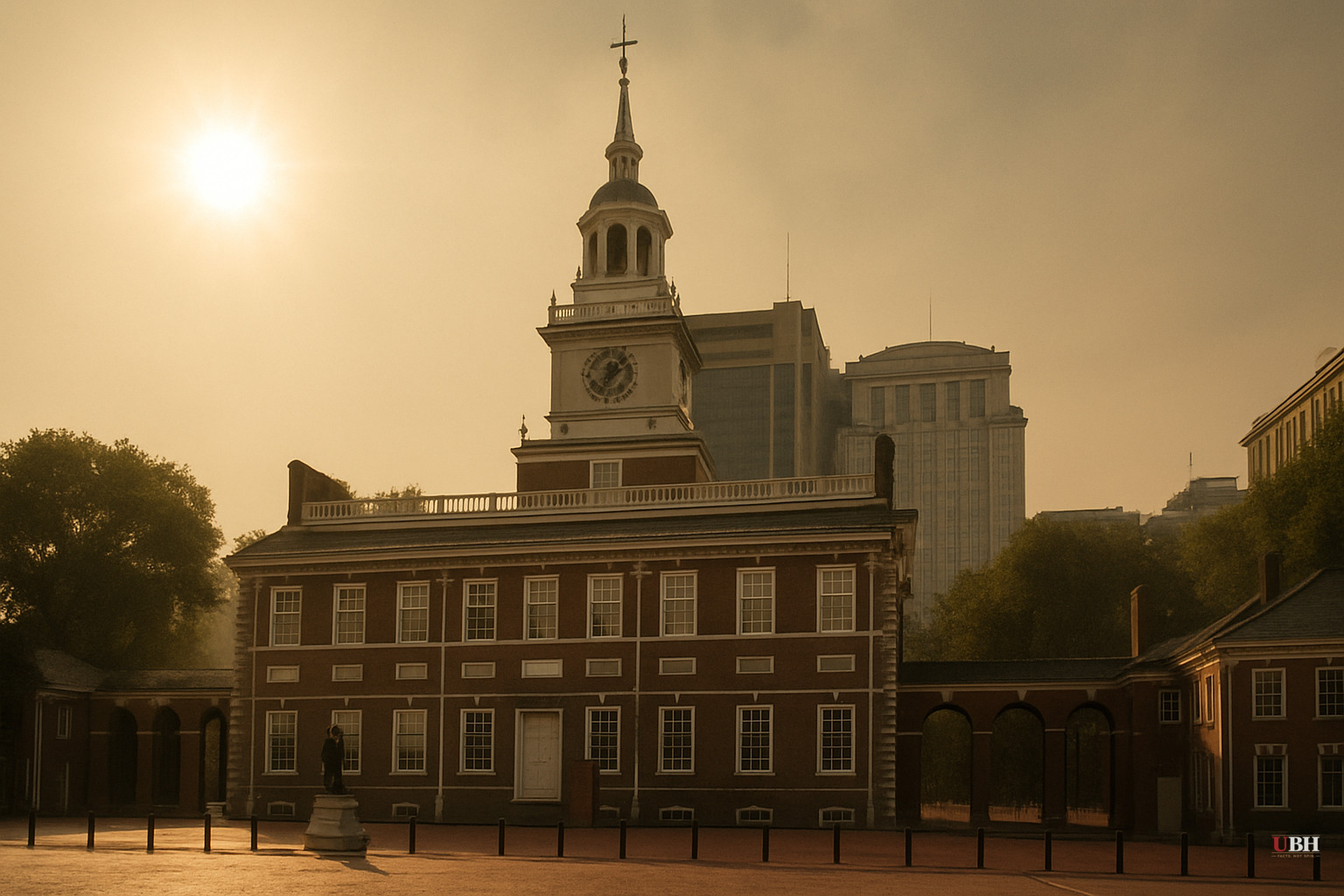
Since the heat wave settled over a corridor stretching from Texas to the East Coast, communities have been forced to scale back or cancel Fourth of July celebrations, with Philadelphia now carrying the most visible loss.
Welcome America Inc., the nonprofit that organizes Philadelphia's Independence Day programming, canceled its Salute to Independence Semiquincentennial Parade, posting the announcement on X. The city of Philadelphia reposted it. The parade had been designed to mark the United States' 250th birthday and was set to feature floats and marching bands.
"As much as this decision pains everyone inside our organization, we simply cannot host an event of this size and scale under these dangerous heat conditions," Welcome America Inc. President and CEO Michael DelBene said in a statement obtained by Fox News Digital. He credited parade producer Todd Marcocci and Under the Sun Productions for working tirelessly to design something "truly historic," calling the last-minute cancellation "heartbreaking."
The Temperature Numbers Are Not Subtle
The National Weather Service Philadelphia/Mount Holly posted Friday morning that if Philadelphia International Airport reached the forecast high of 104°F, it would be the hottest temperature recorded at that location since July 3, 1966.
City Health Commissioner Palak Raval-Nelson extended Philadelphia's existing Heat Health Emergency through 8 p.m. Sunday, according to the city's Department of Public Health.
NPR reported Friday that large swaths of the Midwest and Eastern U.S. remain under heat advisories, with the heat described as dangerous enough that hundreds of Americans die from heat-related illness each year. This holiday weekend puts outdoor crowds, marching band members, parade workers, and spectators directly in that risk window.
Earlier Coverage Had Understated the Scale
Prior reporting on the Philadelphia situation, including NPR's, noted a shortened parade route. The full picture is starker: the parade was not shortened, it was canceled outright. Welcome America Inc. made the call on the day itself, after floats and participants were already staged.
The Strongest Case for Proceeding
The legitimate counterargument is that the United States will not see another 250th birthday, and that canceling the celebration hands a permanent historical loss to millions of people who planned around it. Parade organizers, vendors, and performers absorbed real financial and professional costs. Some public health experts note that with proper precautions, shade structures, hydration stations, and shortened durations, outdoor events can be conducted safely even in heat. That is a defensible position.
DelBene's statement acknowledges that tension directly. His organization's conclusion was that an event "of this size and scale" crossed a threshold where safety planning alone could not contain the risk. A 104°F forecast is not a marginal call.
What Remains Unresolved
Philadelphia's Heat Health Emergency runs through 8 p.m. Sunday, meaning the full holiday weekend is covered by the official declaration. Welcome America Inc. has not announced whether any of the canceled parade elements will be rescheduled or whether the cancellation is the end of it for 2026. Given that this was a semiquincentennial event, tied specifically to the 250th anniversary, rescheduling would not carry the same significance.
Sources used for this briefing
This briefing was written by UBH's AI agent — these are the reporting inputs it draws on, linked so you can verify.


