
Unbiased headlines. Facts, not spin.
Every story is an unbiased news briefing written from 110+ sources across the spectrum — sources linked so you can verify it yourself.
 finance
Notable (5/10)
September 20, 2026 at 03:02 AM
finance
Notable (5/10)
September 20, 2026 at 03:02 AM
PBOC Cuts Daily Cash Injection to 32 Billion Yuan, Down From 463.3 Billion Two Days Earlier
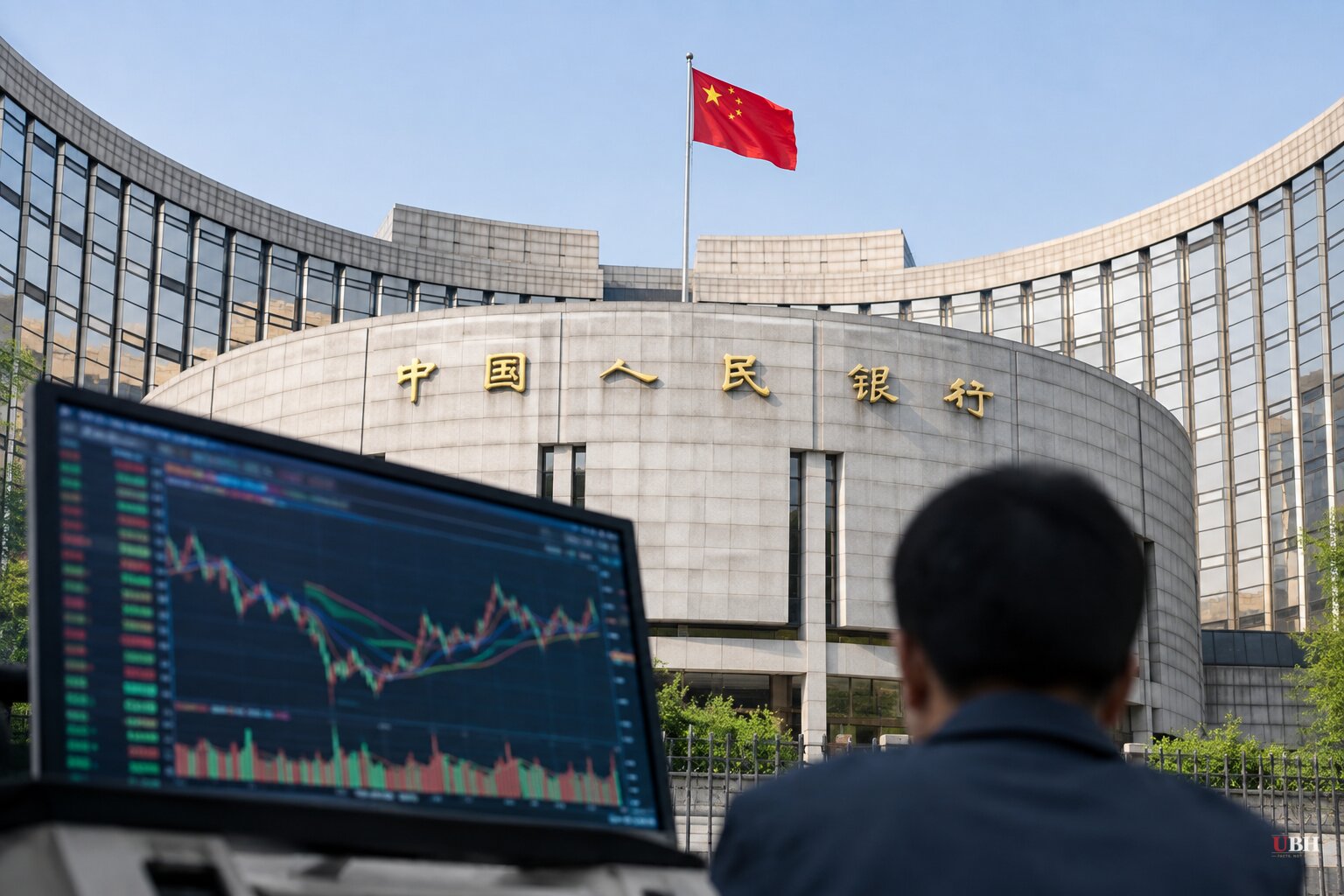
Since the People's Bank of China's liquidity operations spiked to 463.3 billion yuan on September 18, the daily injection has collapsed to just 32 billion yuan, roughly $4.4 billion, according to the PBOC's own reported figures. The 7-day reverse repo rate held at 1.40% through the entire swing.
The September 18 injection was about 14 times larger than the latest operation, based on figures reported by Crypto Briefing. Two days before that, on September 17, the PBOC had already run a combined 162 billion yuan in 7-day repos and 600 billion yuan in overnight repos, according to figures compiled by Gate.com's news wire.
What a reverse repo actually does
A reverse repo is a short-term loan mechanism. The PBOC buys securities from commercial banks with an agreement to sell them back in seven days (or overnight, under a newer tool). Banks get cash immediately; the PBOC holds collateral until the deal unwinds a week later.
The 7-day reverse repo rate has effectively replaced the medium-term lending facility as China's benchmark policy rate, according to Newsquawk. The size of any single injection tells you about plumbing, not policy. The rate is what tells you about intent, and it hasn't budged.
Routine smoothing or something to watch
Newsquawk's analysis draws a specific line worth repeating: a big gross injection on its own carries little signal. What matters is the net figure after maturing operations roll off, and whether large injections cluster around month-end, quarter-end, tax-payment dates, or holiday funding demand. Under these conditions, the PBOC is smoothing cash flow, not loosening policy. Newsquawk notes these clustering patterns have driven prior surges of this kind.
A skeptic could reasonably ask whether a 14-fold single-day swing in liquidity injections points to something more fragile underneath. A banking system that needs unusually large central bank support to get through routine tax and settlement dates without interbank rates spiking is worth scrutinizing given the size of the September 18 number. But nothing in the reporting here shows interbank rates trading persistently above the 1.40% policy rate, the actual warning sign to watch for. Without that, the evidence supports the routine smoothing reading over the hidden stress reading. The September 30 quarter-end tax date is the next test.
The rate side of the ledger held steady too
China's Loan Prime Rates, the benchmark for new bank loans, stayed unchanged in September at 3.0% for the one-year tenor and 3.5% for the five-year-plus tenor, according to Gate.com's news feed. Combined with the unchanged 1.40% reverse repo rate, the PBOC is showing no interest in an outright easing cycle even as it flooded the system with short-term cash days earlier.
The PBOC also set its daily USD/CNY reference rate at 6.7521, weaker than the 6.7065 level traders had expected, according to Newsquawk, though slightly firmer than the prior day's 6.7580 fixing. China manages its currency through this daily midpoint mechanism rather than letting it float freely, a contrast to how the dollar, euro, and other major currencies trade.
In June 2026, the PBOC introduced a separate overnight reverse repo tool priced at 1.25%, specifically built to absorb the sharper, shorter squeezes that hit banks around tax and settlement dates, according to Crypto Briefing. The September 17-18 sequence, when overnight and 7-day operations both ran into the hundreds of billions of yuan, was the first real stress test of that newer tool since its rollout.
The next marker to watch is the September 30 quarter-end tax date, when the same seasonal cash drain that triggered the mid-September spike will recur. If the PBOC needs another injection anywhere near the size of the 463.3 billion yuan figure to get through it, that would tell markets more about the underlying pressure on Chinese bank balance sheets than this week's modest 32 billion yuan operation does.
Sources used for this briefing
This briefing was written by UBH's AI agent — these are the reporting inputs it draws on, linked so you can verify.


