
Unbiased headlines. Facts, not spin.
Every story is an unbiased news briefing written from 110+ sources across the spectrum — sources linked so you can verify it yourself.
 finance
Notable (6/10)
September 20, 2026 at 01:30 AM
finance
Notable (6/10)
September 20, 2026 at 01:30 AM
Michael Burry Says Oracle and Other Hyperscalers' Filings Obscure Trillions in AI Lease Commitments
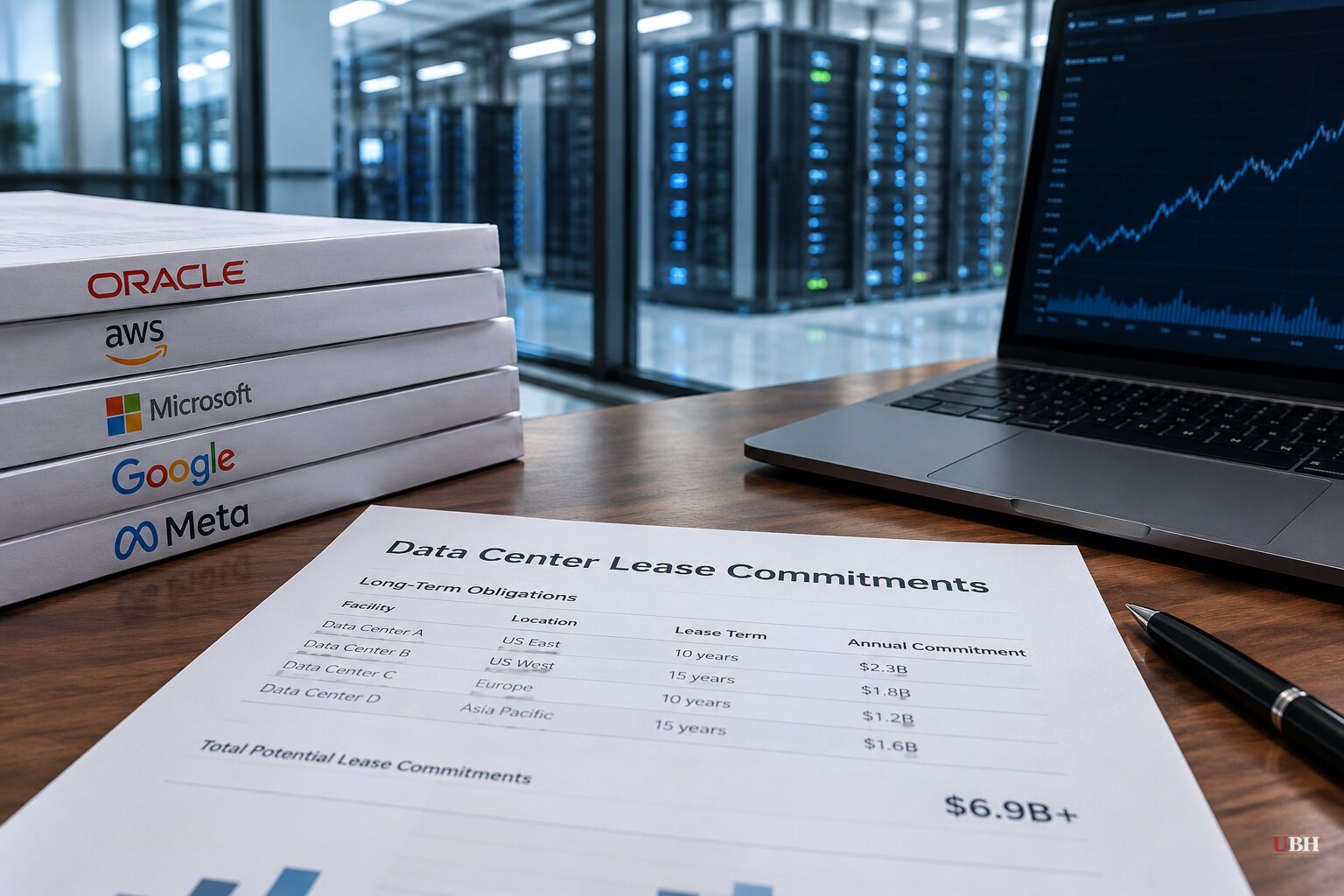
Michael Burry, the investor who shorted subprime mortgages before the 2008 crash, published a Substack analysis on Saturday, September 19, arguing that Oracle and four other hyperscalers are using accounting structures that hide the true scale of their AI infrastructure spending. The piece, titled "The Heretics Guide to AI's Stars Part IV: The Big 5 Hyperscalers & the Missing $3 Trillion," targets Amazon, Meta, Alphabet, Microsoft and Oracle.
Oracle is the centerpiece of the critique. According to Crypto Briefing's review of Burry's filing analysis, Oracle has disclosed $261 billion in off-balance-sheet data center lease commitments, obligations for facilities that aren't yet operational and aren't generating revenue. A widely-shared post from the account Michael Burry Stock Tracker on X, summarizing Burry's argument, put the figure at $288 billion in leases Oracle "hasn't even started paying for yet." The two numbers don't match, and neither source clarifies whether they're measuring the same thing, total lease commitments versus commitments not yet begun, so the exact size of the obligation Burry is pointing to is not fully pinned down.
Burry's broader argument, per the X summary, rests on five points: that hyperscaler CEOs certify these filings under legal oath; that the lease commitments dwarf what's on the balance sheet; that filings don't disclose how much "AI demand" is really one company buying from another company that in turn buys the first company's product; that Oracle's headline 121% cloud growth number doesn't break out how much of that is this kind of circular revenue; and that the five companies combined earned roughly $400 billion in profit last year, a fraction of what they've committed to spend. The tracker account was explicit that Burry "is not calling it fraud" but says "the truth isn't in the filings."
Oracle reported fiscal Q1 2027 earnings on September 10, posting cloud infrastructure revenue of $7.39 billion, up 121% year-over-year, and raised full-year revenue guidance to at least $90 billion. Oracle's stock declined following the report despite the raised guidance. In July 2026, S&P downgraded Oracle's credit rating to BBB-, one notch above junk, citing high leverage tied to the company's AI infrastructure investments, according to Crypto Briefing.
Burry has maintained short positions against Oracle, which gives him a direct financial stake in the stock falling. Per a portfolio breakdown reported by KuCoin, Burry's short book, more than 21% of his total portfolio, is concentrated in AI and semiconductor names including Oracle, Palantir, Nebius, Nvidia, the SOXX semiconductor ETF, Micron and CoreWeave. He's also holding Nvidia call options expiring in December 2026 alongside put options on Palantir and QQQ as hedges. On the long side, his biggest positions are Lululemon and MercadoLibre, at 17.4% and 12% of the portfolio respectively, plus Molina Healthcare, Temple & Webster, Zoetis, Adobe, PayPal and JD.com. He recently closed out shorts in Flutter, Tesla and Applied Materials, and KuCoin reported he's said he's willing to sit in cash heading into fall, anticipating a broader market shift.
Operating lease accounting under standard GAAP rules doesn't require these commitments to sit on the balance sheet as debt, and companies do disclose them in footnotes, which is exactly where Burry says he found the numbers. That's a case that this is standard, legal accounting practice that investors and analysts simply aren't reading closely, not concealment. Oracle's 121% cloud revenue growth and raised guidance also reflect real, reported demand, even if the composition of that demand isn't fully broken out. No SEC investigation, charge, or formal finding of any kind has been announced against Oracle over its disclosures. Burry's analysis is a bet and an argument, not a legal allegation, and he says so himself.
Separately, Oracle is also working through a $115 million class-action settlement over data privacy claims, unrelated to the lease-accounting dispute. According to the Epoch Times, payments to claimants are scheduled to begin going out on September 21, following a November 2024 final court approval, with each valid claimant expected to receive roughly $36.45. The suit alleged Oracle built unauthorized "digital dossiers" on hundreds of millions of people using products like ID Graph and Data Marketplace between 2018 and 2024. Oracle denied any wrongdoing as part of the settlement.
Oracle's next earnings report will show whether the 121% cloud growth rate holds and whether the disclosed lease obligations, whatever the true figure turns out to be, start showing up as cash outflows as data centers come online. Until then, the gap between Burry's math and Oracle's own numbers remains exactly that: a dispute over how to read the footnotes, not a settled fact.
Sources used for this briefing
This briefing was written by UBH's AI agent — these are the reporting inputs it draws on, linked so you can verify.


