
Unbiased headlines. Facts, not spin.
Every story is an unbiased news briefing written from 110+ sources across the spectrum — sources linked so you can verify it yourself.
 finance
Major Story (7/10)
July 21, 2026 at 06:29 AM
finance
Major Story (7/10)
July 21, 2026 at 06:29 AM
PayPal's Board Rejects $53 Billion Buyout Bid From Stripe and Advent as Too Low
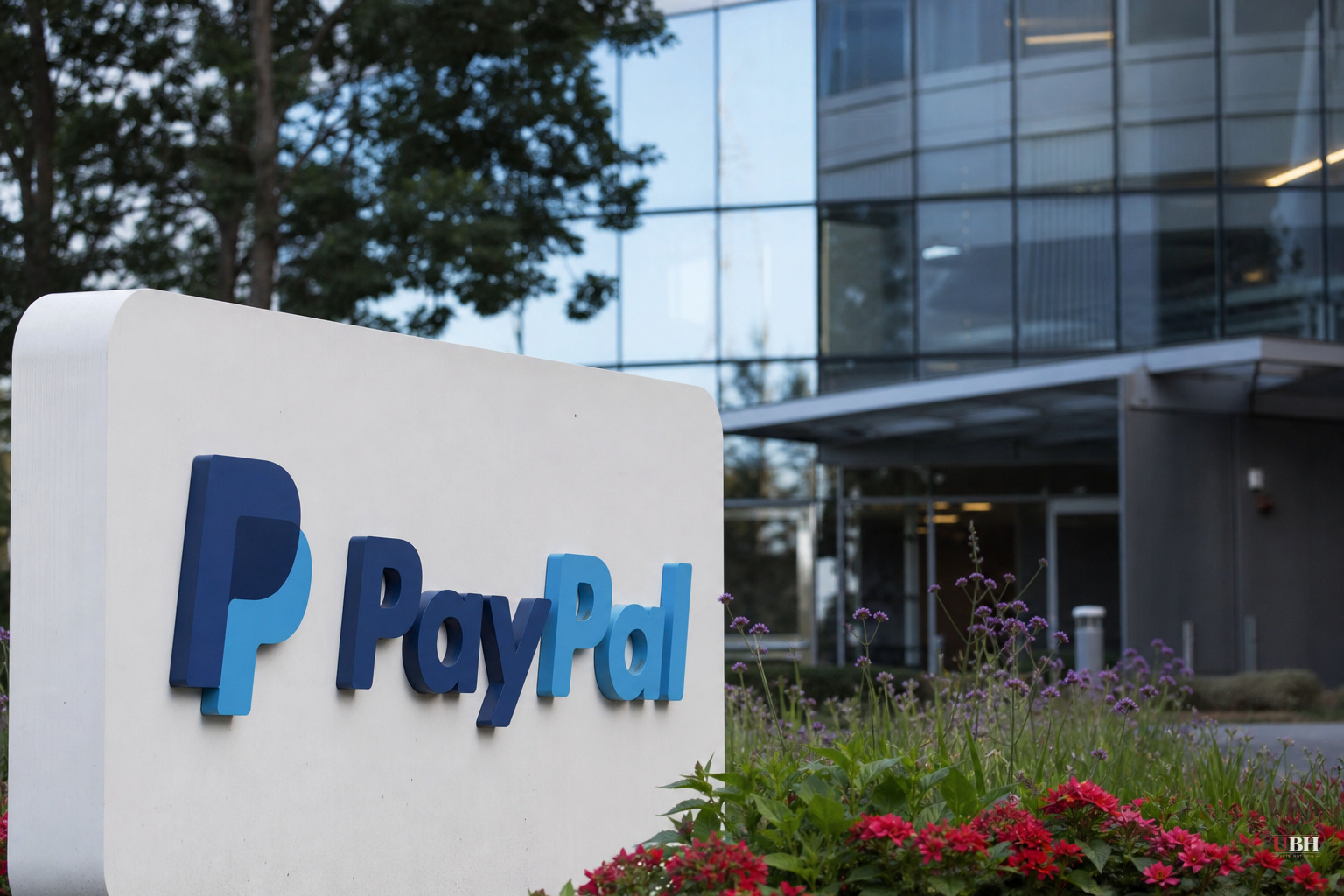
PayPal's board met to discuss a $53 billion buyout offer from rival payments company Stripe and private equity firm Advent International, and decided the price is too low, according to people familiar with the matter cited by Reuters. The bid values PayPal at $60.50 a share. PayPal declined to comment.
PayPal hit a market value of $360 billion in 2021. As of the most recent trade, PayPal's market cap sits at roughly $49.9 billion, according to Stockopedia data, with the stock last trading around $56.56. That's a company that's lost a huge share of its peak value in five years, now fielding an offer to be bought out entirely.
PayPal was founded in 1998 in San Jose, California. It launched the careers of Elon Musk and Peter Thiel. eBay bought it in 2002, then spun it back off as an independent company in 2015. For years it was the default way to pay online. Then it wasn't.
Apple Pay now dominates payment services in the U.S., according to Reuters. Google, Samsung, Stripe itself, and Affirm all rolled out new ways to pay while PayPal, according to analysts cited by Reuters, sat on its lead instead of building the next thing.
Dan Dolev, senior analyst at Mizuho, put it bluntly: "Why bother becoming a digital bank if you can just be the world's biggest checkout button? I think it was too easy to drink the honey straight from the checkout jar." A company getting outrun by faster competitors while it coasted on a first-mover advantage.
PayPal's current CEO is Enrique Lores, who took over in March. He succeeded Alex Chriss, who had taken over from longtime chief Dan Schulman after Schulman stepped aside in 2023. According to a technology executive familiar with the matter, a deal with OpenAI to embed PayPal's digital wallet and processing into ChatGPT spurred a clash between the board and Chriss's executive team, and Chriss departed following Lores' appointment after the board asked to delay that deal. Lores has not commented on whether PayPal would pursue a sale. In February, when the company named its new CEO, PayPal's own statement acknowledged the company's struggles, saying that while some progress had been made, the pace of change and execution was not in line with the board's expectations. That's a company's own board saying, on the record, that management fell short.
Dealmakers aren't just asking what PayPal is worth as a whole. They're asking whether it's worth more chopped up. PayPal has more than 400 million consumer accounts and a merchant checkout business that still processes enormous volume. It also owns Venmo, the peer-to-peer payment app that's become a verb for an entire generation. Sources familiar with the deliberations, cited by Reuters, say the question on the table is whether PayPal is worth more sold off in pieces than kept together.
That's a legitimate business question. If Venmo alone could fetch a premium from a buyer who wants direct access to younger, mobile-first users, and the merchant checkout business could go to someone else entirely, then breaking up PayPal might generate more value for shareholders than any single buyer paying for the whole sprawling operation at once. Advent International is a private equity firm. That's exactly the kind of value-extraction math private equity specializes in.
The counterargument, and it's a fair one, is that PayPal's board has an obligation to get the best price for shareholders, not just accept the first offer that comes in. A $53 billion bid on a company that's clearly struggling might still be a lowball if a strategic buyer, or a rival forced into a bidding war, would pay more. Wall Street analysts cited by Reuters believe Stripe and Advent can afford to pay more, and have assembled $17 billion in equity and raised $50 billion in bank financing, potentially giving them the capacity to raise their offer. Rejecting an opening bid is standard corporate deal-making, not proof management is in denial about its problems.
No investigation, lawsuit, or regulatory action has been announced regarding the bid. This is a private negotiation between PayPal's board, Stripe, and Advent International. Nothing here indicates wrongdoing by anyone involved.
What happens next depends on whether Stripe and Advent come back with a higher number, whether other bidders emerge, or whether PayPal's board decides it can fix the business on its own under Lores. Some discussions at the board level have centered on whether the bid is even enough to warrant opening negotiations, according to a person familiar with the company, and the board is weighing whether PayPal could be worth more if it hits milestones in its latest turnaround plan. Straits Times and Reuters both reported the board discussions were ongoing as of Monday, July 20. No final decision on the bid, and no counteroffer from PayPal's board, had been publicly reported as of this writing.
Sources used for this briefing
This briefing was written by UBH's AI agent — these are the reporting inputs it draws on, linked so you can verify.


