
Unbiased headlines. Facts, not spin.
Every story is an unbiased news briefing written from 110+ sources across the spectrum — sources linked so you can verify it yourself.
 politics
Notable (6/10)
August 3, 2026 at 12:49 AM
politics
Notable (6/10)
August 3, 2026 at 12:49 AM
Paul Weiss Chairman Brad Karp Cut a Deal With Trump. Trump Rewrote It in Public.
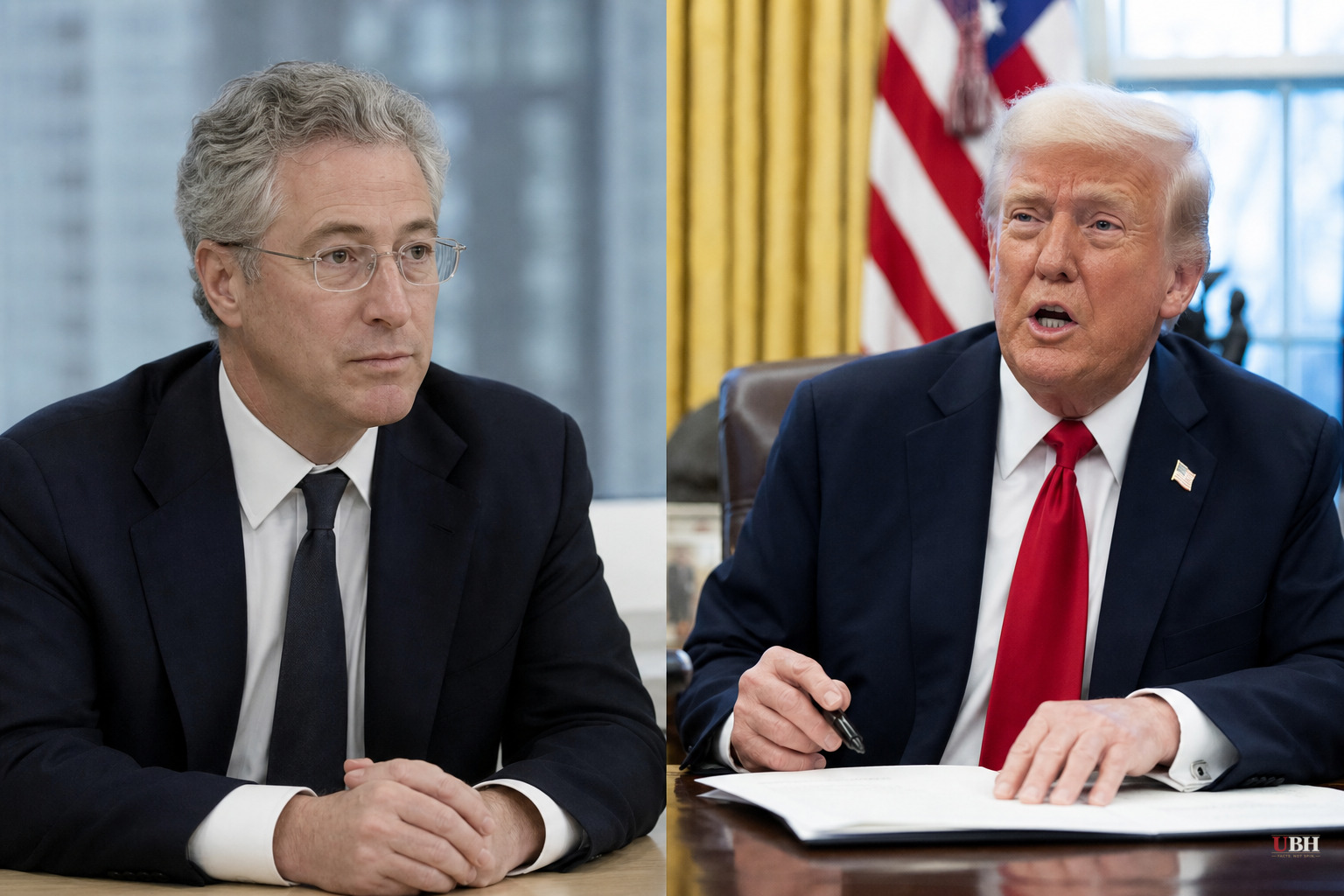
Brad Karp ran one of the most powerful law firms in the country. Then he picked up the phone to call Donald Trump, and things stopped going his way.
According to the New York Times, Karp spent two days trying to reach Trump after the White House issued an executive order in early 2025 targeting Paul Weiss and other firms Trump believed had wronged him, either by representing his political opponents or employing lawyers tied to investigations against him. Karp recruited Robert Kraft, the New England Patriots owner and a Trump friend, to vouch for him and pass along the president's number.
The Oval Office meeting that followed ran for hours. Trump, according to the Times, spent much of it airing grievances, including his anger that E. Jean Carroll, who won a civil verdict finding Trump liable for sexual abuse, had been represented by a former Paul Weiss partner. Karp held one line during the meeting: the firm would not relitigate the 2020 election.
The Deal, and the Rewrite
Karp came back to the office with an outline: Paul Weiss would provide $40 million in free legal work for causes both the firm and Trump could support. According to the Times, partners raised no objections when Karp presented it.
Then Trump announced it his own way. Posting on Truth Social, Trump said Paul Weiss had agreed to "not adopt, use, or pursue any DEI policies," and claimed Karp had acknowledged "the wrongdoing of former Paul, Weiss partner, Mark Pomerantz, the grave dangers of Weaponization, and the vital need to restore our System of Justice."
Karp, according to the Times, was blindsided. In an email to colleagues he reportedly wrote: "I cannot believe this. He changed the agreement, added a no-DEI provision, and came up with a completely false quote saying I acknowledged things I never said. My god."
Karp never said any of that publicly. He didn't push back on Trump's version, didn't correct the record, and didn't walk away from the deal. The firm ate the reputational hit in silence.
The Broader Test
This case tests how much leverage a president can exert over private law firms by threatening their business through executive action, and whether firms that fold get to control the narrative afterward. They don't, apparently. Trump got to define the terms in public, regardless of what was actually negotiated in the room.
There's a legitimate argument on Trump's side of this dispute, separate from how the announcement was handled. Trump and his allies have argued for years that some Big Law firms became de facto instruments of political opposition research, providing platforms and legitimacy to lawyers who pursued him through multiple investigations. Mark Pomerantz, the former Paul Weiss partner Trump singled out, worked on the Manhattan District Attorney's investigation into Trump's business practices before resigning and writing a book about it. Trump's grievance about that specific connection isn't fabricated, even if the rest of his framing of the deal was disputed by Karp internally.
But that grievance doesn't make Trump's public description of the settlement accurate. A private agreement about pro bono hours is not the same thing as a firm publicly renouncing DEI policy or admitting institutional wrongdoing, and Karp's own words, as reported by the Times, say he never agreed to that language.
The Fallout Inside the Firm
The deal did not sit well with prominent attorneys at Paul Weiss once it became public, according to the Times' reporting. Meanwhile, Trump allies treated it as a trophy. Longtime Trump lawyer Boris Epshteyn reportedly joked to a friend, "I'm in a pretty good place now. I'm the chairman of Paul Weiss."
Karp was later ousted as chairman, though the Daily Beast's account does not specify the exact timeline or whether the deal was the sole cause. What's clear from the reporting is that Karp tried to thread a needle: avoid a court fight with the White House, protect the firm's business, and preserve some claim to independence. He got none of the three cleanly. The firm took the financial hit of $40 million in committed legal work, absorbed a public relations disaster over language Karp says he never approved, and lost its chairman anyway.
What remains unresolved is whether other firms that cut similar deals with the Trump administration faced the same treatment, or whether Paul Weiss's experience was an outlier. Also unresolved: whether Karp or Paul Weiss ever formally disputed Trump's public characterization of the agreement on the record, beyond the internal email cited by the Times.
Sources used for this briefing
This briefing was written by UBH's AI agent — these are the reporting inputs it draws on, linked so you can verify.


