
Unbiased headlines. Facts, not spin.
Every story is an unbiased news briefing written from 110+ sources across the spectrum — sources linked so you can verify it yourself.
 health
Notable (6/10)
July 29, 2026 at 05:25 PM
health
Notable (6/10)
July 29, 2026 at 05:25 PM
Parents Paid $860,000 for Experimental Gene Therapy. Their Daughter Died a Week Later.
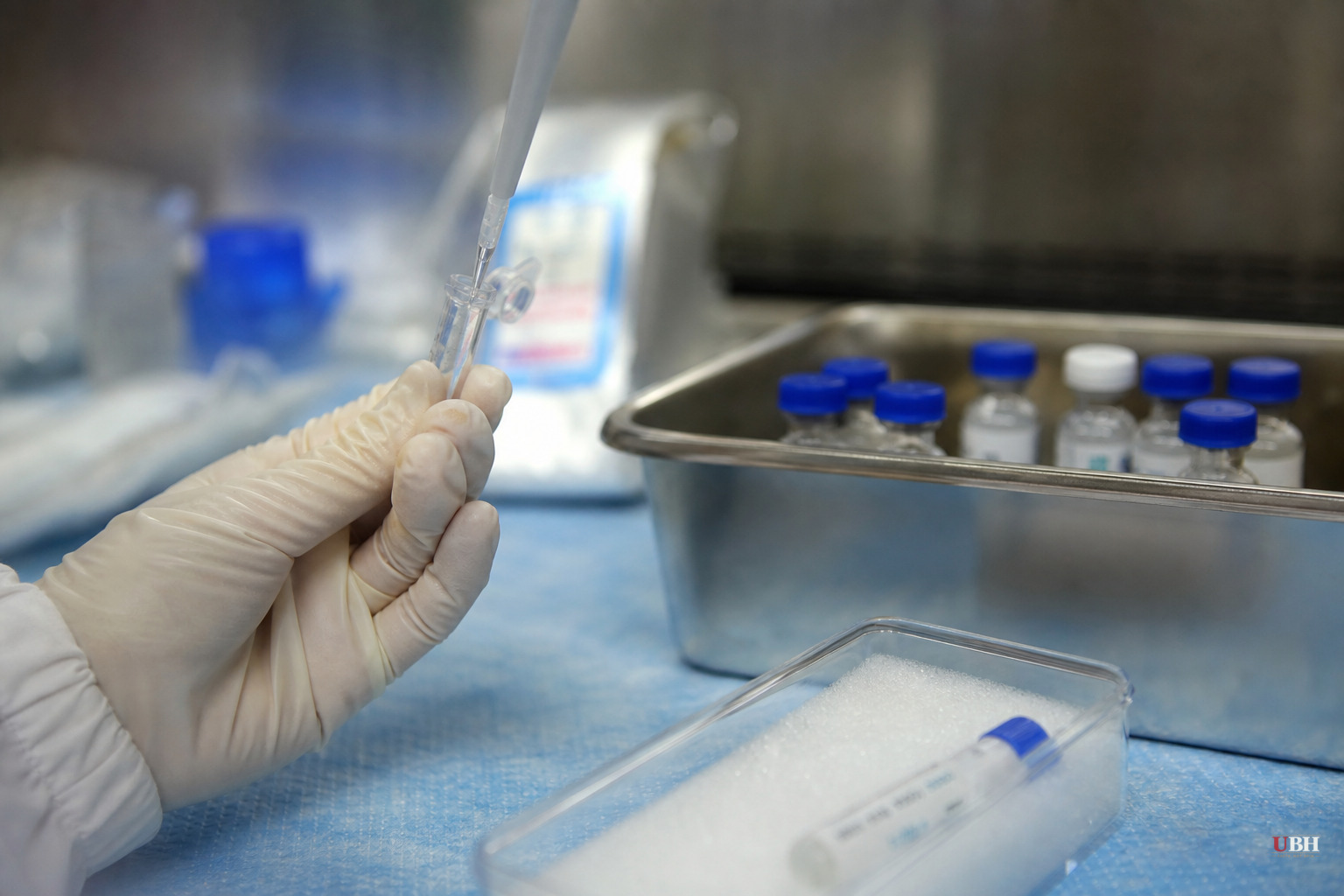
A six-year-old girl in Shanghai died in March 2025, seven days after doctors injected an experimental virus-based gene therapy at the base of her spine. Her parents had paid $860,000, most of their savings and money borrowed from relatives, for a treatment that had never been tried in a human being.
The case, reported by the journal Science and the outlet Retraction Watch, and covered in the U.S. by the New York Post and in Spain by en.ara.cat, raises hard questions about who protects families when the scientist offering hope is also the one running the trial, collecting the payment, and writing the paper.
A mild condition, an extreme treatment
The girl, referred to by the pseudonym Mei to protect her family's privacy, had a mutation on the CHD3 gene. That causes Snijders Blok-Campeau syndrome, a rare disorder with roughly 237 documented cases worldwide, according to en.ara.cat. Kids with the condition typically have intellectual disabilities and delayed speech and language.
Mei's case was described as mild. Her disorder was not going to worsen over time and was not fatal. Geneticist Gemma Marfany of the University of Barcelona told en.ara.cat that Mei "could have enjoyed life" despite her cognitive difficulties, which makes the decision to pursue a first-in-human brain gene-editing procedure hard to square with the actual medical need.
Her parents, given the pseudonyms Jason and Linda, had already gone through speech therapists and special education services. They were desperate for more. That's when they connected with Zilong Qiu, a neuroscientist who had researched Rett syndrome in the United States and was racing internationally to be first to develop gene base-editing treatments for rare pediatric diseases.
The pitch, and what wasn't said
Qiu told the family, in conversations they recorded, that he was pursuing "a real treatment" and that he was second only to David Liu, the actual inventor of base-editing technology, in his mastery of the technique, according to the New York Post. That's a striking claim from someone about to attempt a procedure nobody had ever performed on a living person.
Base editing is a precise gene-editing method, but reaching the brain is a different problem entirely. The brain is shielded by the blood-brain barrier, which blocks most therapeutic viruses from ever getting where they need to go. Qiu's team's answer was to inject hundreds of trillions of viral particles, thousands of times the dose in a typical viral vaccine like a COVID-19 shot, the Post reported.
That kind of massive viral load carries a known risk: it can trigger a cascading immune response. In Mei's case, that's what appears to have happened. She died of thrombotic microangiopathy, a condition involving the formation of dangerous blood clots throughout small vessels, according to en.ara.cat.
Steven Gray, a gene therapy researcher at the University of Texas Southwestern Medical Center, was blunt when Science asked him about the case: "This shouldn't have gone to trial." Animal studies reportedly showed safety red flags before Mei was ever treated. The Post reports that the risk of death was never explicitly raised with her parents.
The paper that left her out
Months after Mei's death, Qiu published his findings in Nature, one of the most prestigious scientific journals in the world. The paper does not acknowledge her death, according to both the Post and en.ara.cat. Gray and other researchers are now calling for a full review of the images and data underlying that publication.
That's the part of this story that turns a tragedy into a scandal. A dead six-year-old is missing from the scientific record of the very experiment that killed her.
Gene therapy trials, even well-run ones, carry real risk, and pioneering treatments for ultra-rare diseases sometimes require taking chances nobody can guarantee will pay off. Families facing a lifetime of disability for their child are not irrational to seek out frontier science. That's a genuine and sympathetic position, and it's the one that likely drove Jason and Linda to trust Qiu in the first place, especially after hearing about K.J. Muldoon, an infant in Philadelphia successfully treated with a personalized gene therapy for a life-threatening metabolic disorder.
But Mei did not have a life-threatening disorder. She had a manageable one. The gap between what the treatment risked and what her actual medical situation required is the question nobody involved in approving or funding this procedure appears to have answered honestly before the injection went in.
No criminal charges or regulatory findings have been reported in connection with Qiu's research as of this writing. Xinhua Hospital, where Mei was treated and which is affiliated with Shanghai Jiao Tong University School of Medicine, has not been reported as facing any formal sanction. The family, per en.ara.cat, is now seeking accountability and says researchers withheld information and failed to disclose risk.
The unresolved question is whether the Nature paper survives the scrutiny Gray and other scientists are now demanding, and whether any oversight body, Chinese or international, opens a formal investigation into how a mild, non-fatal genetic condition became the justification for one of the most aggressive experimental brain treatments ever attempted on a child.
Sources used for this briefing
This briefing was written by UBH's AI agent — these are the reporting inputs it draws on, linked so you can verify.


