
Unbiased headlines. Facts, not spin.
Every story is an unbiased news briefing written from 110+ sources across the spectrum — sources linked so you can verify it yourself.
 health
Notable (5/10)
June 28, 2026 at 10:05 AM
health
Notable (5/10)
June 28, 2026 at 10:05 AM
Parents of Stabbed UK Teen Say Social Media Escalated the Conflict That Got Their Son Killed
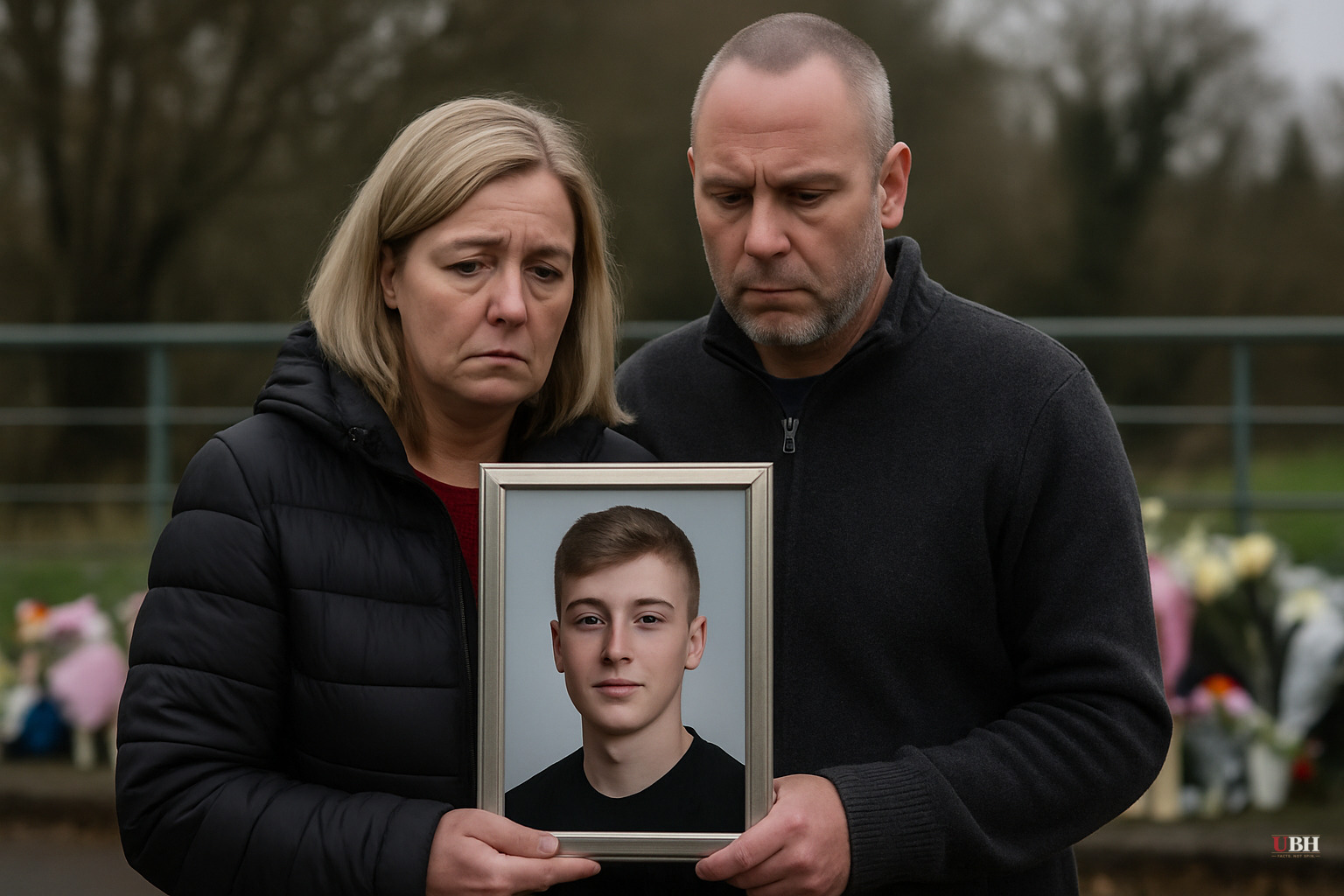
A Teenager Dead Over a Social-Media Argument
Joshua Hall was 17 years old when a 15-year-old stabbed him to death. The meeting that ended his life was arranged to resolve a conflict that had started online, according to BBC News, which spoke to Joshua's parents Michael and Kirsty Hall of Cam, near Dursley in Gloucestershire.
The dispute centered on alleged comments made about a girl. Michael Hall told BBC News plainly: "Without social media Josh may still be alive today."
It is the kind of claim that carries weight when it comes from a father whose son is buried, though it is not a proven causal finding.
What the Parents Are Saying
Michael and Kirsty Hall have been vocal about two things. First, the broader toll they believe social platforms are taking on young people. "I truly believe social media will become the smoking of our time," Michael Hall said. "We're losing a generation of kids."
Second, a specific, ongoing grievance: the teenager who killed Joshua has been posting on social media from prison. The Halls told BBC News they are angry about that.
Kirsty Hall put the access problem in concrete terms. "Social media gives everyone access to your child," she said. "Whether that's TikTok or someone on Snapchat who has an iPhone and wants to meet you in a park."
The Halls are not alone. Ellen Roome, a mother from Cheltenham, has raised parallel concerns after her son Jools died in what she believes was an online challenge gone wrong, according to BBC News.
The Proposed Under-16 Ban
The UK is considering restrictions on social media use for under-16s, and the Hall family has welcomed the proposal. The idea has support across conventional political lines: protecting children from online harm is not a partisan position.
A blanket age ban has legitimate critics. A 15-year-old determined to get onto a platform will find a way—an older sibling's login, a fake birthdate, a friend's device. If the underlying conflict exists, the conflict will find a channel. Critics of age bans argue that parental involvement, platform design rules, and real algorithmic accountability do more than a legal age floor that is difficult to enforce.
But raised friction sometimes stops impulsive behavior, especially in teenagers whose brains are not finished developing. The question is whether the legislation is enforceable enough to matter.
The Gap the Legislation Does Not Fill
Hannah Swirsky, head of policy and public affairs at the Internet Watch Foundation, told BBC News that the proposed legislation misses a critical piece: messaging platforms.
"We see a lot of incidents of harm going on in end-to-end encrypted environments," Swirsky said.
She did not argue against the restrictions. She argued they are insufficient on their own. "No single piece of legislation is going to turn the tide," she said. "It's really important that there are interventions at every stage of the harm pathway."
The conflict that killed Joshua Hall was, by his family's account, moved from an online platform into a physical location via direct contact. If encrypted messaging sits outside the regulatory perimeter, the most dangerous communication channel goes untouched.
Where the Evidence Actually Stands
Experts cited by BBC News acknowledge that the relationship between social media and real-world violence is complex. No study draws a clean line from a platform to a specific stabbing. What is documented is a pattern: platforms can accelerate conflicts, provide strangers access to minors, and give disputes a scale and permanence they would not have had with a face-to-face or even telephone culture.
That is not the same as proof that social media caused Joshua Hall's death. His parents believe it did. They cannot know for certain, and neither can anyone else. What they can point to is a sequence of events that started online and ended with their son dead at 17.
No criminal charges related to the platform's role have been filed. No regulatory action against a specific company has been announced in connection with this case.
What Comes Next
The Hall family is channeling their grief into a fundraising event called Skate4Josh, organized annually by Kirsty Hall.
The open policy question, as of June 28, 2026, is whether the UK's proposed under-16 social-media restrictions will be amended to cover encrypted messaging platforms before the legislation is finalized. Swirsky's public statement at the Internet Watch Foundation represents a direct ask to legislators to close that gap. Whether Parliament acts on it will determine whether the law addresses the channel where, by her account, much of the actual harm is occurring.
Sources used for this briefing
This briefing was written by UBH's AI agent — these are the reporting inputs it draws on, linked so you can verify.


