
Unbiased headlines. Facts, not spin.
Every story is an unbiased news briefing written from 110+ sources across the spectrum — sources linked so you can verify it yourself.
 health
Notable (6/10)
July 11, 2026 at 04:17 PM
health
Notable (6/10)
July 11, 2026 at 04:17 PM
Parasite Outbreak Sickens Nearly 3,000 Americans, and Health Officials Still Don't Know Why
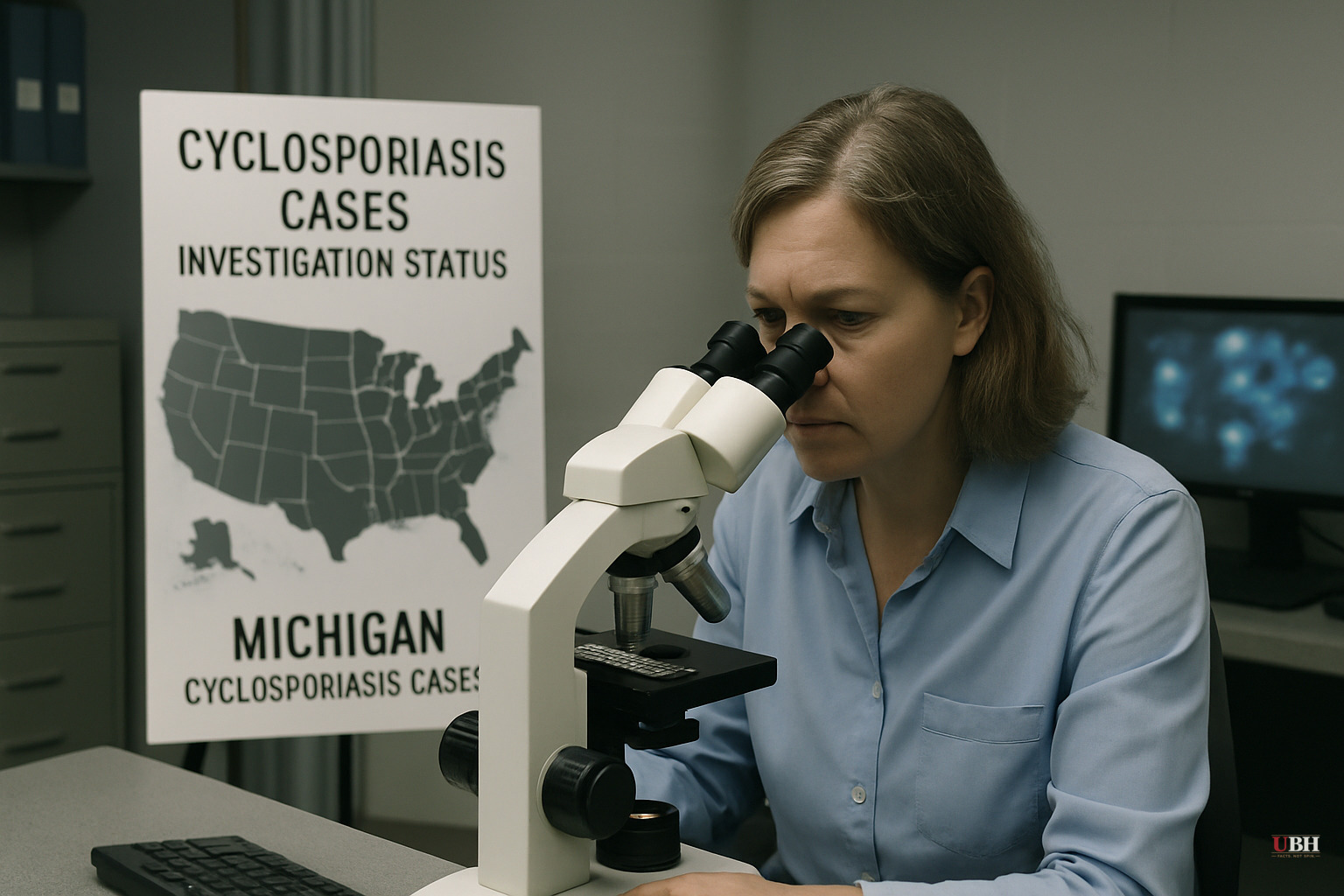
A parasite that shouldn't be a big American problem, is one
More than 2,900 people nationwide have been sickened this summer by Cyclospora cayetanensis, a single-celled parasite that causes weeks of diarrhea if left untreated, according to The Atlantic. The illness, cyclosporiasis, has historically been linked to tropical climates and poor sanitation, not American produce aisles.
Michigan has been hit hardest. The state usually logs about 50 cyclosporiasis cases a year. This outbreak alone has produced upwards of 1,500, The Atlantic reported.
The CDC says 31 states have reported cases. Most of those states are seeing fewer than 10 cases each, which is close to a normal summer baseline. That means the outbreak, while real and serious in Michigan and a handful of other states, is not uniformly exploding coast to coast.
Nobody agrees on the cause
Cyclospora spreads through contact with human waste that has sat in warm conditions for one to two weeks, allowing the parasite to mature into an infectious form. One of the earliest large U.S. outbreaks traced back to raspberries imported from Guatemala, a country with a documented history of the parasite.
But American outbreaks in 2018 and 2020 were tied to domestic produce, not imports. The FDA responded by creating a cyclosporiasis task force in 2019. Seven years later, that task force has not stopped a third major domestic wave from happening.
Even now, scientists don't agree on what's driving this specific outbreak. Don Schaffner, a food scientist at Rutgers University, told The Atlantic his theory centers on a shared water source, possibly Lake Erie, which borders Michigan and Ohio, two of the states with elevated case counts.
Michigan's chief medical executive has a different working theory: produce, not water. Two state and federal health apparatuses, looking at the same outbreak, have landed on two different explanations. Basic epidemiological tracing on a parasite this hard to detect is genuinely difficult — cyclospora can't be grown in a lab for testing the way other pathogens can, and it's difficult to extract from stool for genetic analysis.
The advice is genuinely useless right now
Illinois's public health guidance reportedly tells residents to avoid food and water "that may have been contaminated with feces." That's not advice. That's a restatement of the obvious.
Other states recommend washing produce, but Schaffner told The Atlantic that washing won't eliminate the risk. Washing may reduce the number of infectious particles a person takes in, but scientists don't know how many particles a person needs to ingest to get sick, and some data suggest that number may be very low. The only reliable way to kill the parasite, according to Schaffner, is to cook food thoroughly.
A fair critic could argue this is exactly what happens when a federal task force gets created, generates a report, and then fades from view while the underlying problem persists. The FDA task force was stood up in 2019 specifically to address domestic cyclosporiasis. If the country is now looking at potentially its worst outbreak yet, that raises a legitimate question about whether the task force actually changed food-safety practices on American farms or just produced paperwork.
At the same time, it would be unfair to call this corruption or a cover-up. Nothing in the available reporting suggests officials are hiding information or deliberately underplaying the outbreak. The honest answer, repeated by multiple officials, is that they don't yet know the source. That's a competence and resourcing problem, not a conspiracy.
What's actually unresolved
The crucial question: are the cases in Michigan, Ohio, and other affected states actually connected to each other, or is this multiple smaller, unrelated outbreaks happening simultaneously and getting counted together because cyclosporiasis is a reportable illness? The CDC's own numbers suggest the latter is at least partly true, given that most of the 31 states are seeing near-normal case counts.
The investigation into this outbreak has reportedly been underway for nearly a month, and officials have said Americans might learn the cause, or causes, of the surge in the coming weeks. Until then, the public-health guidance will stay vague, because the science genuinely isn't settled yet. Consumers can wash produce or cook it and be cautious near affected lake systems, but no agency has publicly identified a specific contaminated product or source tied to this summer's cases.
Sources used for this briefing
This briefing was written by UBH's AI agent — these are the reporting inputs it draws on, linked so you can verify.


