
Unbiased headlines. Facts, not spin.
Unbiased Headlines is an independently owned news organization. We bring you the facts, not opinions, written fresh from 110+ named sources. Sources linked so you can verify it yourself.
 health
Notable (6/10)
Event date: October 23, 2026 ·
Pancreatic Cancer Vaccine Triggers Immune Response in 98.9% of Evaluable Patients but Misses Main Survival Goal
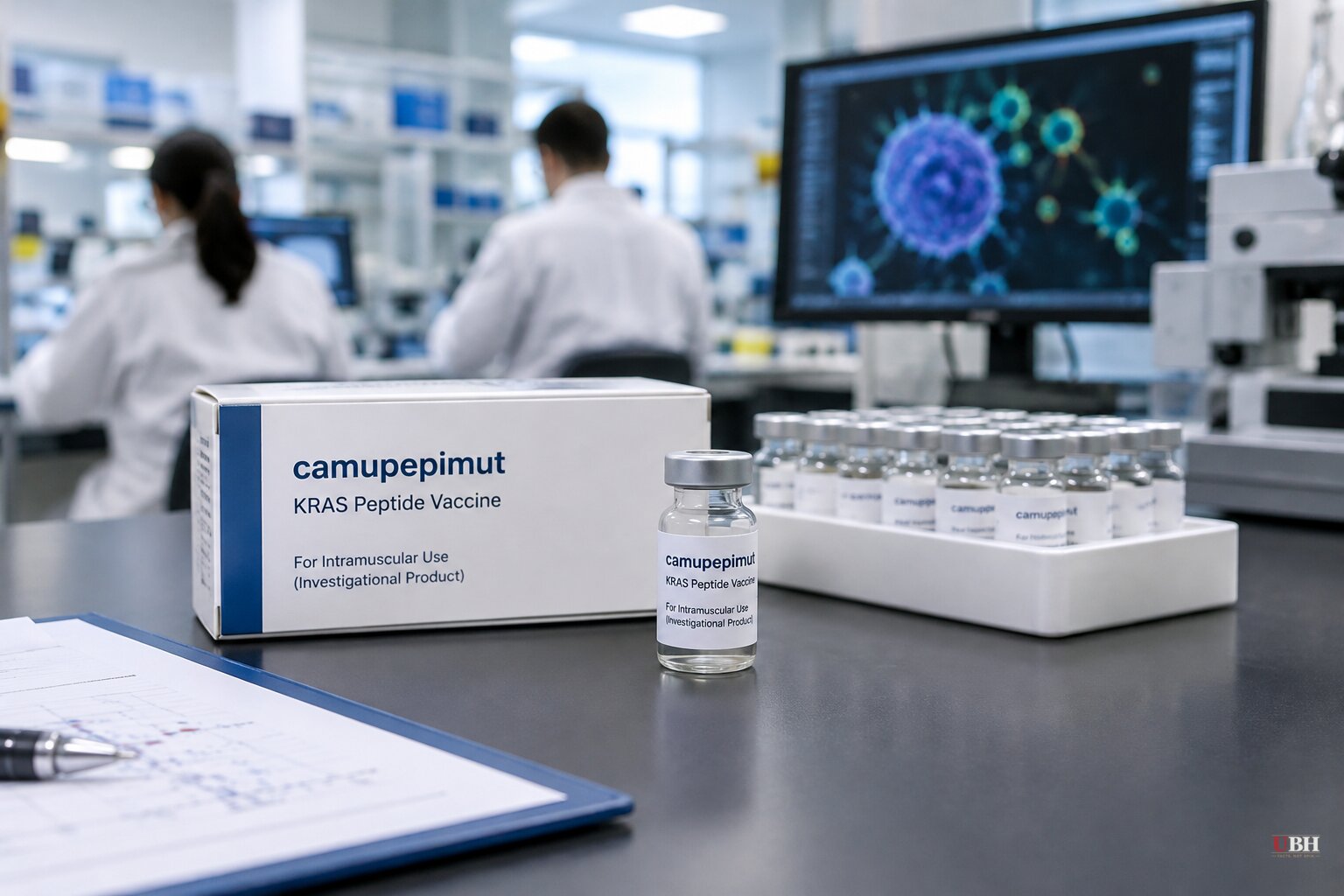
A vaccine aimed at the gene mutation behind most pancreatic cancers got the immune system to respond in almost every patient tested. It did not do what the trial was built to show: keep the cancer away longer across the full study group.
The randomized phase 2 results, published in Nature Medicine and announced by Mayo Clinic on Oct. 23, 2026, were also presented at the ESMO Congress 2026. The trial is called AMPLIFY-7P.
What the trial tested
The vaccine is camupepimut. It targets seven of the most common mutations in the KRAS gene, which turns up in about 90% of pancreatic ductal adenocarcinomas, the most common form of the disease.
It is designed to travel to the lymph nodes, where many immune responses begin, and train T cells to find cancer cells carrying mutated KRAS. Unlike some cancer vaccines built for one patient at a time, this one is "off the shelf." It is meant for anyone whose tumor has one of the targeted mutations.
The trial enrolled 144 patients with stage 1-3 KRAS-mutated pancreatic cancer. All had finished surgery and chemotherapy, started within six months of that standard curative-intent treatment, and showed no visible cancer on imaging. Researchers randomly assigned 96 to the vaccine and 48 to observation.
The immune numbers
Of the 90 vaccinated patients who could be assessed, 98.9% developed increased T-cell responses against mutated KRAS. In more than 80% of patients, the response was more than nine times greater than before vaccination.
"We've shown that we can teach the immune system to recognize these KRAS mutations," said lead author Ben George, a Mayo Clinic medical oncologist. "The next step is finding out whether doing that can change the course of the disease for patients."
The 98.9% figure covers the evaluable patients, not all 96 who were vaccinated.
The survival result
The trial missed its primary endpoint. Median disease-free survival was 23.8 months with the vaccine and 21.2 months in the observation group. The difference was not statistically significant.
The researchers did report two prespecified subgroup findings. Patients whose circulating tumor DNA was negative, and those who had no prior radiation treatment, showed a significant disease-free survival benefit in the vaccine arm. Subgroup results from a trial that missed its main goal are a lead for the next study, not proof that the vaccine works.
George also described an exploratory analysis in which patients with greater immune responses "appeared protected with longer disease-free survival times." The authors call the data a proof-of-concept for potential clinical benefit. They have not claimed that it prevents recurrence. Mayo said the findings will help researchers design a larger phase 3 trial.
Why recurrence is the target
Pancreatic cancer comes back often, even after surgery and chemotherapy. Some estimates put recurrence at up to 80% of patients. Immunotherapies that work in other cancers have largely failed against this one, which is why a strong, measurable immune response counts as progress.
It is not a cure, and the trial does not show one.
A busy year for KRAS
The vaccine is one of several KRAS-focused efforts this year. In August 2026, the FDA approved daraxonrasib (Rasonque), a KRAS inhibitor, for metastatic pancreatic cancer. The approval followed a large trial in which the drug helped patients live much longer than those on the long-standing standard treatment, according to Stand Up To Cancer.
In July 2026, a team led by Neeha Zaidi of the Johns Hopkins School of Medicine reported results in Cancer Discovery from a different KRAS peptide vaccine. That trial enrolled 20 people with an inherited risk of pancreatic cancer and a precancerous abnormality. The vaccine targets six mutated KRAS proteins. The participants reported only minor side effects, nearly all had a strong and lasting immune response, and none developed pancreatic cancer over the following 16 months. It was a small study with no results yet on long-term prevention.
The Hopkins group has launched another small trial in people who have had surgery to remove pancreatic cysts that could progress to tumors.
What comes next
The phase 3 design is the key open item. Mayo has not said when a larger trial will begin or how it will be structured. The ctDNA-negative and no-prior-radiation subgroups are the obvious candidates for a narrower, more tightly defined study. The test is whether a vaccine that reliably moves the T-cell numbers can also move the survival curve.
Sources used for this briefing
6 links from 6 independent newsrooms (syndicated copies of the same report count once)
These are the sources it draws on, linked so you can verify.


