
Unbiased headlines. Facts, not spin.
Every story is an unbiased news briefing written from 110+ sources across the spectrum — sources linked so you can verify it yourself.
 finance
Notable (6/10)
August 4, 2026 at 12:28 AM
finance
Notable (6/10)
August 4, 2026 at 12:28 AM
Palantir Stock Jumps 12% After Q2 Revenue Grows 93% and U.S. Commercial Sales Nearly Triple
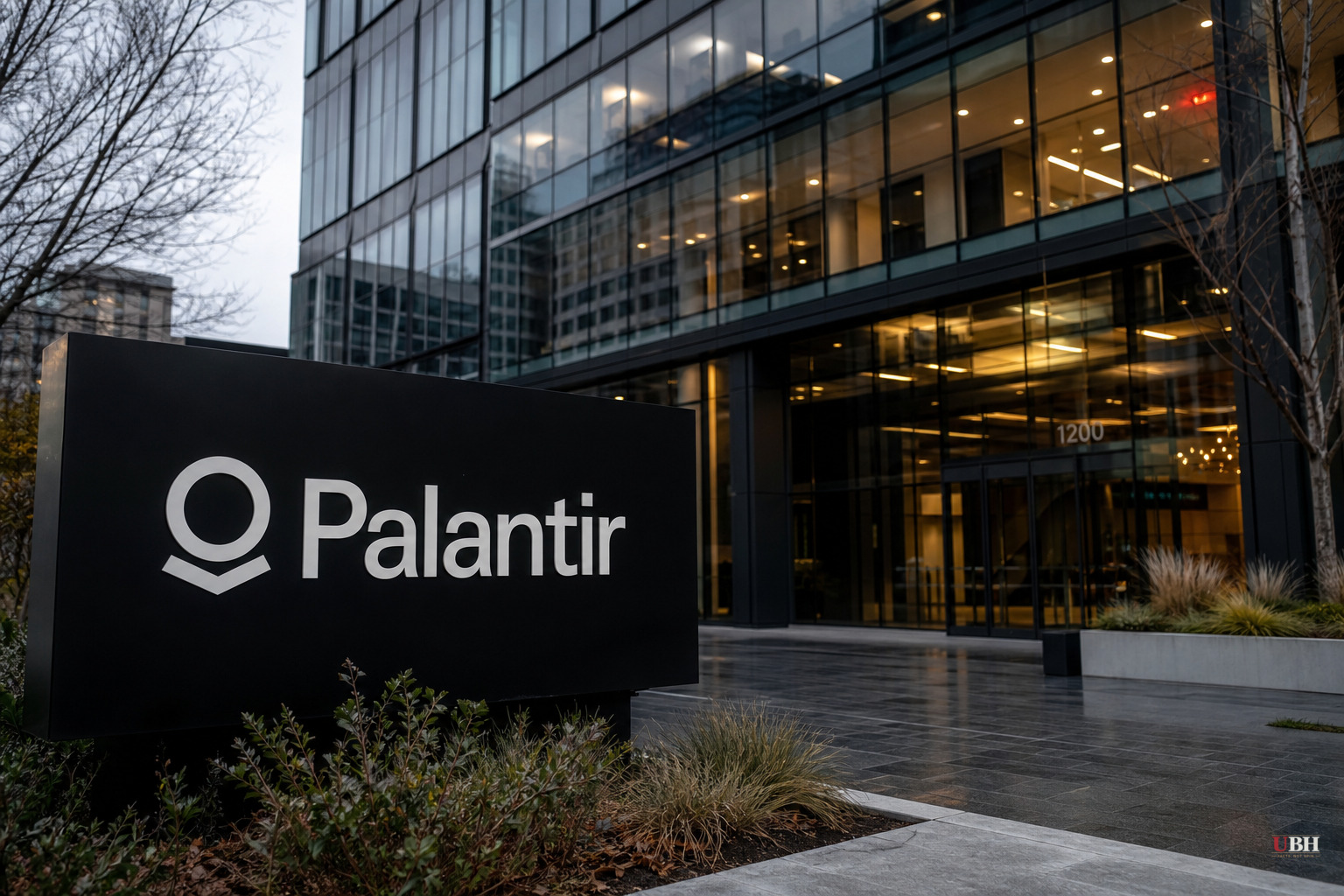
Palantir Technologies reported second-quarter results Monday that blew past Wall Street estimates on every major line, and the stock moved fast because of it.
Revenue hit $1.94 billion, up 93% from about $1 billion a year ago, according to CNBC. That beat the LSEG consensus estimate of roughly $1.80 billion to $1.81 billion cited by both CNBC and Stocktwits. Net income came in at $1.07 billion, or 41 cents per share, versus $329 million, or 13 cents per share, in the same quarter last year. Adjusted earnings of 41 cents per share beat the 35-cent estimate analysts had penciled in, according to ground.news.
The stock surged in after-hours trading, up 12% according to CNBC and as much as 13% to $142 according to ground.news. Seeking Alpha's Jonathan Weber called it Palantir's "fifth consecutive double beat," with EPS coming in 17% above consensus, and upgraded the stock to Buy in a note published Monday.
Commercial growth is the headline number
U.S. commercial revenue, meaning sales to private businesses rather than government agencies, jumped 149% year-over-year to $764 million. Total U.S. revenue, combining government and commercial, rose 115% to $1.57 billion, according to Stocktwits. U.S. commercial business now makes up close to 48% of Palantir's total revenue, up from a much smaller share in prior years.
Palantir's remaining U.S. commercial deal value, essentially contracts signed but not yet fully recognized as revenue, more than doubled from a year ago to $6.24 billion, per CNBC. The company closed 220 transactions worth over $1 million during the quarter, including a record $2.132 billion in U.S. commercial total contract value, according to Stocktwits.
Operating margin expanded to 62%, up roughly 1,600 basis points from a year earlier, Weber noted in his Seeking Alpha analysis. He called it evidence of real operating leverage rather than just top-line growth funded by spending.
Government business still growing, just slower
U.S. government revenue, Palantir's original bread-and-butter business built on Pentagon and intelligence-community contracts, grew 90% year-over-year to $809 million. Ground.news noted Palantir continues work with Anduril on the Golden Dome missile-defense initiative championed by President Donald Trump. That government growth rate, while still strong, trails the commercial segment's near-150% pace, underscoring how much of Palantir's recent acceleration is coming from private-sector adoption of its Foundry and Artificial Intelligence Platform tools rather than new federal spending.
Guidance raised, again
Palantir lifted full-year 2026 revenue guidance to between $8.15 billion and $8.16 billion, up from prior guidance of $7.65 billion to $7.66 billion, according to CNBC. The company also raised its U.S. commercial revenue target for 2026 to "in excess of" $3.42 billion, up from a prior $3.22 billion projection. Ground.news reported Palantir expects third-quarter revenue of roughly $2.164 billion.
CEO Alex Karp did not hold back in his interview with CNBC's Seema Mody. "Forget consensus," Karp said. "To my knowledge, no businesses at our scale has even grown half this much." He told CNBC the growth rate "looks like this is going to go on for at least another 18 months."
That is a bold, specific, and testable claim from a CEO with every incentive to sound bullish. Karp has a track record of blunt public commentary, and investors have generally rewarded it so far given five straight quarters of beats, per Seeking Alpha. An 18-month growth forecast from company leadership is guidance, not a guarantee, and Palantir shares had lost 29% of their value earlier this year on broader concerns that AI software spending could be cooling, according to CNBC.
The skeptic's case, stated fairly
The strongest case against chasing this rally is straightforward: Palantir trades at a steep valuation relative to most software peers, and a single blowout quarter does not resolve the underlying worry that drove the stock down 29% earlier in the year. That worry is that enterprise AI spending growth could decelerate once early adopters finish their initial rollout cycles. Weber's own Seeking Alpha upgrade acknowledges the valuation remains a live debate even after this quarter's numbers, framing his Buy call as a long-term entry point rather than a claim the stock is cheap.
Karp also used the earnings call to push a policy argument: that the U.S. needs open-weight AI models to compete with China's, and that overreliance on a handful of frontier-model labs is a competitive risk. He and Palantir joined other tech companies last month in a letter urging the federal government not to restrict open-weight models, according to CNBC. That is a substantive regulatory fight worth watching independent of Monday's earnings beat, since restrictions on open-weight AI development could directly affect Palantir's product strategy going forward.
The next test comes when Palantir reports third-quarter results against its own guidance of about $2.164 billion in revenue. Whether U.S. commercial growth holds anywhere near 149% or begins cooling toward more typical enterprise-software rates will tell investors whether Karp's 18-month call was accurate or just good salesmanship on an earnings call.
Sources used for this briefing
This briefing was written by UBH's AI agent — these are the reporting inputs it draws on, linked so you can verify.


