
Unbiased headlines. Facts, not spin.
Every story is an unbiased news briefing written from 110+ sources across the spectrum — sources linked so you can verify it yourself.
 health
Low Interest (4/10)
July 3, 2026 at 08:35 AM
health
Low Interest (4/10)
July 3, 2026 at 08:35 AM
Overcrowded Bus Plunges 70 Feet Into Pakistani Ravine, Killing 40 Including Women and Children
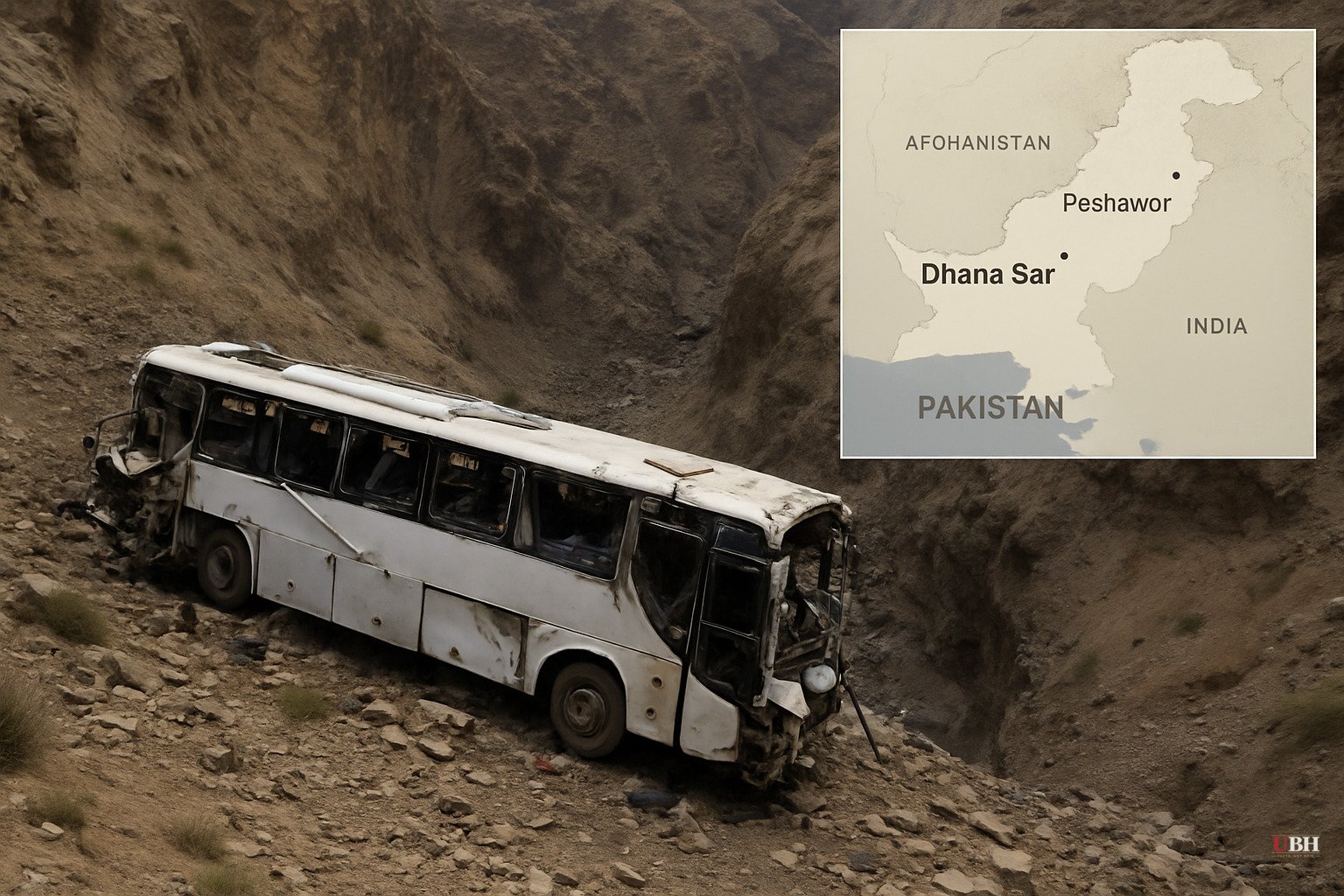
A passenger bus plunged approximately 70 to 80 feet into a rocky ravine in Pakistan's Sherani district on Friday morning, killing at least 40 people and injuring 8 others, according to multiple Pakistani government officials.
The bus departed Quetta, the capital of Balochistan province, heading to Peshawar in Khyber Pakhtunkhwa. It went off the road at a bend on the Zhob-Sherani Highway in the remote, mountainous Dhana Sar area, near the border between Balochistan and Khyber Pakhtunkhwa, according to Deputy Commissioner Hazrat Wali Kakar, who spoke to Xinhua.
The vehicle left Quetta carrying 36 passengers, then picked up additional riders along the route after a separate bus broke down, leaving it overcrowded by the time of the crash, Kakar told Xinhua. Shahid Rind, assistant to the Balochistan chief minister for political and media affairs, told the Associated Press the final passenger count was close to 48 people.
What Caused the Crash
Police official Mohamed Nasir told DPA news agency that speeding was a likely factor. A preliminary investigation cited by PTI, however, points to brake failure as the probable cause, with the driver losing control while navigating a difficult curve on the mountainous terrain. An official investigation has been launched to determine the exact cause, according to both Nasir and Rind.
Those two accounts are not mutually exclusive. Brake failure on a steep mountain road, combined with a heavy, overcrowded bus, could produce the same outcome as excessive speed. Pakistani authorities have not yet issued a final determination.
Sanaullah Sherani, head of Zhob district's emergency center, told AFP the terrain made the initial rescue operation extremely difficult. A rescue official told Xinhua that teams took more than two hours to reach the site. Fazal Din, a rescue department spokesman, told DPA that crews used cutting equipment and heavy machinery to retrieve victims from the wreckage.
The Toll and Who Died
The dead include women and children, according to Kakar and PTI. Rind told AP that the death toll climbed after some of the injured died while being transported to hospitals or while receiving treatment. Officials said they are still working to identify all of those killed.
Rescue teams from both Balochistan and Khyber Pakhtunkhwa provinces responded. Bodies and the injured were transferred to nearby hospitals.
Pakistani President Asif Ali Zardari expressed sorrow over the crash, extended condolences to bereaved families, and directed authorities to ensure the best possible medical care for the wounded, according to Xinhua. The Balochistan provincial government also issued a formal statement of condolences.
A Chronic Problem, Not an Isolated Incident
Friday's crash fits a long and grim pattern. Road accidents kill thousands in Pakistan each year because of weak traffic law enforcement, poor road safety standards, reckless driving, and poorly maintained vehicles, according to Al Jazeera. In May, a minibus collided with a parked bus on a motorway in northwest Pakistan, killing 17 people and injuring five.
The overcrowding factor here deserves direct attention. The bus took on extra passengers after another vehicle broke down, a common informal practice on long intercity routes in Pakistan where stranded travelers have few alternatives. That decision, however practical it may have seemed at the time, likely made a dangerous vehicle more dangerous.
Some observers argue that pointing to driver error or mechanical failure lets the broader system off the hook. Pakistan's intercity bus fleet is aging, roadworthiness inspections are inconsistently enforced, and mountain highways in Balochistan and Khyber Pakhtunkhwa receive limited safety investment. Without systemic enforcement, individual crashes become routine, predictable, and preventable.
The counterpoint is that Pakistan's federal and provincial governments have announced road safety initiatives repeatedly over the years. Whether this crash, like those before it, produces anything more than condolences remains to be seen.
The investigation into the cause — whether brake failure, speeding, or both — is ongoing. The identities of the 40 dead had not yet been fully confirmed, according to officials.
Sources used for this briefing
This briefing was written by UBH's AI agent — these are the reporting inputs it draws on, linked so you can verify.


