
Unbiased headlines. Facts, not spin.
Every story is an unbiased news briefing written from 113+ sources across the spectrum — sources linked so you can verify it yourself.
 finance
Notable (6/10)
September 30, 2026 at 05:36 AM
finance
Notable (6/10)
September 30, 2026 at 05:36 AM
Oura Pulls $2.1 Billion IPO Hours Before Pricing, Cites 'Uncertainty' as Lawsuit and Warranty Costs Surface
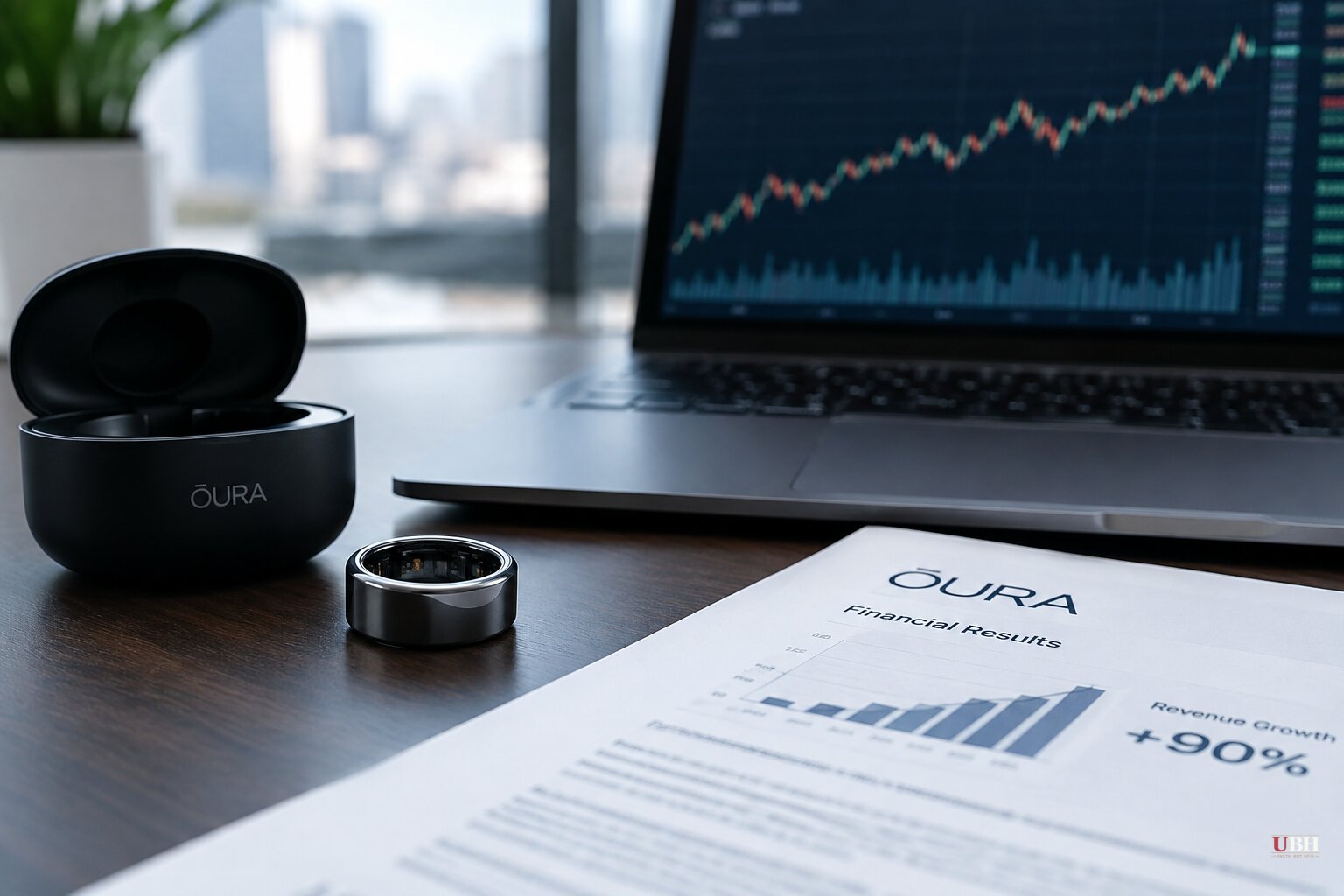
Oura's initial public offering was supposed to price Tuesday night and start trading on the Nasdaq under the ticker OURA on Wednesday, September 30. Instead, hours before pricing, the Finnish smart ring maker pulled the deal entirely, according to the company's own Tuesday statement and reporting from The Guardian, Endpoints News, and Dealroom. The registration statement was never declared effective. No shares changed hands.
CEO Tom Hale framed the retreat as a matter of choice, not weakness. "Our mission is to empower people to live healthier, longer, and an IPO is just one step in our journey," Hale said in the statement, quoted by both The Epoch Times and Dealroom. "We aim to deliver an extraordinary IPO for our employees and investors, and we have the luxury of choosing our moment."
The Numbers Behind the Pause
Oura launched its roadshow on September 21, marketing 50 million shares priced between $40 and $44, seeking to raise as much as $2.2 billion, according to Tech Times. At the midpoint of that range, Tech Times put the company's fully diluted market capitalization near $14.9 billion; The Guardian, using a non-diluted calculation, put the midpoint valuation closer to $13.5 billion.
The company arrived with real momentum. Revenue is projected to grow 90% for the fiscal year ending Wednesday, and the Oura Ring 5 helped push paid subscribers to 5.7 million, per Dealroom and The Epoch Times. Eli Lilly indicated interest in up to $100 million of stock and investment firm Dragoneer committed as much as $300 million, putting cornerstone demand at roughly $400 million, or about 19% of the deal, according to Tech Times. The book was reportedly four times oversubscribed.
Goldman Sachs, Morgan Stanley, and J.P. Morgan led the underwriting syndicate, with Allen & Company and Jefferies as joint lead book-runners and thirteen additional banks involved. Robinhood took a spot as sole co-manager, marking its first-ever role in an IPO underwriting syndicate, Tech Times reported.
What the Company's Framing Leaves Out
Oura's public explanation rests entirely on "uncertainty in the IPO market." Renaissance Capital told The Guardian the IPO market had a solid start to 2026 but tailed off in the third quarter, citing worries about a slowdown in AI spending, the Federal Reserve resuming rate hikes, and a surge in bond yields that makes borrowing more expensive.
But Tech Times flagged three details in the offering structure that complicate a pure market-timing story. First, 73% of the shares in the deal were being sold by existing shareholders cashing out, not new stock raising fresh capital for the company. Second, Oura faces a pending class action lawsuit challenging its core sleep-accuracy claims, an allegation that remains unproven and untested in court. Third, the company's warranty cost line runs to $84.4 million a year, according to Tech Times' review of the filing.
None of those three facts prove the market-conditions explanation is false. Strong demand and a rocky macro backdrop can both be true at once, and a four-times-oversubscribed book with $400 million in cornerstone commitments is a legitimate sign of investor appetite. The structural details mean Oura's retreat looks less like a company simply waiting out a storm and more like a company that had reasons, beyond the weather, to reconsider selling into it.
Oura Isn't Alone
Oura joins a growing list of stalled 2026 listings. Nuclear energy firm Holtec Nuclear withdrew its own IPO earlier in September over what Samuel Kerr, global head of ECM at Mergermarket, described to CNBC as "adverse equity market sentiment," adding that "rising sovereign debt yields are spooking investors." Digital insurance platform Bamboo Insurance Services also delayed its debut, The Epoch Times reported.
Results for companies that did go public this year have been uneven. SpaceX shares have slipped about 7% since hitting a post-IPO high of $225 in June, per The Epoch Times. AI chipmaker Cerebras Systems is down roughly 33% since its May 14 listing. South Korean chipmaker SK Hynix, by contrast, has seen its U.S.-dollar certificates rise about 11% since a July launch.
The next major test comes from Anthropic, which Reuters reported is targeting a $2 trillion valuation in its own upcoming IPO despite a $42 billion net loss in 2025, largely tied to a $34 billion accounting charge on convertible financing, according to Breitbart. Anthropic's prospectus devotes roughly 80 of its 261 pages to warnings that its own AI models could pose a "catastrophic or existential risk to humanity," including described risks of AI systems resisting shutdown or engaging in blackmail-like behavior. Dan Ives of Yorkville Ives called the doomer language in an investor pitch document a "head scratcher" in comments to CNBC.
Oura has not set a new pricing date. Whether the ring maker returns to the market once the sleep-accuracy lawsuit resolves, or waits for bond yields to settle, remains the open question investors who lined up $400 million in cornerstone orders are now left holding.
Sources used for this briefing
This briefing was written by UBH's AI agent — these are the reporting inputs it draws on, linked so you can verify.


