
Unbiased headlines. Facts, not spin.
Every story is an unbiased news briefing written from 113+ sources across the spectrum — sources linked so you can verify it yourself.
 finance
Major Story (7/10)
Event date: September 28, 2026
finance
Major Story (7/10)
Event date: September 28, 2026
Fed's Favorite Inflation Gauge Lands Wednesday, and a Methodology Overhaul Will Muddy the Read
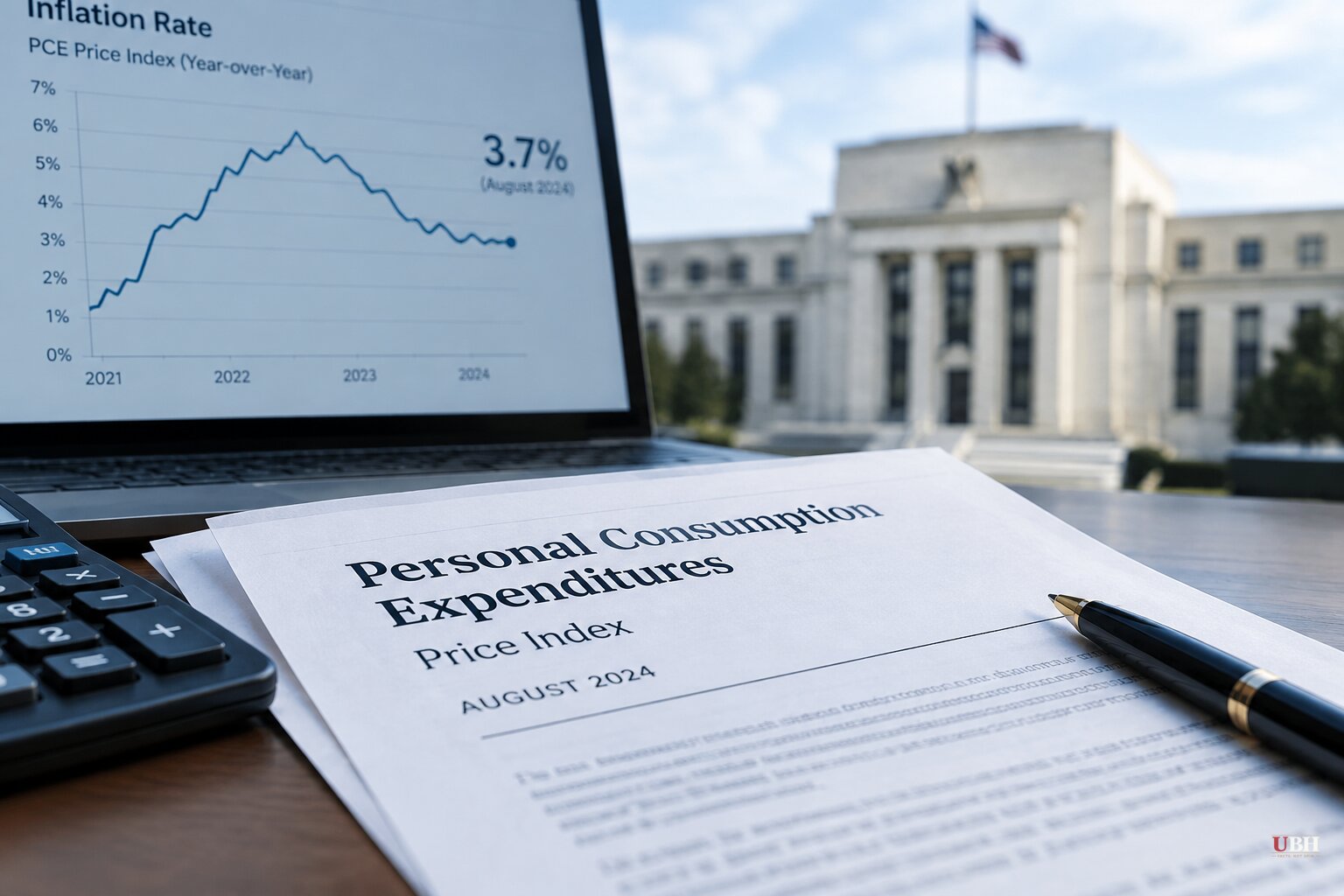
The Bureau of Economic Analysis is set to release the August Personal Consumption Expenditures price index Wednesday, September 30, 2026. It's the Federal Reserve's preferred inflation gauge, and economists surveyed by Dow Jones expect it to show headline inflation running at 3.7% annually, unchanged from July, according to CNBC and AOL. Core inflation, which strips out food and energy, is expected to hold at 3.3% annually, both consensus figures well above the Fed's 2% target.
The Cleveland Fed's Inflation Nowcasting Model is running a touch hotter, projecting headline PCE at 3.8% and core at 3.4%, according to the Epoch Times. Truflation, a private-sector tracker, pegs headline inflation at 3.3% and says in a report shared with the Epoch Times that price pressure "is not yet clearly broadening into generalized demand-driven inflation," even as energy and tariffs remain the chief upside risks. KuCoin's market note put the monthly headline increase at 0.4%, slightly hotter than the 0.3% monthly gain in the Dow Jones consensus cited by CNBC.
A revision lands the same day
Wednesday's release isn't a clean read. The BEA is simultaneously rolling out a retroactive methodology change to how it measures portfolio management and investment advisory fees, computer software, and legal services, applied all the way back to the first quarter of 2021, according to the Epoch Times and RBC Economics.
RBC estimates the update will shave 18 basis points off the annual core PCE reading, meaning July's core figure would be revised down to 3.1% from 3.3% once the new method is applied. Bank of America economists, cited by AOL's Diccon Hyatt, put the combined effect at roughly 0.2 percentage points lower across the indexes than the old methodology would have shown.
RBC is blunt about what that does and doesn't mean: "a one-time shift in measured inflation, but that shouldn't alter the underlying trend," the firm wrote, cautioning against reading Wednesday's number as evidence of disinflation. A lower headline on Wednesday could be a statistical artifact of the revision, not proof the Fed is winning the inflation fight.
Why the Fed just hiked, and why it might again
The Fed raised its benchmark rate a quarter point in September to a range of 3.75%-4.00%, the first increase in that policy cycle since rates last moved in 2023, according to American Banker. Sixteen of 18 Federal Open Market Committee officials who submitted forecasts penciled in at least one more hike before year-end, per CNBC.
Fed Governor Michael Barr said tariffs and the ongoing war involving Iran have "knocked us off course" from the 2% goal, adding "I don't yet see a clear trend toward a timely return to 2%." New York Fed President John Williams has taken a more patient tone, saying there's no need to rush but that he still expects one more hike this year, according to KuCoin. Fed Chairman Kevin Warsh told reporters he'd be "hard pressed to describe broad financial conditions as restrictive," a signal he sees room to keep tightening.
BMO Capital Markets chief economist Scott Anderson noted the timing problem. "In many ways, the August numbers are already stale," he wrote, pointing to a fresh surge in fuel prices in September tied to the Iran conflict that Wednesday's data won't even capture.
The case against another hike
Kevin Hassett, director of the National Economic Council, pushed back on that reasoning at an Economic Club of New York event. He argued that looking at the three-month annualized core CPI reading, rather than the 12-month figure everyone quotes, shows inflation is already close to the Fed's 2% target. Applying a rule of thumb from modern monetary economics that interest rates should run about two points above inflation, Hassett said "there's not a lot of room to go up from here," according to American Banker.
Hassett's point is a real methodological argument, not just political spin. A 12-month average can carry momentum from price spikes that already faded, while a 3-month annualized rate reflects what's happening right now. Whether the Fed should weight the shorter window more heavily is, in Hassett's own words, "something for the seminar room" rather than settled economics. The Fed's own leadership, including Barr and Williams, has so far rejected that framing in public remarks.
Markets, for now, are leaning toward the Fed's side of the argument. CME FedWatch futures data show traders pricing in another quarter-point hike at the Fed's next meeting, according to the Epoch Times. Whether Wednesday's PCE report, filtered through a brand-new accounting method, gives the Fed more room to argue that case or hands Hassett fresh ammunition will be clear within hours of the 8:30 a.m. release.
Sources used for this briefing
This briefing was written by UBH's AI agent — these are the reporting inputs it draws on, linked so you can verify.


