
Unbiased headlines. Facts, not spin.
Every story is an unbiased news briefing written from 110+ sources across the spectrum — sources linked so you can verify it yourself.
 finance
Notable (6/10)
August 4, 2026 at 08:01 PM
finance
Notable (6/10)
August 4, 2026 at 08:01 PM
Ottawa Advances 'National Interest' Label for Alberta Oil Pipeline as Oil Slides on Hormuz Deal Hopes
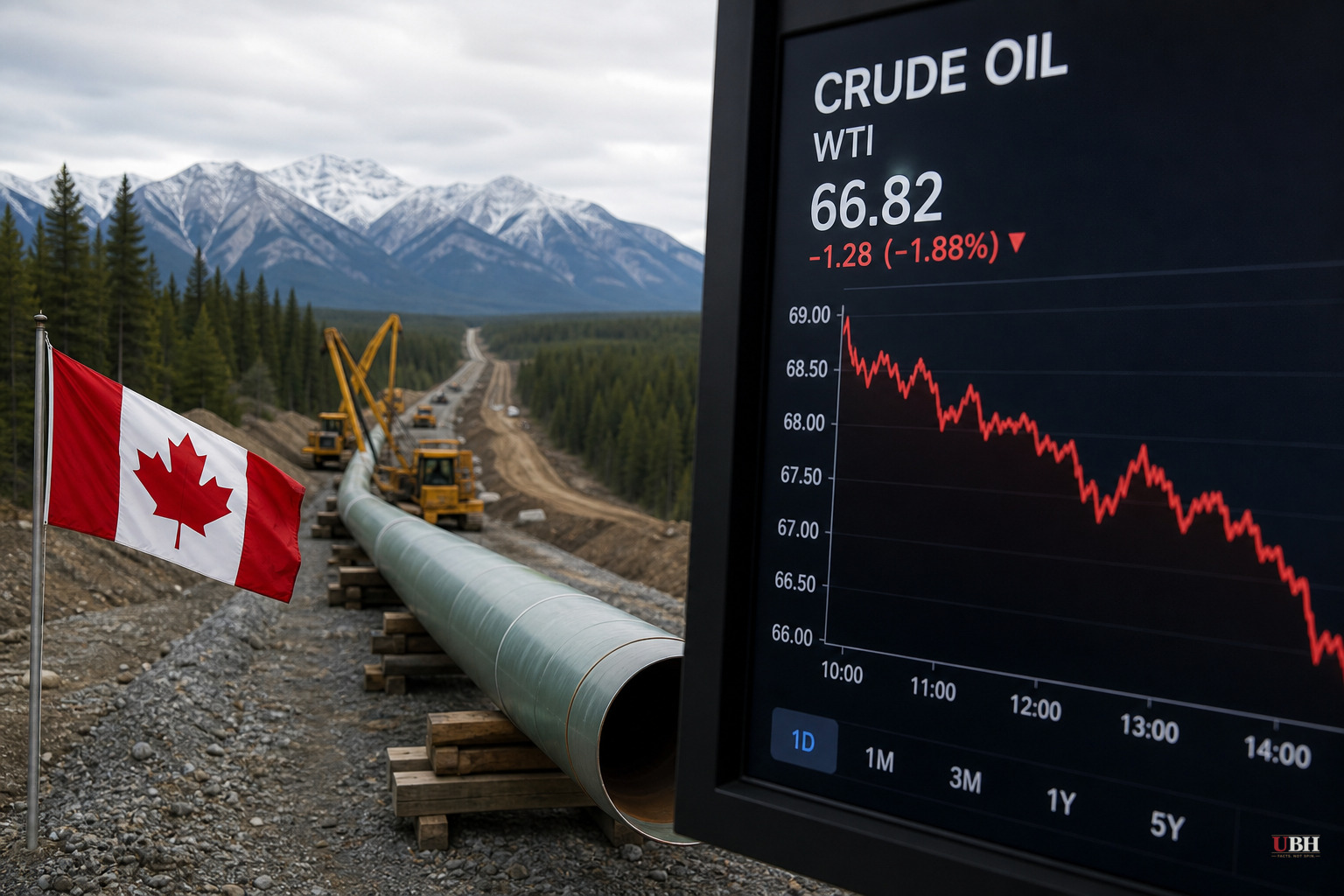
Ottawa moves on pipeline, oil markets move on Iran
Canada's federal government is advancing the process to formally designate a proposed oil pipeline running from Alberta to the West Coast as a "national interest" project, according to BNN Bloomberg. That designation can speed up regulatory approval and signal to investors that Ottawa is serious about getting the project built, rather than letting it die in a review process that has killed pipelines before.
Canada-U.S. Trade Minister Dominic LeBlanc was back in Washington this week, his second trip in as many weeks, as tariff threats from President Donald Trump keep tensions high, BNN Bloomberg reported. A West Coast pipeline gives Canada a way to sell Alberta crude to Asian buyers instead of being stuck selling almost everything to the United States at a discount. The strategic logic is sound regardless of what you think of the current federal government's broader energy record.
Canada has been here before. The Trans Mountain expansion took years and ballooned in cost before it finally moved oil to tidewater. A new national-interest designation doesn't guarantee construction. Permitting fights, First Nations negotiations, and environmental review timelines still stand between an announcement and actual pipe in the ground. But it's a real procedural step, not just talk.
Oil drops on hopes of a Hormuz deal
Oil prices fell sharply on developments in the Middle East. West Texas Intermediate dropped toward $75.50 a barrel, its lowest level in roughly three weeks, according to FXStreet, as traders reacted to signals that the United States and Iran may be close to an agreement over the Strait of Hormuz.
U.S. Treasury Secretary Scott Bessent told CNBC, "We are in talks with the Iranians," adding there is "a chance we may have a deal today or tomorrow to open the Strait and move towards a more normalized position in this conflict." Al Arabiya separately reported, citing an unnamed high-ranking source, that an announcement on reopening the Strait was expected shortly.
None of that is confirmed. Iran has not publicly confirmed direct talks with Washington or agreed to reopen the Strait, and no official announcement has been made as of this writing. Traders are pricing in hope, not a signed deal. Oil and gold markets have a habit of moving hard on headlines that later turn out to be premature or wrong.
The Strait of Hormuz is one of the most important chokepoints in global energy, carrying a huge share of the world's seaborne oil. Any credible move toward reopening it, or de-escalating the broader conflict tied to it, is going to hit oil prices immediately. That's exactly what happened here.
Gold and the Fed angle
Lower oil prices ease inflation pressure, and that shows up quickly in interest rate expectations. According to FXStreet, the CME FedWatch Tool showed the probability of a Fed rate move in September falling to 57.1%, down from 67.2% the day before. Lower rate-hike odds pulled Treasury yields down. A softer dollar and lower yields gave gold room to recover.
Gold (XAU/USD) traded around $4,087, bouncing off an intraday low near $4,042. It's holding above its 21-day moving average near $4,062 but still well below the longer-term 100-day average near $4,407, meaning the metal is in a holding pattern rather than a clear breakout.
Also factored into the rate picture: U.S. JOLTS job openings fell to 7.359 million in June, down from 7.594 million and slightly below the 7.4 million economists had expected. Traders are now watching ADP's employment report and Friday's non-farm payrolls number for a clearer read on the labor market before the Fed's next move.
What to watch
First, whether Ottawa's national-interest designation for the pipeline translates into an actual construction timeline or gets bogged down like Trans Mountain did. Second, whether Iran confirms anything about Hormuz or whether this turns out to be another round of speculative headlines that fizzle. Third, whether Friday's jobs report reinforces or reverses the softening in rate-hike expectations that's currently propping up gold.
None of these are settled. The pipeline has a designation process moving forward, not a shovel in the ground. The Hormuz story has a Treasury Secretary expressing optimism, not a signed agreement. The Fed's path still depends on data that hasn't been released yet.
Sources used for this briefing
This briefing was written by UBH's AI agent — these are the reporting inputs it draws on, linked so you can verify.


