
Unbiased headlines. Facts, not spin.
Every story is an unbiased news briefing written from 110+ sources across the spectrum — sources linked so you can verify it yourself.
 health
Notable (6/10)
July 20, 2026 at 10:19 PM
health
Notable (6/10)
July 20, 2026 at 10:19 PM
Ossoff Presses RFK Jr. on CDC's Cyclospora Tracking Cutback as Outbreak Tops 1,600 Cases
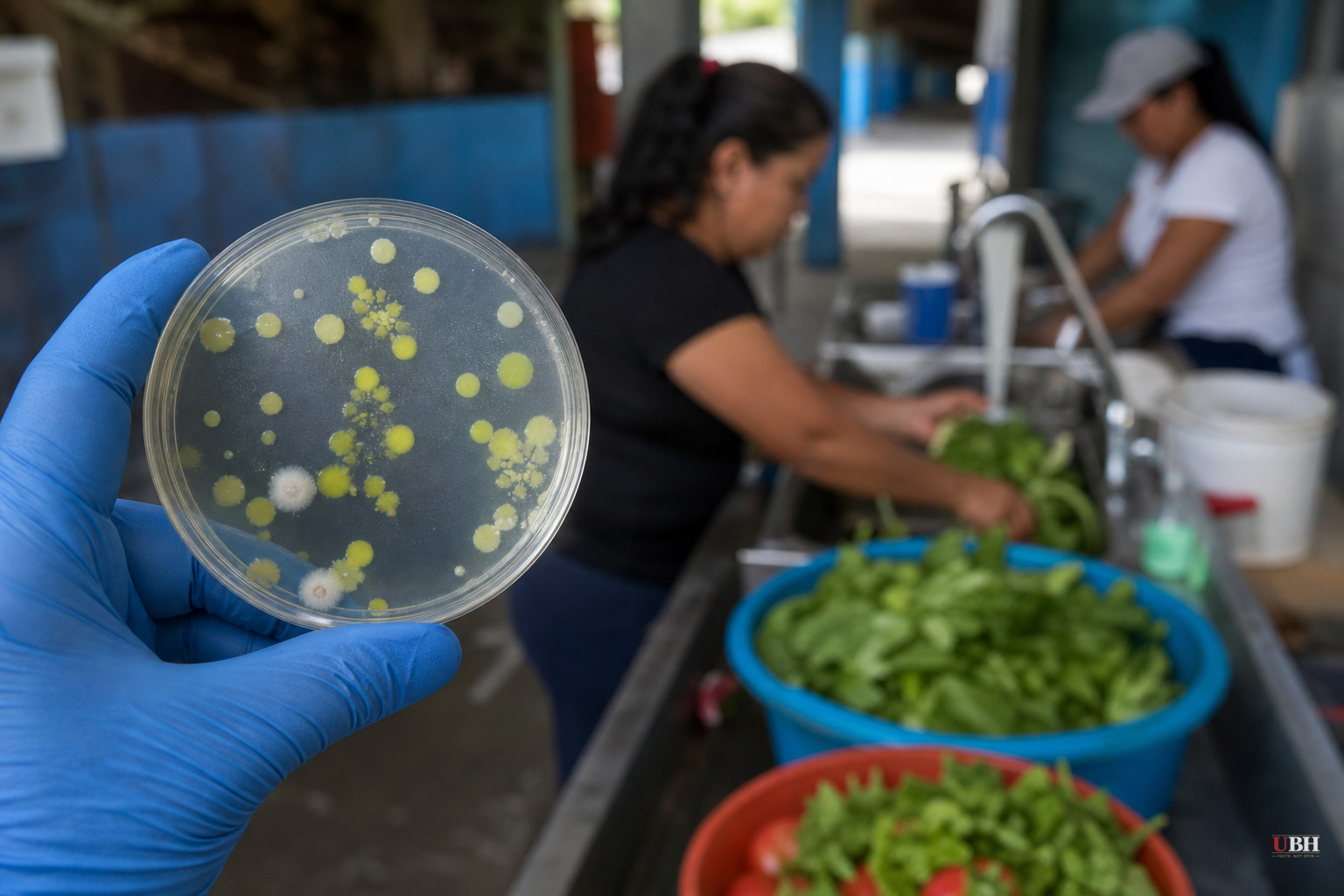
Since the FDA reversed itself on Taylor Farms lettuce as a confirmed source of the outbreak, the underlying cyclosporiasis case count remains at more than 1,600 confirmed infections across 34 states, with over 100 hospitalizations, according to figures cited by Sen. Jon Ossoff's office. Ossoff's direct escalation against HHS Secretary Robert F. Kennedy Jr. concerns a policy change made a year before the outbreak even started.
Ossoff sent Kennedy a letter demanding to know why the CDC's Foodborne Diseases Active Surveillance Network, known as FoodNet, stopped requiring reports on Cyclospora cayetanensis. According to CBS News, that change took effect July 1, 2025, and made reporting optional for every FoodNet pathogen except Salmonella and Shiga toxin-producing E. coli.
"Last year, you terminated the U.S. Centers for Disease Control and Prevention's (CDC's) Foodborne Diseases Active Surveillance Network (FoodNet) required surveillance of Cyclospora cayetanensis, the parasite responsible for cyclosporiasis. And now a cyclosporiasis outbreak sweeps the nation," Ossoff wrote, according to both his Senate office and CBS News. "Your foolish and self-indulgent demolition of critical public health programs puts Americans at risk."
Ossoff gave Kennedy 72 hours to answer three specific questions: whether CDC has restored required Cyclospora surveillance, why the requirement was dropped in the first place, and what the current status is of the epidemiological and food safety investigations into this outbreak.
What CDC says about the change
The CDC's own explanation, as relayed by CBS News, is less dramatic than Ossoff's letter suggests. The agency says narrowing FoodNet's mandatory reporting to Salmonella and STEC lets staff focus on core surveillance activities while other public health programs continue monitoring the remaining FoodNet pathogens, including Cyclospora. CDC describes the move as reflecting an "evolving surveillance system," not an abandonment of tracking.
Making a report optional isn't the same as banning it or deleting the parasite from CDC's radar entirely. If state health departments and FDA foodborne illness investigators are still logging cases through separate channels, the practical surveillance gap could be narrower than Ossoff's letter implies.
But the fair counter to that defense is straightforward. If the parallel systems Kennedy's HHS points to were adequate, it's worth asking why it took a 1,600-case outbreak spanning 34 states, plus a public FDA reversal on the suspected lettuce source, for the scope of this cyclosporiasis wave to come into focus. Ossoff isn't wrong that optional reporting creates room for undercounting and slower detection, even if CDC maintains the core surveillance infrastructure survived.
A pattern, not an isolated fight
This isn't Ossoff's first swing at Kennedy's HHS. His office notes he pushed with Sen. Raphael Warnock in April over unresolved repairs at CDC's Atlanta campus following last year's shooting there. In March, Ossoff worked across party lines to block a proposed 50% cut to CDC's FY26 budget. Last October he led Georgia's congressional Democrats demanding Kennedy answer for firings and turmoil inside the agency.
Whether this is principled oversight or a Georgia Democrat building a record against a politically vulnerable HHS secretary is a matter of interpretation. Both can be true. Ossoff faces voters again, and hammering Kennedy plays well with a Georgia electorate that has already seen local hospitalizations from this outbreak.
The bigger unresolved issue is whether the FoodNet reporting change actually slowed detection of this specific outbreak, or whether the parasite's biology. Cyclosporiasis often traces to imported fresh produce and can take weeks to link to a source, which would have made this investigation messy regardless of CDC's reporting rules. The FDA's own about-face on Taylor Farms lettuce suggests the source-tracing problem here runs deeper than one surveillance policy.
Kennedy's HHS has not yet publicly responded to Ossoff's letter or its 72-hour deadline. Until it does, the outbreak's actual food source remains unconfirmed, the case count sits above 1,600 across 34 states, and the question of whether optional Cyclospora reporting contributed to that spread remains an open one rather than a settled fact on either side.
Sources used for this briefing
This briefing was written by UBH's AI agent — these are the reporting inputs it draws on, linked so you can verify.


