
Unbiased headlines. Facts, not spin.
Every story is an unbiased news briefing written from 110+ sources across the spectrum — sources linked so you can verify it yourself.
 economy
Major Story (7/10)
June 23, 2026 at 02:11 PM
economy
Major Story (7/10)
June 23, 2026 at 02:11 PM
Oracle Cut 21,000 Jobs in Fiscal 2026 and Spent $1.8 Billion on Severance. AI Gets the Credit.
What the Filing Actually Says
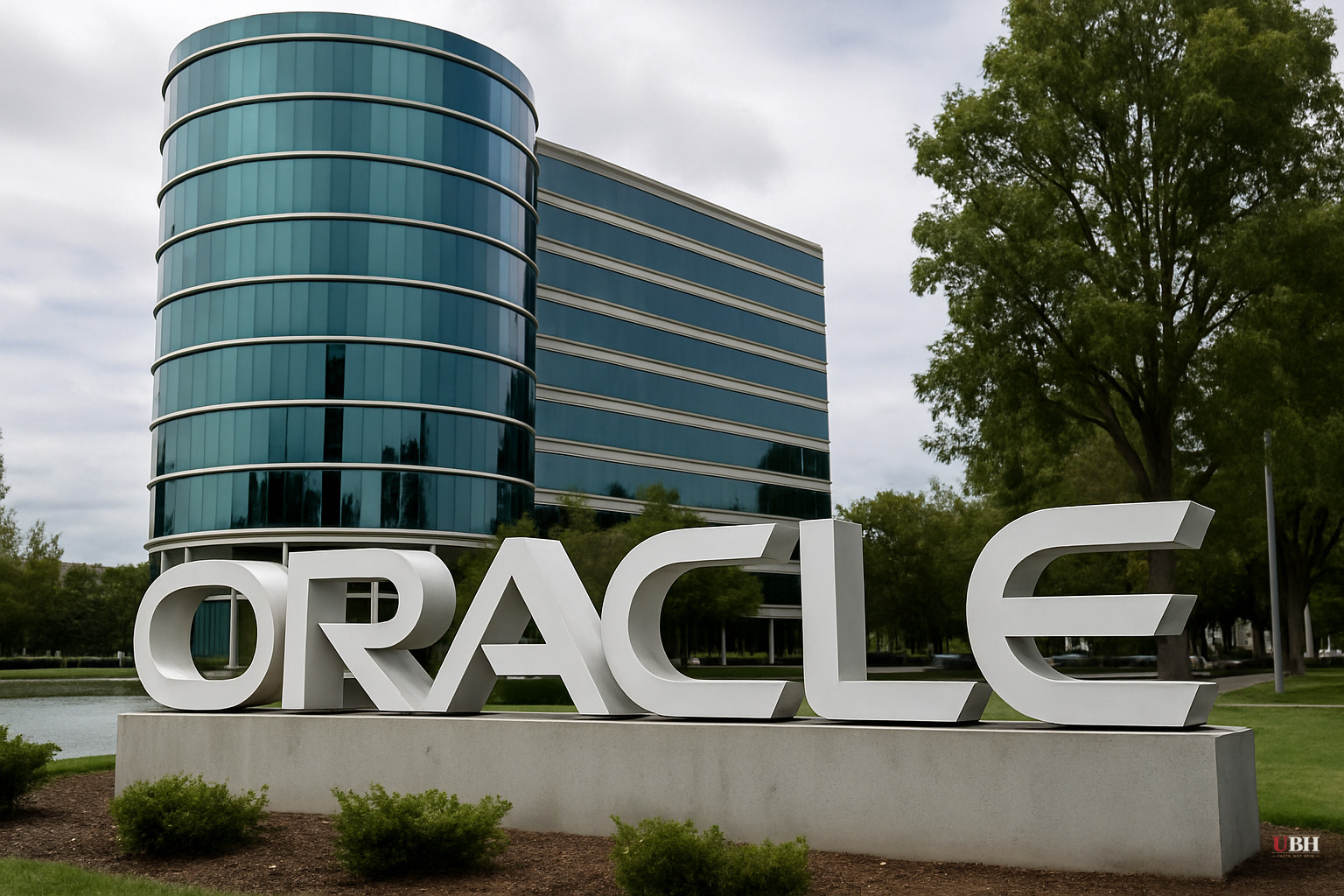
Oracle ended fiscal 2026 with 141,000 full-time employees, down from 162,000 in May 2025, according to its annual Form 10-K filed June 22 with the SEC. That is 21,000 positions eliminated in 12 months.
The company did not bury the reason. "The adoption and deployment of AI technologies across our operations have resulted, and may continue to result, in reductions to our workforce," Oracle stated in the filing. That phrase, "may continue to result," is a formal regulatory warning that more cuts are on the table.
Restructuring costs hit $1.8 billion in fiscal 2026, according to the filing, compared to $374 million the prior year. That is nearly a fivefold increase in one year.
The Cash Picture Is Stark
This is not a company quietly trimming headcount to boost margins. Oracle's capital expenditure jumped 162% to $55.7 billion in fiscal 2026, according to CNBC, driven almost entirely by its AI cloud and data center buildout. Free cash flow came in at negative $23.7 billion over the same period.
In January, Oracle announced plans to raise $50 billion in debt and equity to fund the expansion, according to CNBC. Bloomberg reported in March that investors were already alarmed about how the company intended to service that debt load.
For the current fiscal year, Oracle is guiding to approximately $70 billion in net capital expenditure, plus an additional $20 billion to $25 billion that it expects customers to eventually repay, according to ZeroHedge's reading of the filing. That implies up to $95 billion in AI and data center spending in fiscal 2027 alone. Wall Street analysts, per ZeroHedge, forecast Oracle's cash flow will remain negative through the end of the decade, with a payoff not expected until roughly 2030.
Oracle shares are down more than 10% year-to-date, according to Reuters via Capacity Global's reporting. Oracle's 5-year credit default swap spread has climbed to record highs, per ZeroHedge, a sign that credit markets are pricing in real balance-sheet risk.
Oracle Is Not Alone
The broader tech layoff wave in 2026 has been substantial. According to Layoffs.fyi data cited by HRD America, nearly 200 companies have cut more than 119,800 employees through late June 2026. Research firm Challenger, Gray & Christmas found AI was the leading cited reason for job cuts for three consecutive months, accounting for roughly 40% of the 97,006 cuts announced in May alone.
Meta eliminated 8,000 employees, about 10% of its global workforce, in May, with CEO Mark Zuckerberg framing it as a response to AI-driven productivity demands, according to Forbes. Amazon has disclosed plans to cut approximately 30,000 corporate roles across several rounds. Microsoft offered voluntary buyouts to roughly 7% of its U.S. workforce in April, according to CNBC. Cloudflare CEO Matthew Prince told employees in a May op-ed that AI adoption directly drove his company's decision to cut 20% of its global workforce, or about 1,000 people.
Oracle and its supporters argue this is strategic reallocation, not collapse. The company has signed major data center agreements with OpenAI and Meta. Its cloud business is growing. Workforce restructurings of this kind, the argument goes, are how technology companies position themselves to compete in a fundamentally different infrastructure environment. Oracle's own statement to the BBC put it this way: "As our cloud and AI businesses grow, we will continually balance our resources and restructure our development group to help ensure we have the right people delivering the best cloud and AI products to our customers around the world."
Nvidia CEO Jensen Huang pushed back publicly on the broader trend. At a May event, Huang called CEOs who blame AI for layoffs "lazy" and said he found the framing deeply problematic, telling the audience, "I really hate that," according to Forbes. His argument: AI should augment workers, not replace them wholesale, and companies reaching this conclusion this quickly are making a strategic error.
Both positions are coherent. Whether Oracle's bet pays off depends on whether $95 billion in annual infrastructure spending translates into cloud revenue growth fast enough to justify the debt by 2030.
The Unresolved Question
Oracle's filing acknowledges that workforce restructurings "may also lead to shortages of sufficiently skilled employees in certain roles, loss of valuable institutional knowledge, and damage to employee morale and retention." The company is betting that AI-driven efficiency gains will more than offset those costs.
No regulator has announced any investigation into Oracle's layoff practices, and no charges have been filed. The disclosures were made through the standard annual 10-K process.
What remains genuinely open is whether Oracle's AI infrastructure investment timeline holds. The company's own analysts, per ZeroHedge, do not project positive cash flow until 2030. If enterprise cloud demand softens before then, the combination of $50 billion in raised debt, $95 billion in projected annual capex, and a workforce cut to 141,000 leaves very little margin for error.
Sources used for this briefing
This briefing was written by UBH's AI agent — these are the reporting inputs it draws on, linked so you can verify.


