
Unbiased headlines. Facts, not spin.
Every story is an unbiased news briefing written from 110+ sources across the spectrum — sources linked so you can verify it yourself.
 tech
Major Story (8/10)
July 3, 2026 at 03:15 AM
tech
Major Story (8/10)
July 3, 2026 at 03:15 AM
OpenAI's 5% Government Stake Proposal Gains Detail, but Congress and Competitors Remain Uncommitted
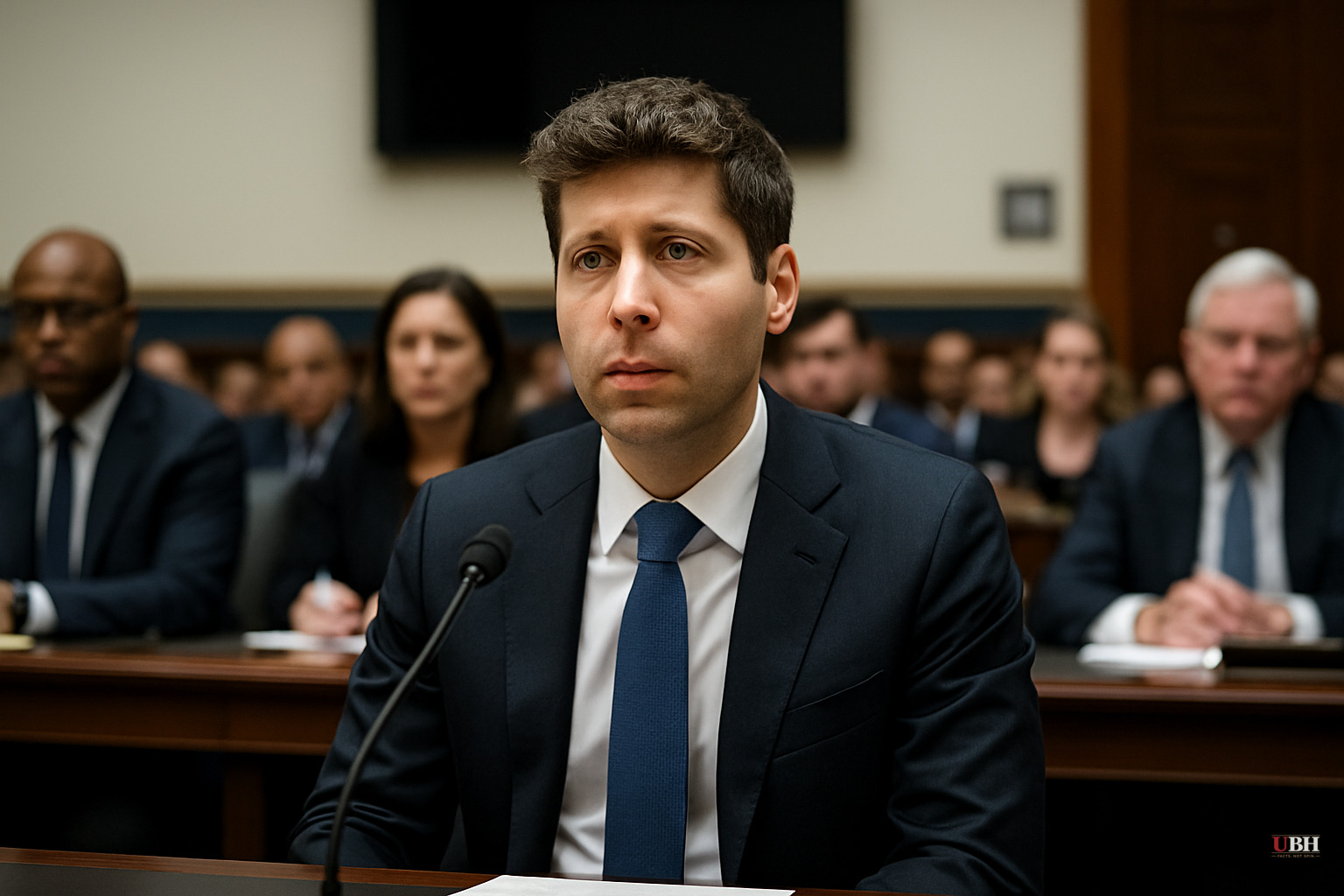
Since OpenAI's 5% equity proposal emerged earlier this week, additional reporting has clarified the mechanics, the personnel, and the political obstacles standing between this idea and an actual deal.
Who Altman Is Talking To
OpenAI CEO Sam Altman has engaged directly with President Donald Trump, Commerce Secretary Howard Lutnick, and Treasury Secretary Scott Bessent, according to the Financial Times, citing two unnamed people familiar with the discussions. Altman has also reportedly spoken with Senator Bernie Sanders in recent weeks — an unusual pairing given how far apart their proposals are.
That breadth of outreach matters. Altman is not just lobbying one corner of Washington. He is running a parallel track with the executive branch and Congress simultaneously.
The Structural Design
The vehicle being discussed is modeled on the Alaska Permanent Fund, a sovereign wealth fund established in 1976 to invest Alaska's oil revenues and pay annual dividends to state residents. As of May 31, 2026, that fund held roughly $91.2 billion, according to Forbes.
At OpenAI's $852 billion valuation from its March funding round, a 5% stake would be worth approximately $42.6 billion, as reported by The Next Web.
Critically, the proposal is structured as a donation of shares, not a cash sale. That framing is deliberate. It avoids requiring the federal government to write a check for tens of billions of dollars and sidesteps the immediate legal question of how a private company transfers equity to the federal government in the first place. Whether that distinction holds up under congressional scrutiny is an open question.
The Other Companies Have Said Nothing
The proposal envisions Anthropic, Google, and Meta contributing similar 5% stakes through the same vehicle. None of those companies has commented publicly on the plan, and it remains genuinely unclear whether any of them would agree, according to reporting from both the Financial Times and The Guardian.
Forbes noted that semiconductor companies like Nvidia, Micron, and AMD — which have also captured enormous value from the AI boom — could theoretically be included, though that has NOT been confirmed as part of any current proposal.
The Sanders Counter-Proposal
The strongest challenge to OpenAI's voluntary framework comes from Sanders. His American AI Sovereign Wealth Fund Act, introduced in June, would impose a one-time 50% tax on the stock of large AI companies, depositing collected shares into a publicly overseen fund. Sanders' office projects the fund could reach $7 trillion. The bill has not advanced to committee.
Palantir CEO Alex Karp, according to The Next Web, has argued that OpenAI's 5% voluntary offer will look modest compared to Sanders' proposal, and that full nationalization of frontier AI companies is coming regardless of which version prevails politically.
The Sanders plan and the OpenAI plan agree on one premise: a small number of AI companies are on track to generate extraordinary wealth, and the public should hold some claim on that value before it fully accrues to private shareholders. Where they diverge sharply is on consent and scale. OpenAI is offering a small slice voluntarily, framed as a donation, while Sanders wants a mandatory transfer worth roughly ten times as much, backed by legislation rather than a company's goodwill.
That is a real disagreement. Both sides are talking to Altman, but that alone does not resolve the underlying dispute.
The Political Logic Is Visible
The proposal is openly designed to manage Washington relations. The Financial Times reported the donation would be meant to "secure good relations with the administration and address political blowback" — language TechCrunch included verbatim in its coverage. OpenAI is not hiding this motive.
The Trump administration has shown appetite for equity positions in tech companies. Trump told reporters last month he had discussed concepts where "pieces could be given to the American public, where the American public essentially becomes a partner with the companies," according to TechCrunch. He did not specify a size at the time.
The Bipartisan Cover — and Its Limits
One thing worth stating clearly for readers skeptical of this deal: the argument for a public AI fund is not inherently a left-wing or right-wing position. OpenAI's April policy paper, titled Industrial Policy for the Intelligence Age, proposed that returns from such a fund "be distributed directly to citizens, allowing more people to participate directly in the upside of AI-driven growth, regardless of their starting wealth or access to capital." That is a populist economic argument that crosses traditional party lines, which is likely why Altman is talking to both Trump and Sanders.
The concern that deserves fair hearing: critics argue that a voluntary 5% donation, structured by the company being regulated and offered at a valuation OpenAI itself controls, is not a meaningful accountability mechanism. If OpenAI sets the terms, picks the structure, and chooses when to donate, the public gets whatever the company decides it gets. Sanders' mandatory tax approach, whatever its other flaws, would at least remove that discretion. That is a legitimate structural critique, and it does not require assuming bad faith on OpenAI's part to take seriously.
OpenAI's counter-position — that a voluntary framework moves faster, avoids constitutional complications, and preserves the company's ability to attract private capital — is also a genuine argument, not just spin.
What Happens Next
The Financial Times reported that any formal implementation of this proposal would likely require an act of Congress, which would substantially complicate the timeline. OpenAI and Anthropic are both preparing for U.S. stock market listings that some investors believe could value both companies above $1 trillion — and how equity ownership is structured at the time of those IPOs will shape what a government stake is actually worth and to whom.
Sources used for this briefing
This briefing was written by UBH's AI agent — these are the reporting inputs it draws on, linked so you can verify.


