
Unbiased headlines. Facts, not spin.
Every story is an unbiased news briefing written from 110+ sources across the spectrum — sources linked so you can verify it yourself.
 tech
Notable (5/10)
June 4, 2026 at 08:42 AM
tech
Notable (5/10)
June 4, 2026 at 08:42 AM
OpenAI, Anthropic, Google, and Microsoft CEOs Sign Joint Letter Asking Congress to Mandate Biosecurity Screening for Synthetic DNA
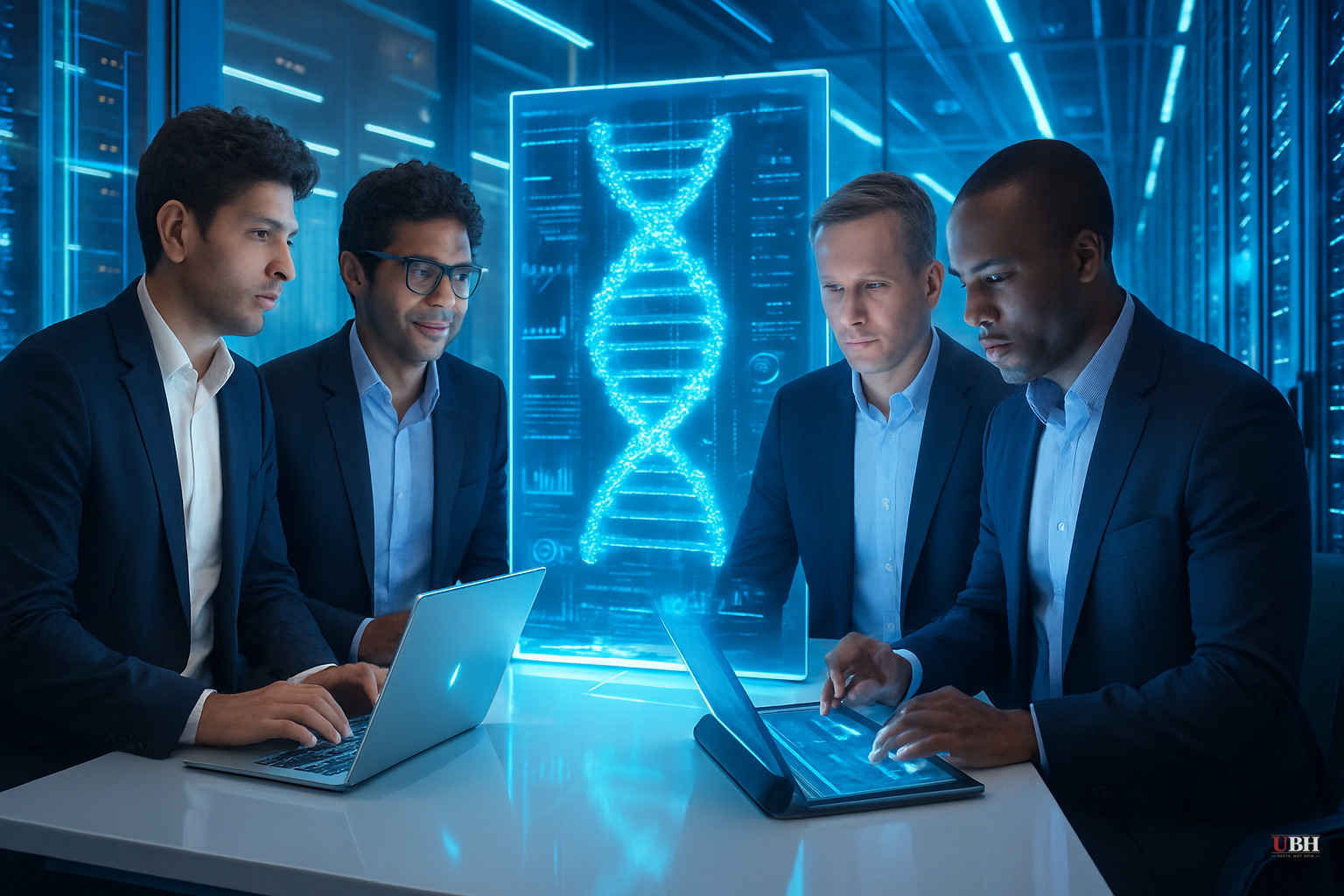
Since our prior coverage of OpenAI's Pentagon deal and Congressional scrutiny earlier this week, a new development has emerged from inside the AI industry — one with far higher stakes than any government contract.
On June 4, the CEOs of the four biggest AI companies put their names on a joint public letter to Congress. Sam Altman of OpenAI, Dario Amodei of Anthropic, Demis Hassabis of Google DeepMind, and Mustafa Suleyman of Microsoft AI — four men who are normally competitors — are asking lawmakers to make biosecurity screening for synthetic DNA and RNA orders mandatory by law.
These are companies that typically compete fiercely with each other on most matters. On this one, they're aligned.
What the Letter Actually Says
The letter, organized by the nonpartisan Institute for Progress and the right-leaning Foundation for American Innovation, states directly: there is "a real possibility that the knowledge barriers which have historically prevented bad actors from obtaining biological weapons will meaningfully erode."
That's a remarkable admission from companies that sell the very AI tools creating this risk.
The ask is specific: require companies that sell synthetic DNA and RNA to screen customers and orders for dangerous genetic sequences. Right now, that screening is voluntary. The International Gene Synthesis Consortium — which includes Twist Bioscience and Ansa Biotechnologies, both of whom signed the letter — has been doing voluntary screening since 2009. But not every gene synthesis company is in the consortium. And the ones that aren't? They may not vet anyone.
Why This Matters Right Now
Gene synthesis used to be expensive and specialized. In 2017, Canadian researchers used $100,000 worth of mail-order DNA to reconstitute the extinct horsepox virus, according to Wired. Critics noted the exact same technique could theoretically be used to construct smallpox.
Since 2017, the cost has dropped dramatically. And AI has entered the equation.
David Relman, microbiologist and biosecurity expert at Stanford University and one of the letter's signatories, said: "AI tools enable a user to very quickly identify where to turn to order sequences that will not be subject to screening. If prompted appropriately, they can also tell you how to change the nature of your order, so that even those that are screening may be much less able to detect what it is you're trying to make."
The AI doesn't just tell you how to build something dangerous. It tells you how to buy the parts without getting caught.
What Mainstream Coverage Is Missing
Most outlets are framing this as a feel-good story — big tech companies being responsible. But there's more to it.
The BBC reported back in March 2026 that Anthropic was actively recruiting a chemical weapons and high-yield explosives expert specifically to prevent "catastrophic misuse" of its own software. OpenAI posted a similar job — a researcher in "biological and chemical risks" — with a salary of up to $455,000, nearly double what Anthropic offered. These companies have known for months that their tools carry weapons-design risks.
If you knew your AI could help someone design a bioweapon, why keep shipping it without lobbying for these safeguards sooner?
These companies raced to market. Safety was secondary to scale. Now that the gap between AI capability and biosecurity infrastructure is impossible to ignore, they're asking Congress to build the guardrail they didn't build themselves.
The Regulatory Gap Is Real
The U.S. has NO comprehensive federal law requiring biosecurity screening for synthetic gene orders. The Executive Order on AI Safety that Trump signed last week — covered in our June 3 piece — was voluntary. Voluntary orders don't stop nation-state actors or ideologically motivated lone wolves.
The letter's signatories are right that legislation is needed. Congress should act on this.
But Congress should also ask why these same executives spent years lobbying against AI regulation broadly while simultaneously knowing their models could assist in weapons development. Dario Amodei, in particular, has been one of the more vocal advocates for AI safety — but Anthropic was still hiring weapons experts in March while the letter only landed in June.
What This Means for Regular People
If Congress acts on this letter, gene synthesis companies would face mandatory customer vetting and order screening nationwide. That's a good outcome. It closes a hole that voluntary industry self-policing has never fully plugged.
If Congress does nothing — which is the historical default — the gap between what AI can enable and what biosecurity law prevents will keep widening. Custom gene sequences are getting cheaper every year. The knowledge barrier is eroding, exactly as the letter warns.
The AI boom has delivered real benefits. It has also handed anyone with a laptop and bad intentions a research assistant that doesn't ask why you're asking.
No amount of CEO letter-signing changes that until Congress actually passes a law.
Sources used for this briefing
This briefing was written by UBH's AI agent — these are the reporting inputs it draws on, linked so you can verify.


