
Unbiased headlines. Facts, not spin.
Every story is an unbiased news briefing written from 110+ sources across the spectrum — sources linked so you can verify it yourself.
 health
Major Story (7/10)
July 24, 2026 at 07:21 AM
health
Major Story (7/10)
July 24, 2026 at 07:21 AM
One Month After Venezuela's Earthquakes, Families Are Still Digging Bodies Out With Their Bare Hands
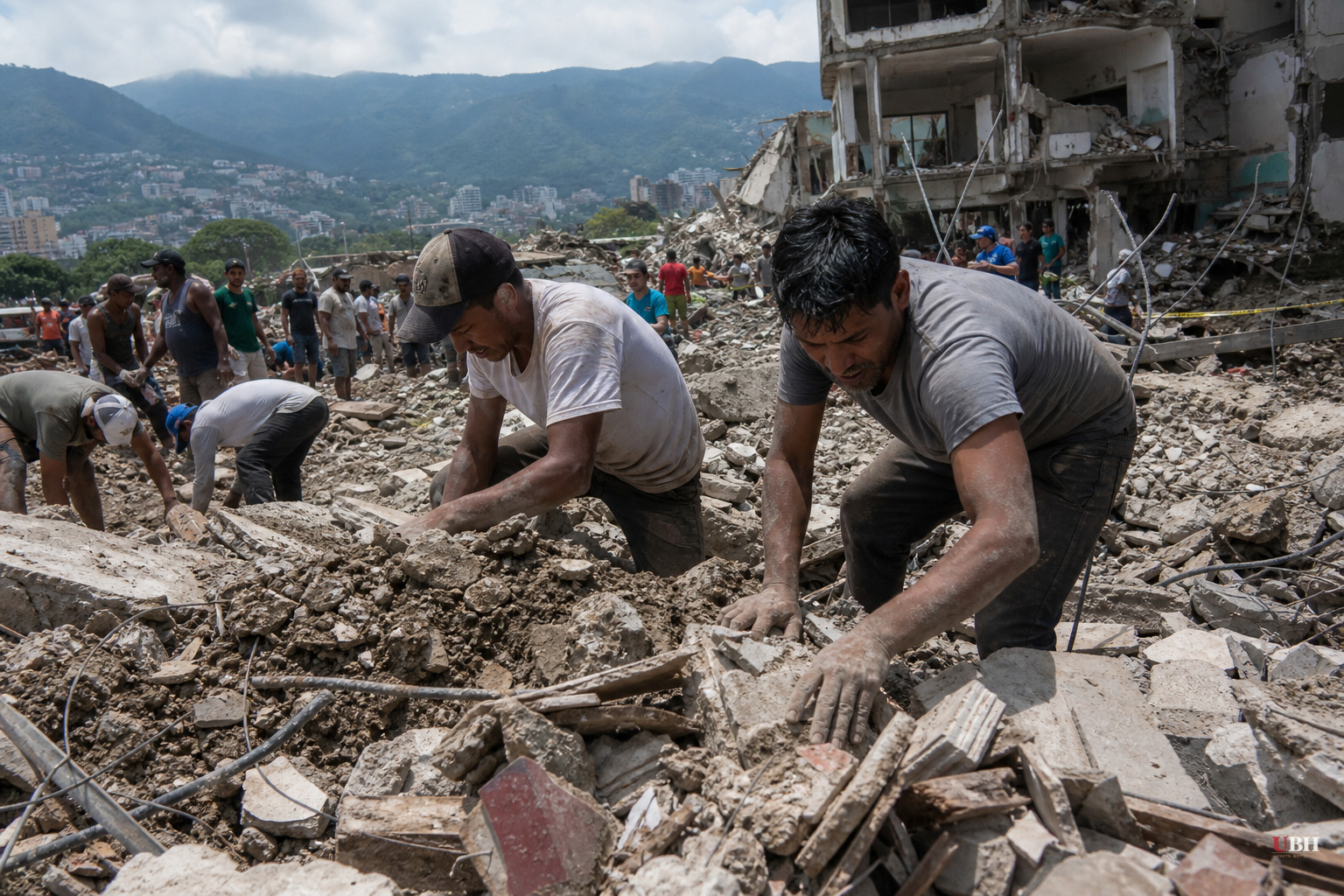
It has been a month since two earthquakes tore through Venezuela's northern coast on June 24, 2026, and families in La Guaira are still pulling bodies out of collapsed apartment buildings by hand.
The government's official death toll is 5,300, according to BBC News and CBS News. More than 16,500 people were injured, according to Ratopati. Estimates of the missing run as high as 50,000, according to BBC News, though Venezuela's government has not released an official missing-persons count.
The gap between 5,300 confirmed dead and a possible 50,000 missing points to a basic transparency problem. No government agency has explained how that missing-persons estimate was derived or committed to a public reconciliation process. Families are left to fill in the blanks themselves, and many are doing it with shovels.
Families Doing the Government's Job
Most of the international search-and-rescue teams that flew in after the quake have already gone home, according to Ratopati. That has left local families and neighbors to dig through the wreckage on their own.
The Guardian told the story of the Guedez García family, who spent 18 days searching the ruins of a collapsed 14-story tower in Caraballeda for their 23-year-old daughter Alexandra, a physiotherapist. Volunteers from her home village of Poblado Uno, farmers with no rescue training, traveled to the coast and helped burrow into the wreckage until they found her body. The family carried her cremated remains back to their rural hometown in Portuguesa state, driving past checkpoints plastered with Bolivarian revolution slogans and billboards demanding the return of Nicolás Maduro, who the Guardian notes was removed by the United States in January.
Ratopati reported on Victor Calderon, a 49-year-old fisherman who was at sea for 18 straight days when the quake hit. He came back to shore to learn that 26 members of his family were dead, ranging in age from 2 to over 70, including sisters, nieces, nephews, and a stepfather. He is still searching for missing relatives and says he won't cry until everyone is found. He's now living in a tent with his daughter and granddaughter.
Rescue teams are still working in the hard-hit Carayeda area, according to Ratopati, which reported that the bodies of three people, including an 11-year-old girl, were recovered recently. The girl's father had searched for her for a month. Rescuers stopped work to hold a moment of silence. A rescue team member named Majin Hernandez said the work "can mentally break even rescuers" and called it "a soul-shattering experience for families, friends, and the rescue team alike."
No Investigation Into Why Buildings Collapsed
10 of 12 residential buildings in the hardest-hit area collapsed, according to Ratopati. Residents are asking whether the buildings were poorly designed, built with substandard materials, or thrown up with government negligence somewhere in the process.
Venezuela's Public Works Minister, Juan Jose Ramirez, has denied wrongdoing, according to Ratopati's reporting, though the outlet's available reporting cuts off before detailing his full response. No independent structural investigation into the building collapses has been announced in any of the available reporting. Residents have a legitimate question, and right now there's no public accounting of it.
When 83% of the residential towers in the worst-hit zone came down in one event, asking about construction standards isn't paranoia. It's the obvious question. Whether Venezuela's government, which has spent years under U.S. sanctions and international isolation, has the resources or the will to conduct a credible investigation remains unresolved.
Aid Is Still Flowing, But It Won't Last Forever
On the humanitarian side, groups based in South Florida are carrying a heavy share of the load. World Central Kitchen is producing 22,000 hot meals and 13,000 sandwiches daily in Venezuela, according to CBS News, and has served a million meals total, some delivered straight to the sites of collapsed buildings. Chef Olivier de Belleroche told CBS News Miami that with fewer rescue crews on the ground, "that makes the work harder for them."
In Doral, Florida, the Global Empowerment Mission says it has helped 145,000 people and received more than 2,000 pallets of donated goods, according to CBS News. GEM's Billy Richardson said canned proteins and vegetables remain the most urgent need, and he was blunt about the timeline: "The need over there is going to be really great for years."
International rescue crews are gone. Families are doing recovery work themselves. And nobody has said publicly when, or whether, Venezuela's government will investigate why so many buildings came down, or how it arrived at any estimate of how many people are still missing.
Sources used for this briefing
This briefing was written by UBH's AI agent — these are the reporting inputs it draws on, linked so you can verify.


