
Unbiased headlines. Facts, not spin.
Every story is an unbiased news briefing written from 110+ sources across the spectrum — sources linked so you can verify it yourself.
 politics
Major Story (8/10)
July 19, 2026 at 10:52 PM
politics
Major Story (8/10)
July 19, 2026 at 10:52 PM
OMB's Rewrite of Federal Grant Rules Draws Fire From Scientists as Budget Office Expands Fund-Freezing Tool
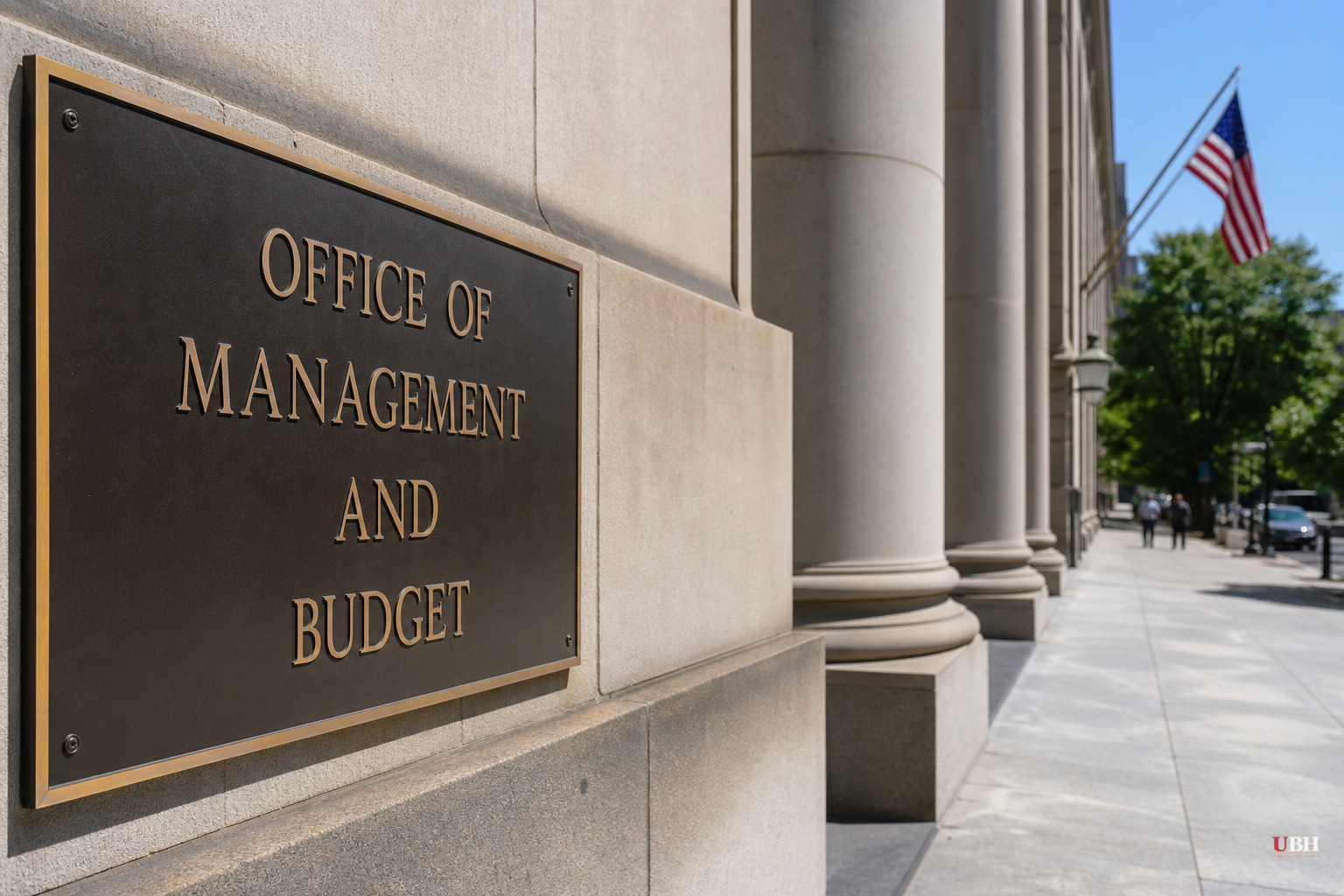
The White House Office of Management and Budget proposed a rewrite on May 29 of 2 CFR Part 200, the Uniform Guidance that has governed federal grants, cooperative agreements, and financial assistance since 2013, according to TechPolicy.Press. The rule change would touch more than $1 trillion in federal assistance that flows to state and local governments, tribes, universities, nonprofits, school districts, hospitals, small businesses, and research institutions.
About $150 billion of that money funds research and development, including science and technology grants that universities and federal labs depend on, TechPolicy.Press reported.
What the Rule Actually Changes
The proposal would elevate the Uniform Guidance from administrative guidance to a binding, government-wide regulation, centralizing rulemaking authority inside OMB itself, according to TechPolicy.Press. Under the new provisions, political appointees would conduct mandatory pre-issuance reviews of all discretionary awards to check alignment with administration policy priorities. The rule would also expand agency discretion to terminate existing awards already underway and restrict funding for collaborations with specified foreign entities.
That last piece is not controversial on its face. Restricting research money from flowing to adversarial foreign entities, particularly those tied to China, is a reasonable national-security guardrail that both parties have pursued in various forms for years.
The pre-issuance political review is a different matter. Science Editor-in-Chief Holden Thorp, in a June editorial titled "Another red alert for American science," argued the rule effectively overrides the peer-review process that has historically decided which research gets funded on scientific merit, according to TechPolicy.Press. Thorp's concern, as characterized by TechPolicy.Press, is that letting political appointees select, cut, or terminate awards turns independent research allocation into a tool of executive policy rather than scientific judgment.
The American Physical Society and the American Geophysical Union organized members to file public comments against the rule, TechPolicy.Press reported, describing the response from the scientific and academic community as widespread. That reporting reflects the reaction of researchers and their professional associations, groups with an obvious institutional stake in preserving grant independence from political direction.
The administration's side of this argument is straightforward, even if TechPolicy.Press's piece does not quote an OMB official defending it directly. Elected officials, not unelected agency staff or academic peer-review panels, are accountable to voters for how a trillion dollars in taxpayer money gets spent. A White House arguing it has the authority and the obligation to ensure grant money aligns with the priorities voters elected it to pursue is not a fringe position. Whether that authority should extend to overriding scientific merit review on individual grants is the real fight, and it's a legitimate one.
Category C and the Fight Over Appropriated Money
Separately, OMB under Director Russell Vought has expanded its use of a lesser-known budget tool called Category C, according to Lawfare. A Category C apportionment sets aside multi-year or no-year congressional funding for use in a future fiscal year, which blocks an agency from spending that money now unless OMB issues a new apportionment or footnote allowing it.
Lawfare's review of every apportionment OMB issued from Jan. 20, 2025, through Jan. 28, 2026, found the use of Category C has grown both in raw numbers and as a share of all apportionments OMB issues. Lawfare identified at least 64 budgetary accounts placed in Category C that, based on OMB's own apportionment data published since 2022, had never previously had funds withheld this way.
Two factors are driving the increase, according to Lawfare. One is the One Big Beautiful Bill Act, whose execution OMB appears to be metering out through Category C designations in agencies including the Department of Defense and NASA. The other is OMB's broader expansion of the tool into accounts that saw no such treatment even under the Biden administration, which also used Category C in some accounts.
Congress appropriates money with fiscal-year timelines built in for a reason: so agencies can plan and Congress can track whether the executive branch is spending what lawmakers directed. Lawfare frames Category C as a mechanism OMB can use either to legitimately delay funding for planning purposes or to unilaterally cut funds in violation of congressional spending directives. The reporting does not claim to have proven which is happening in every account. The distinction between delay and de facto cut is what Lawfare says its apportionment-by-apportionment roadmap is meant to help Congress and watchdogs track.
No court ruling or congressional finding cited in these reports has yet determined that OMB's expanded Category C use violates the Antideficiency Act or the Impoundment Control Act. That remains a live legal question, not a settled one. Lawfare's own framing acknowledges OMB has, at times, used its authority in ways that go beyond ordinary discretion, without claiming every instance is unlawful.
Both the 2 CFR Part 200 rewrite and the Category C expansion share a common thread: OMB, under Vought, is consolidating control over how and when federal money actually reaches the ground, at the expense of agency discretion and, critics argue, congressional intent. The public comment period on the Uniform Guidance rewrite gives Congress, universities, and watchdog groups a formal record to build on. Whether lawmakers move to reassert control over either mechanism through legislation, litigation, or appropriations riders is the open question neither report resolves.
Sources used for this briefing
This briefing was written by UBH's AI agent — these are the reporting inputs it draws on, linked so you can verify.


