
Unbiased headlines. Facts, not spin.
Every story is an unbiased news briefing written from 110+ sources across the spectrum — sources linked so you can verify it yourself.
 finance
Major Story (8/10)
August 4, 2026 at 01:50 PM
finance
Major Story (8/10)
August 4, 2026 at 01:50 PM
Oil Rises Again as US-Iran Talks Stall and Iran Denies Any Negotiations
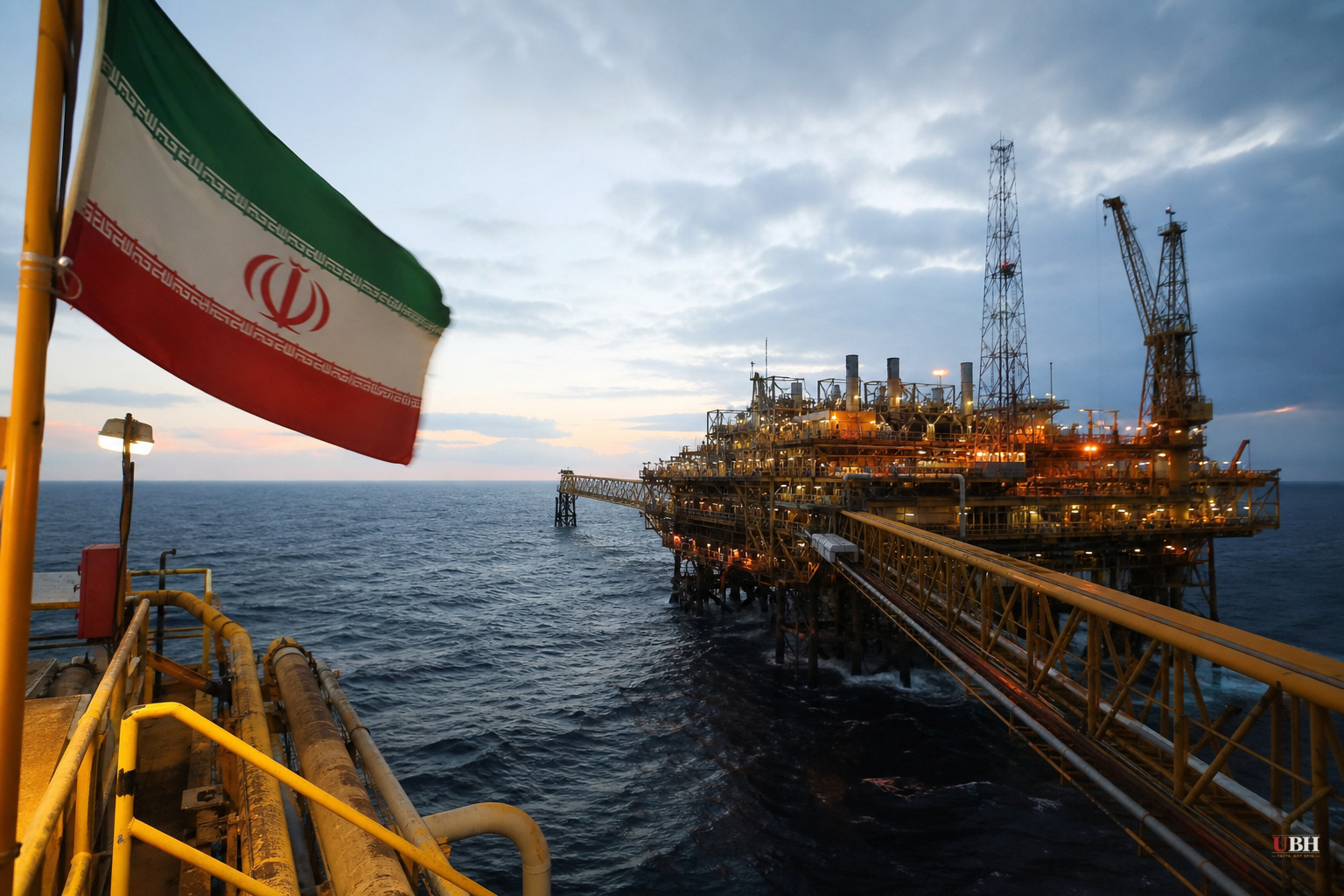
Oil prices climbed Tuesday, August 4, after a rough session Monday, as traders tried to figure out whether the US and Iran are actually talking or not.
Brent crude futures rose $1.04, or 1.24%, to $84.81 a barrel by 0800 GMT, according to Reuters. That followed a 7% drop in the prior session that took Brent to a three-week low. US West Texas Intermediate crude rose 30 cents, or 0.37%, to $80.64 a barrel, clawing back a small piece of Monday's 5% slide.
The whiplash traces back to a claim from President Donald Trump on Sunday that he was holding off on new strikes on Iran while talks proceeded to end the war and resolve disputes over control of the Strait of Hormuz. Iran's Foreign Ministry spokesman Esmail Baghaei shot that down Monday, saying no negotiations with the US were taking place and no meetings were scheduled, according to Reuters.
That denial is exactly why oil bounced back Tuesday instead of continuing to fall. Markets had sold off on hope of a deal. When Iran said there is no deal in the works, some of that hope came out of the price.
"The subsequent marginal gain in prices suggests that investors remain reluctant to fully price out the risk of renewed escalation, leaving the market front and centre influenced by geopolitical headlines," said Ahmad Assiri, research strategist at Pepperstone, according to Reuters.
Hormuz still a mess
The Strait of Hormuz handled roughly one-fifth of global daily oil and liquefied natural gas supplies before the US-Iran conflict escalated in late February, according to Reuters. It remains a central sticking point in whatever talks may or may not be happening.
Shipping traffic through the Hormuz and Bab el-Mandeb chokepoints held largely flat at the start of the week. ANZ analysts told Reuters that "Gulf exports remained under pressure, with Strait of Hormuz transits only marginally improving from extremely depressed levels," adding that Iranian attacks on vessels are still constraining flows.
The strait is still dangerous water. On Tuesday, the UK Maritime Trade Operations agency flagged an incident 20 nautical miles northeast of Oman's Al Khasab, after a cargo vessel radioed that it had been hit by an unknown projectile, Reuters reported.
Meanwhile, ships are routing around the trouble. Six Saudi-flagged supertankers changed course in the Gulf of Aden for southern Africa, while two tankers carrying Saudi oil crossed the Bab el-Mandeb Strait anyway, according to shipping data cited by Reuters.
Goldman's two scenarios
Goldman Sachs laid out its thinking in a note dated July 20. The bank's base case, which is not its worst-case scenario, has Brent averaging $80 a barrel in the fourth quarter and $75 next year, assuming Middle East tensions ease, according to a Bloomberg report cited by the Times of India.
But Goldman flagged the risks as "tilted to the upside." If disruptions through Hormuz and the Red Sea keep going, the bank said Brent could climb above $120 a barrel in the fourth quarter, according to the Times of India.
Goldman's analysts pointed to a specific number driving that risk: estimated Persian Gulf flows have dropped below 45% of pre-war levels, according to the July 20 note reported by the Times of India. That's the kind of supply hit that turns a geopolitical headline into a real price shock.
The bank also told Reuters its global visible stocks counter showed oil inventories falling by 6.3 million barrels per day over the past two weeks. Goldman attributed that to lower flows from the Persian Gulf and Red Sea, reduced Russian oil exports, and stronger Asian imports, including from China. Tighter physical stockpiles mean less cushion if something else goes wrong.
Brent had briefly topped $91 a barrel on July 21, with both Brent and WTI up more than 15% for that week alone, according to figures reported by Coinpaper. That spike pushed national average US gasoline prices above $4 a gallon, with some regions topping $5, before prices retreated toward the low $80s by early August.
What's actually unresolved
There is a real dispute here about basic facts on the ground. Trump says talks are happening. Iran's own Foreign Ministry says they are not. Reuters reported both claims without resolving which one is accurate, which is the honest way to handle it since neither side has produced evidence settling the question.
Goldman's own framing matters too. The bank is not predicting $120 oil. It is warning that's the tail risk if the fighting and shipping disruptions drag on, while its actual forecast points toward prices falling to $80 and then $75 next year. Headlines chasing the $120 number without that context are overstating the bank's actual view.
The next real signal will come from whether Hormuz transit volumes recover from that sub-45% level Goldman flagged, and whether Washington or Tehran produces anything concrete enough to confirm or kill the idea that talks are underway at all.
Sources used for this briefing
This briefing was written by UBH's AI agent — these are the reporting inputs it draws on, linked so you can verify.


