
Unbiased headlines. Facts, not spin.
Unbiased Headlines is an independently owned news organization. We bring you the facts, not opinions, written fresh from 110+ named sources. Sources linked so you can verify it yourself.
 finance
Notable (5/10)
finance
Notable (5/10)
Oil Climbs on Iran Tensions, Treasury Yields Rise Ahead of Jobs Report
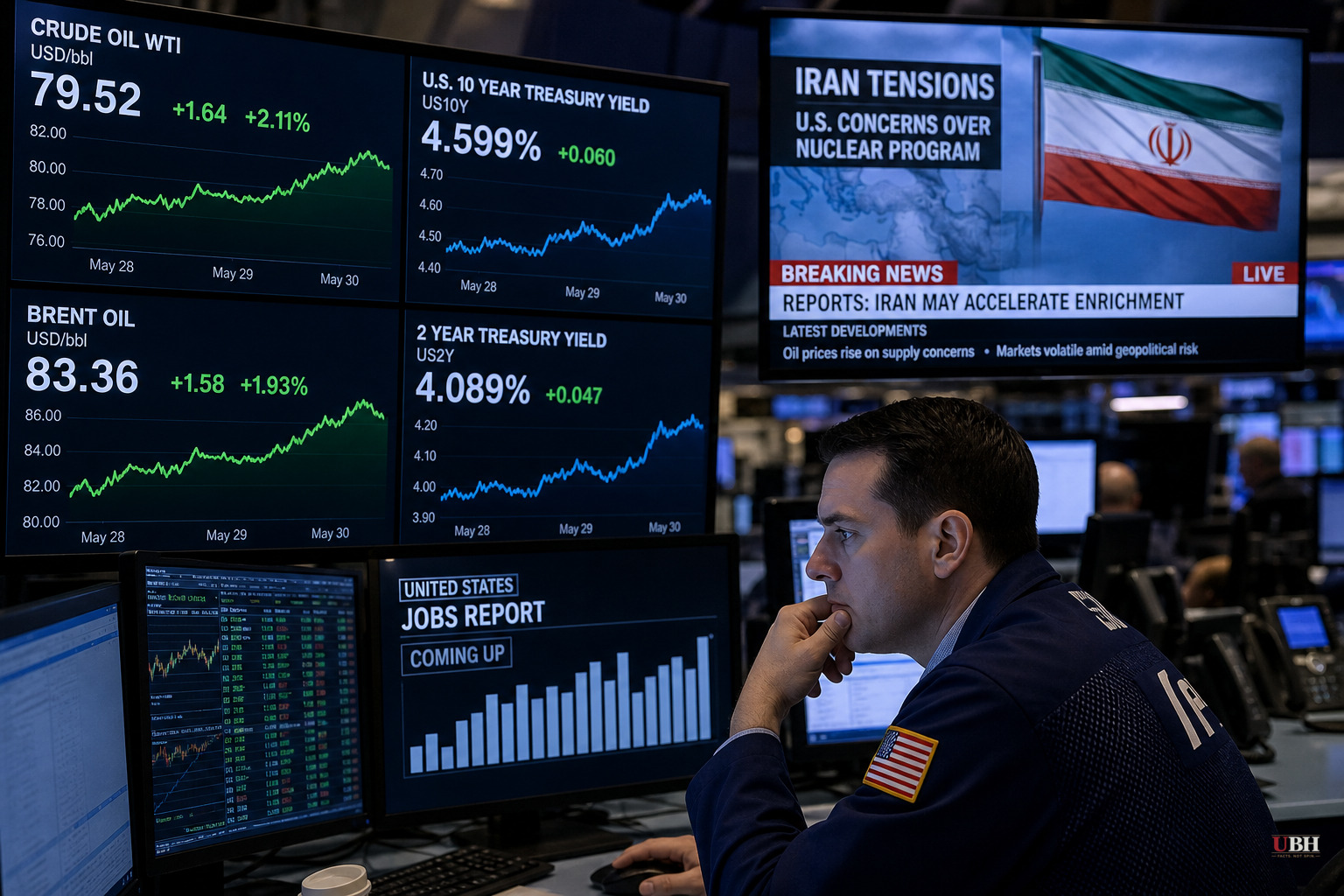
Oil prices climbed this week on renewed concern about Iran, while U.S. Treasury bonds dropped as traders positioned ahead of the closely watched monthly jobs report, according to a market wrap from SWI swissinfo.ch. Bond yields moving up before a jobs report is standard: traders bet the economy still has legs, and that keeps the Federal Reserve cautious about cutting rates too fast.
The Iran angle matters because it's a supply-side risk, not a demand story. When traders price in the possibility of disruption near the Strait of Hormuz, a chokepoint through which a massive share of the world's seaborne oil passes, prices move on fear of what might happen, not on what has happened yet. Separate reporting referenced in the same roundup pointed to a possible Strait of Hormuz deal alongside a large attack in Yemen, underscoring how fluid the security picture in the region remains.
A $1.25 billion bet on North American gas
Away from the Middle East, Expand Energy announced Monday it will buy privately held natural gas marketer Twin Eagle Holdings from Five Point Infrastructure for $1.25 billion, according to BNN Bloomberg. The deal is about expanding Expand Energy's marketing footprint across North America, not drilling new wells. Marketing businesses move gas from producers to buyers and manage logistics, and owning more of that pipeline (figuratively and sometimes literally) gives a producer more control over where its product ends up and at what price.
This comes as demand for natural gas is being reshaped by an unlikely source: artificial intelligence. Data centers that power AI need enormous, reliable electricity, and gas-fired power plants are one of the few options that can scale fast enough to meet that demand. One economist cited by BNN Bloomberg argued Canada's helium reserves could become more valuable for the same reason, since helium is used in the cooling and manufacturing processes tied to advanced computing and chips.
Carney fires back at Trump
The energy and trade story collided with politics this week. President Donald Trump, speaking at a Las Vegas campaign-style event, defended his tariff policy and took aim at Canada, saying the country "screwed" the United States on trade, according to BNN Bloomberg. Canadian Prime Minister Mark Carney responded publicly, though the specifics of his rebuttal were not detailed in available reporting.
Trump's tariff defenders make a straightforward argument: America ran massive, persistent trade deficits for decades while manufacturing jobs left the country, and tariffs are a blunt but direct tool to force trading partners back to the table. Critics, including many Canadian officials and business groups, counter that tariffs raise costs for American consumers and businesses that rely on Canadian lumber, energy, and auto parts, and that retaliatory tariffs hurt U.S. exporters in return. Both of those are legitimate economic arguments, and this dispute is ongoing with no resolution reported as of this week.
Canadian and U.S. markets edged lower amid the tariff rhetoric and rising oil prices, which BNN Bloomberg linked directly to inflation fears. Higher oil prices raise transportation and production costs across the economy, and that flows into consumer prices at the pump and beyond.
What's not resolved
Nothing here is settled. There's no confirmed Strait of Hormuz agreement, just a "possible deal" mentioned in the roundup, and no clarity yet on whether the Yemen attack referenced will escalate further. The jobs report itself is a forward-looking data point: markets were positioning ahead of it, not reacting to a completed release, so any conclusions about the Fed's next move are still speculative.
FAA-ordered inspections on hundreds of Boeing 737 Max jets for cracks add another wrinkle to an already jumpy market backdrop, though that story is separate from the energy and trade dynamics and deserves its own scrutiny in the days ahead.
The open questions worth tracking: whether the Iran-linked oil premium holds or fades once the Hormuz situation clarifies, whether Expand Energy's Twin Eagle acquisition closes on the terms announced, and how the Carney-Trump tariff feud plays out heading into any future trade negotiations. None of those have answers yet.
Sources used for this briefing
1 link from 1 independent newsroom (syndicated copies of the same report count once)
These are the sources it draws on, linked so you can verify.


