
Unbiased headlines. Facts, not spin.
Unbiased Headlines is an independently owned news organization. We bring you the facts, not opinions, written fresh from 110+ named sources. Sources linked so you can verify it yourself.
 finance
Notable (6/10)
finance
Notable (6/10)
S&P 500 Hits Record Highs This Week on a Record Wave of Call-Option Buying
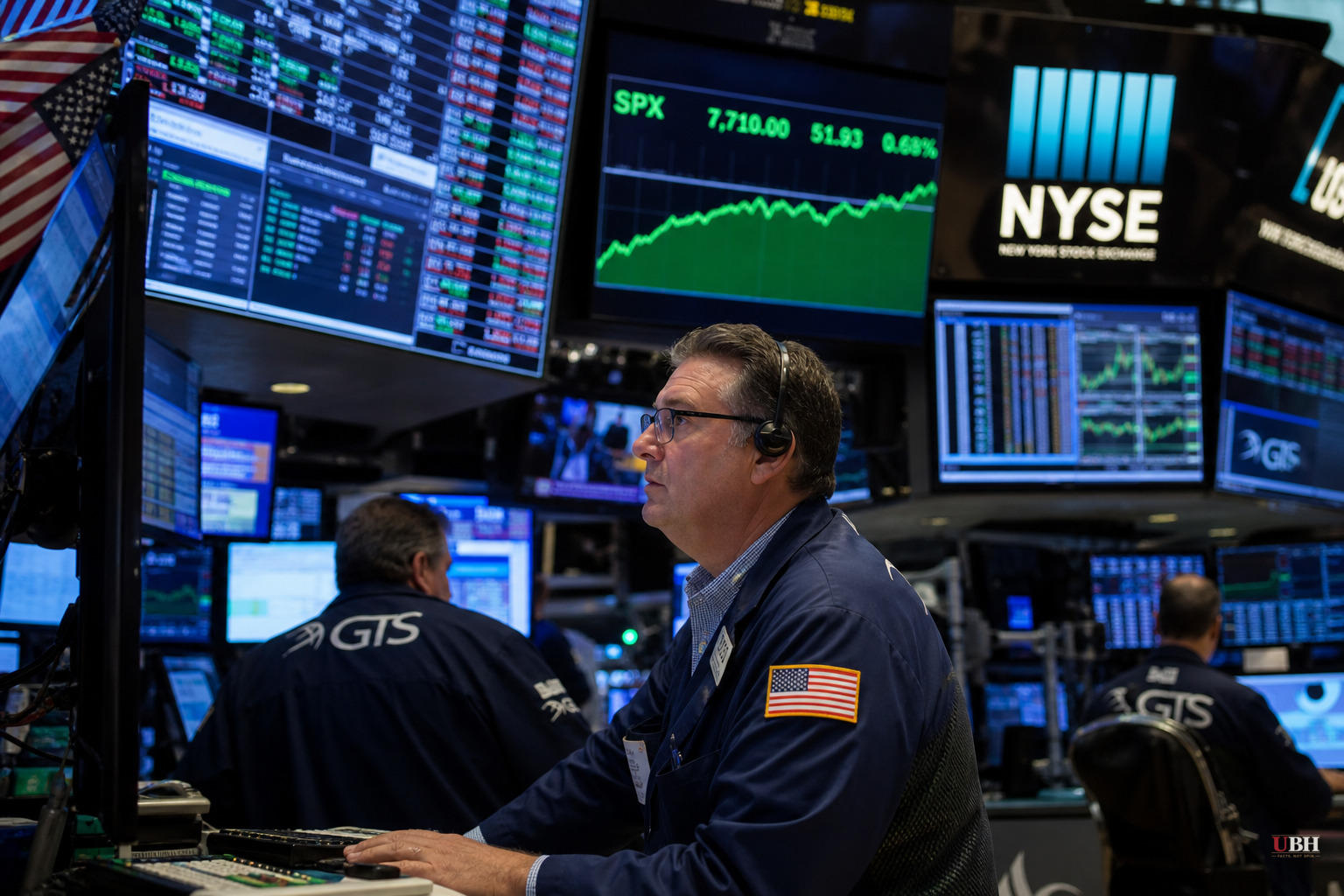
The S&P 500 closed out the week ending Friday, August 7, up 3.6%, adding another 0.6% on Friday alone and pushing past 7,700 for the first time in the index's history, according to CNBC. The Cboe Volatility Index, Wall Street's so-called fear gauge, fell to its lowest level since January by Friday.
On Tuesday, August 4, more than 4 million S&P 500 index call options traded on Cboe Global Markets, a single-day record that beat the previous mark set in May by 10%, CNBC reported. Zero-day-to-expiry calls alone accounted for 2.4 million of those trades, also a record. The put/call ratio collapsed to 0.83, the second-lowest reading ever recorded, according to Cboe data cited by CNBC and BigGo Finance. Since puts are normally used as insurance against a drop, a ratio that low means almost nobody was buying protection. Everybody wanted in on the upside.
Jason Coogan, an S&P 500 options pit trader at Simplex Trading, described the order flow heading into Tuesday as "a one-way flow in orders," according to Briefs Finance. A trader on the Cboe floor told CNBC that Tuesday's rally brought back the old-school din of the trading pits: "That's what it used to sound like... Sometimes it sounds like that on down days, but we were up. That was really busy."
According to Morningstar, this rally may be more mechanical than fundamental. Going into the Federal Reserve's July 29 rate decision, options dealers were sitting on heavily negative gamma exposure. In plain terms, that means market makers who sold those options had to hedge by buying as prices rose and selling as prices fell, which amplifies whatever direction the market is already moving. That dynamic, Morningstar's Michael Kramer wrote, likely reinforced the initial surge higher.
That negative-gamma setup has now flipped. The market has moved into positive-gamma territory, according to Morningstar, meaning dealer hedging flows now work against the market's direction and should dampen further swings. The tailwind that helped launch this rally is gone. Whatever happens from here has to come from actual earnings and economic data, not options mechanics.
On August 4, the S&P 500 jumped 1.8%, yet the VIX rose by a full point on the same day, an inversion of the usual relationship where fear and stock prices move opposite each other, according to BigGo Finance, which cited CNBC's reporting. The same disconnect showed up again on August 5. Market analysts cited by BigGo Finance say this stocks-and-VIX-rising-together pattern shows up on roughly 20% of trading days, typically when a fast rally out of a low-volatility environment triggers a flood of call buying. This signal suggests the rally's mechanics are unusual.
Not everyone reads this as fragile. UBS Group's head of equity derivatives research, Max Grinacoff, told Briefs Finance the rally is broadening well past the big tech names that have driven markets for years, pointing to 12 all-time highs in the equal-weight S&P 500 version since June. UBS projects the S&P 500 will finish the year at 8,100, nearly 5% above where it stood earlier in the week. Grinacoff said flatly, "We are fundamentally quite bullish," arguing that stronger-than-expected earnings from "tech-plus" companies aren't fully priced in yet.
The earnings numbers back up part of that optimism. S&P 500 earnings are on pace to grow 47% in the second quarter, which would be the fastest growth rate since the 2021 rebound from the Covid crash, according to FactSet data cited by CNBC. Semiconductor stocks led sector gains this week, with the iShares Semiconductor ETF up more than 7% and the Corgi Lithography & Semiconductor Photonics ETF up 13%, CNBC reported. The 10-year Treasury yield, meanwhile, stalled at 4.7%, removing one potential headwind.
None of this proves the rally is fake. Strong earnings are real. UBS's bullish call is a real forecast from a real bank, not spin. But the mechanics matter. When 4 million-plus call contracts trade in a single day and the put/call ratio hits a near-record low, a meaningful chunk of the move is coming from options positioning and dealer hedging, not just investors reassessing company fundamentals. Morningstar's read is that the market has now shifted from a self-reinforcing positive-feedback loop into a regime where dealer hedging works against further gains. Whether the S&P 500 keeps climbing toward UBS's 8,100 target likely depends on whether upcoming earnings and economic data can carry the load options mechanics were carrying this week.
Sources used for this briefing
4 links from 3 independent newsrooms (syndicated copies of the same report count once)
These are the sources it draws on, linked so you can verify.


