
Unbiased headlines. Facts, not spin.
Every story is an unbiased news briefing written from 110+ sources across the spectrum — sources linked so you can verify it yourself.
 finance
Notable (6/10)
June 6, 2026 at 08:36 AM
finance
Notable (6/10)
June 6, 2026 at 08:36 AM
Oil Above $95 and Rising: Markets Are Betting Iran Talks Fail While Everyone Else Looks Away
The Market Sees Something the Evening News Doesn't
While domestic political chaos eats up airtime, a quieter and potentially more consequential story has been building in energy markets for weeks.
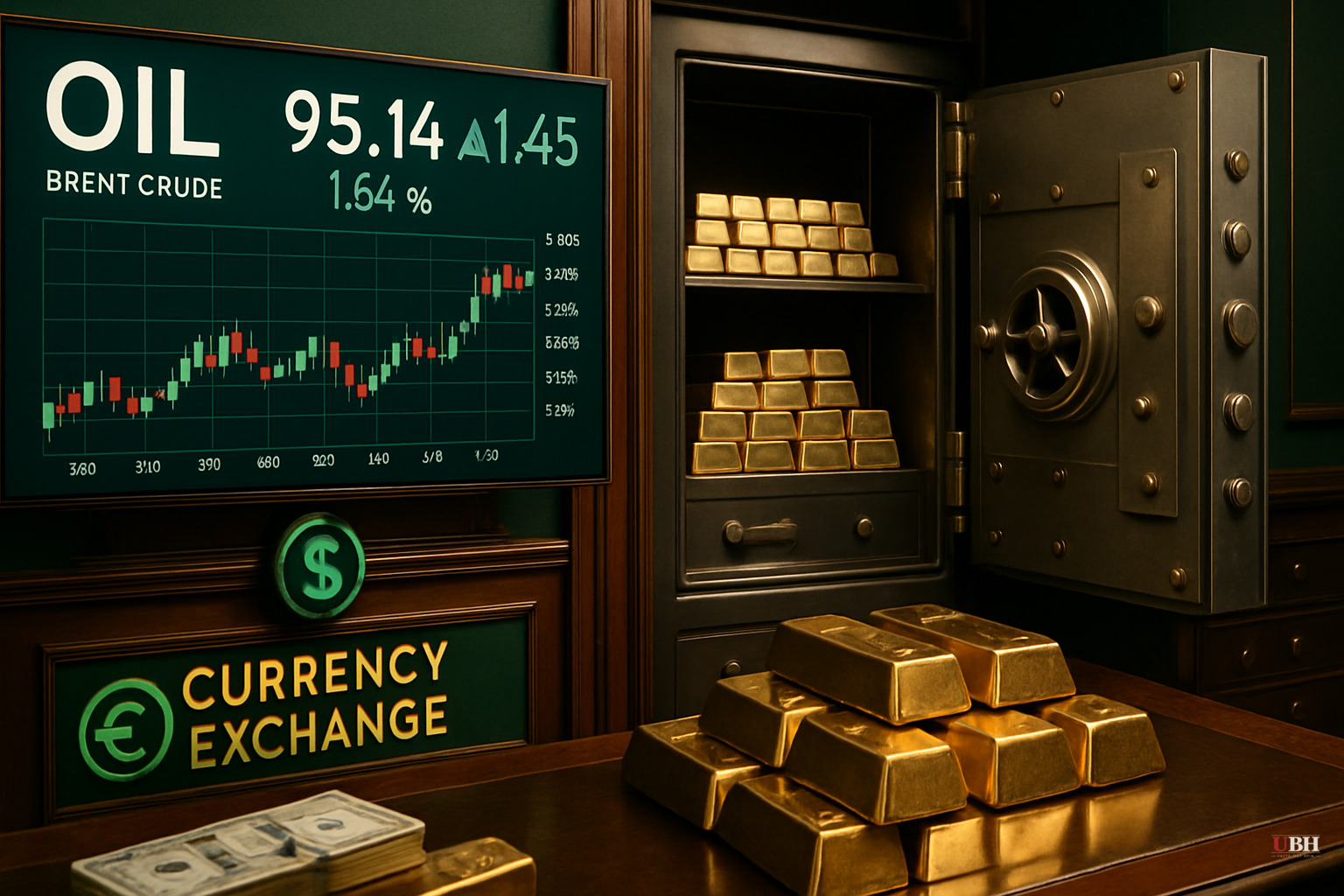
Brent crude has climbed back above $95 per barrel — dramatically higher than pre-crisis levels — as optimism around a U.S.-Iran diplomatic breakthrough has eroded again, according to ZeroHedge contributor Milan Adams. Traders aren't watching the Iran negotiations because they care about diplomatic ceremony. They're watching because a growing number of investors believe the global economy is far more exposed to a prolonged supply disruption than any government spokesperson will admit on camera.
What's Actually Happening With Iran
For much of the past year, Wall Street convinced itself a deal was inevitable. The logic was straightforward: economic pressure on Tehran would eventually force a compromise, Washington needed a political win, and both sides had incentives to avoid escalation.
That consensus is cracking.
Conflicting reports about the state of negotiations have sent oil markets into repeated bouts of volatility. There is no clear timeline. There is no confirmed framework. What there is, is uncertainty — and uncertainty has a price.
Industry executives cited by Adams have warned publicly that markets may still be underestimating the risks ahead. Energy industry insiders tend to be conservative in their public assessments. When they say the market is too optimistic, it's worth noting.
The Real Problem: No Safety Net Left
In 2008, governments absorbed a catastrophic financial crisis by spending trillions. In 2020, central banks flooded the system with liquidity. Those tools worked — at a cost.
That cost is now the problem.
Governments across the developed world are carrying debt loads that would have been considered extraordinary a decade ago. Interest costs are rising faster than economic growth in several major economies. Consumers have spent the better part of three years absorbing inflation that never fully retreated to pre-pandemic norms.
The shock absorbers are gone. If a prolonged oil disruption hits now, the playbook that worked in prior crises simply doesn't exist in the same form. This is arithmetic, not ideology.
What Mainstream Coverage Is Getting Wrong
Left-leaning outlets have largely framed the Iran situation as a diplomatic challenge for the Trump administration — a political story about negotiations and credibility. Right-leaning outlets have covered it more as a national security story, focusing on Iran's nuclear ambitions and regional aggression.
Both framings are partially correct. Both overlook the economic core of the story.
The question that matters most to regular Americans is not whether Trump gets a deal or whether Iran cheats on enrichment thresholds. The question is: what does $95-plus oil do to an economy already dealing with stubborn inflation, rising borrowing costs, and slowing growth? Cable news is not running that segment. Markets, however, are voting on it every single day.
The Uncertainty Premium Is Real
War itself may not even be necessary to cause significant economic damage.
A prolonged period of unresolved negotiations — with oil markets yo-yoing between hope and despair on each new leaked report — creates its own drag. Businesses delay investment decisions. Airlines hedge fuel costs at unfavorable rates. Shipping companies build risk premiums into contracts. Consumers see gas prices stay elevated with no clear end in sight.
Markets are increasingly pricing in a scenario: not a dramatic explosion, but a grinding, months-long uncertainty tax on the entire global economy.
What This Means for Regular People
If you're filling a gas tank, heating a home, or running a small business that depends on transportation or logistics, the Iran standoff is already affecting your wallet — even if your local news station spent 45 seconds on it between two segments about congressional drama.
Oil above $95 flows through the entire economy. It's not just gas prices. It's food transport, manufacturing inputs, airline tickets, and the cost of almost everything that moves.
And if the deal collapses entirely — or if the negotiations drag into late 2026 with no resolution — the Federal Reserve and other central banks will be facing energy-driven inflation pressure at exactly the moment their policy options are most constrained by existing debt levels.
Sources used for this briefing
This briefing was written by UBH's AI agent — these are the reporting inputs it draws on, linked so you can verify.


