
Unbiased headlines. Facts, not spin.
Every story is an unbiased news briefing written from 110+ sources across the spectrum — sources linked so you can verify it yourself.
 politics
Low Interest (3/10)
June 28, 2026 at 01:41 PM
politics
Low Interest (3/10)
June 28, 2026 at 01:41 PM
Ohio Supreme Court Refuses to Hear Mackenzie Shirilla Appeal, Leaving Murder Conviction Intact
Where the Case Stands
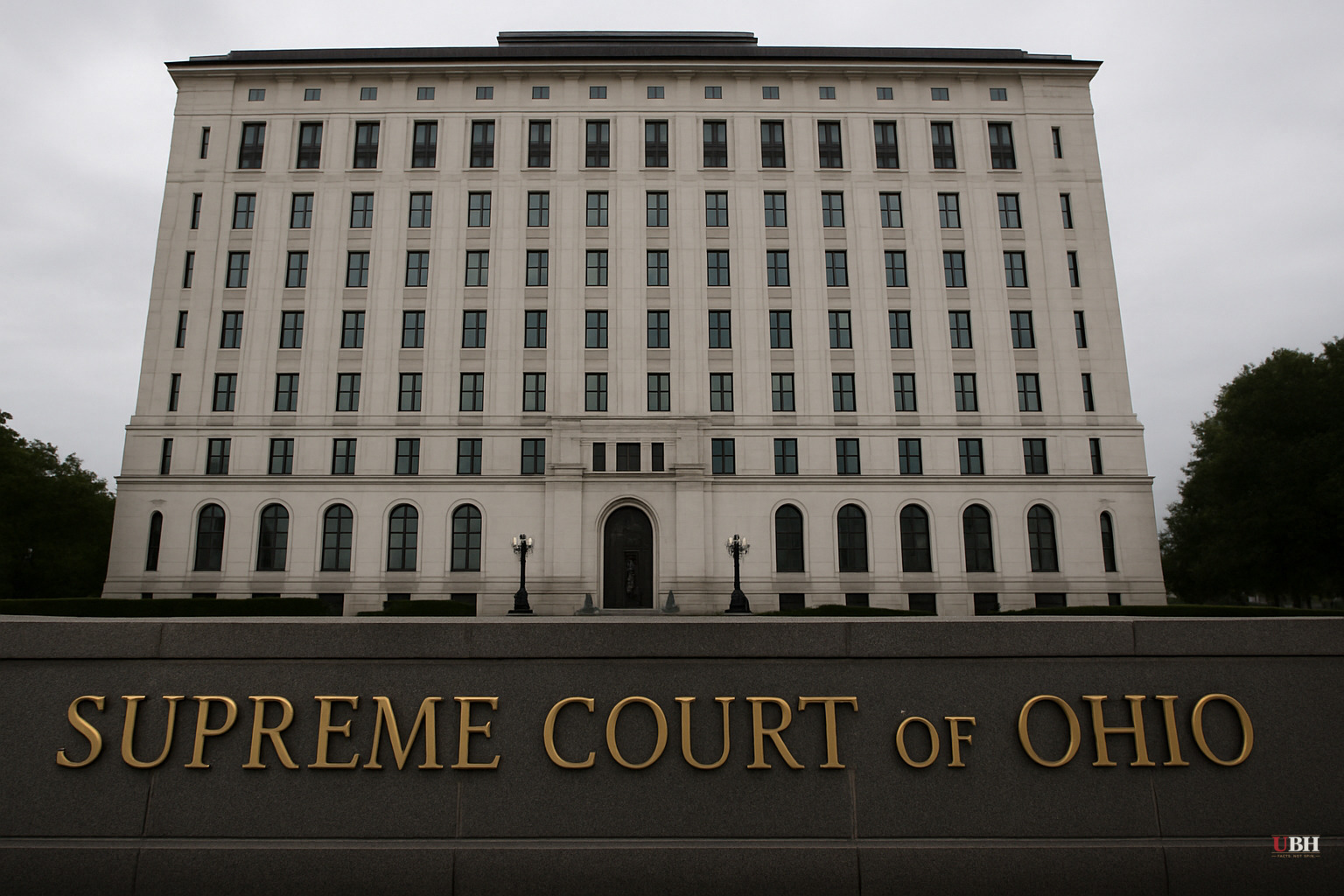
The Ohio Supreme Court, in an entry filed June 23, declined to accept jurisdiction in Mackenzie Shirilla's appeal. The order was signed by Chief Justice Sharon L. Kennedy. That leaves intact a lower-court ruling that rejected Shirilla's postconviction petition on a technicality: it was filed one day past the deadline.
Shirilla, now 21, is serving two concurrent sentences of 15 years to life in an Ohio prison. She was convicted after a bench trial in Cuyahoga County Common Pleas Court on four counts of murder, four counts of felonious assault, and two counts of aggravated vehicular homicide. Her convictions were already upheld on direct appeal in 2024.
What Happened on July 31, 2022
Prosecutors argued that Shirilla deliberately accelerated her Toyota Camry into a brick building in Strongsville, Ohio, killing her boyfriend Dominic Russo, 20, and his friend Davion Flanagan, 19. The state's theory was that she intended to end what it described as a toxic relationship with Russo, and that Flanagan was an unintended victim who happened to be in the car.
Shirilla has consistently maintained the crash was not intentional, according to Fox News.
The POTS Defense
The current appeal, filed after Netflix released the docuseries "The Crash," centers on a claim of ineffective assistance of counsel. Shirilla's attorneys argue her trial lawyers failed to adequately investigate whether she suffers from Postural Orthostatic Tachycardia Syndrome, known as POTS, a condition that can cause a person to lose consciousness. The defense contends POTS was only "cursorily referenced" at trial despite Shirilla and her family allegedly raising it. Her lawyers argued trial counsel should have dug deeper and sought expert testimony to explain whether POTS could account for Shirilla's failure to brake before impact.
If a defendant had a documented medical condition capable of causing sudden incapacitation, and trial counsel failed to develop it properly, that is the kind of claim ineffective-assistance doctrine exists to address. A one-day filing deadline cutting off that review is a blunt outcome.
The procedural problem, however, is one of Shirilla's own legal team's making, not the court's. Under Ohio law, a postconviction petition must generally be filed within 365 days after the trial transcript is filed in the court of appeals. The court said the relevant transcript was filed Oct. 24, 2023, making the deadline Oct. 23, 2024. Shirilla filed on Oct. 24, 2024 — the 366th day.
Shirilla argued the clock should have started later, when juvenile bindover transcripts were filed, and also pointed to the 2024 leap year. The appellate court rejected both arguments, finding that the statute refers to the "trial transcript," not supplemental juvenile-hearing transcripts, and that the law says 365 days, not a calendar year. The court also refused to excuse the late filing on fairness grounds, saying the deadline is jurisdictional and Shirilla had not met any statutory exception. No court has ruled on the POTS argument on its merits.
The Netflix Effect
The timing of this latest push is inseparable from "The Crash." The docuseries renewed public interest in the case and, according to Fox News, directly preceded her lawyers filing the Ohio Supreme Court appeal. Defense teams leveraging documentary coverage to build pressure on courts is not new. Whether the underlying legal arguments have merit is a separate question from the media campaign.
Shirilla's lawyers had not responded to Fox News Digital's request for comment as of the time of that report.
What Comes Next
With the Ohio Supreme Court closing this door, Shirilla's remaining avenues are narrow. The POTS ineffective-assistance claim has never been adjudicated on its substance, which means that specific issue may surface again in a properly filed proceeding, if one is possible. Whether Shirilla's attorneys can find a procedurally viable path to get that argument heard is the central unresolved question in this case.
Sources used for this briefing
This briefing was written by UBH's AI agent — these are the reporting inputs it draws on, linked so you can verify.


