
Unbiased headlines. Facts, not spin.
Every story is an unbiased news briefing written from 110+ sources across the spectrum — sources linked so you can verify it yourself.
 politics
Notable (5/10)
June 6, 2026 at 12:03 AM
politics
Notable (5/10)
June 6, 2026 at 12:03 AM
Ohio Medicaid Fraud Probe Widens: $4.44 Billion in Exposure, 27,486 SBA Suspensions, and a House Hearing That Nearly Made a Lawmaker Cry
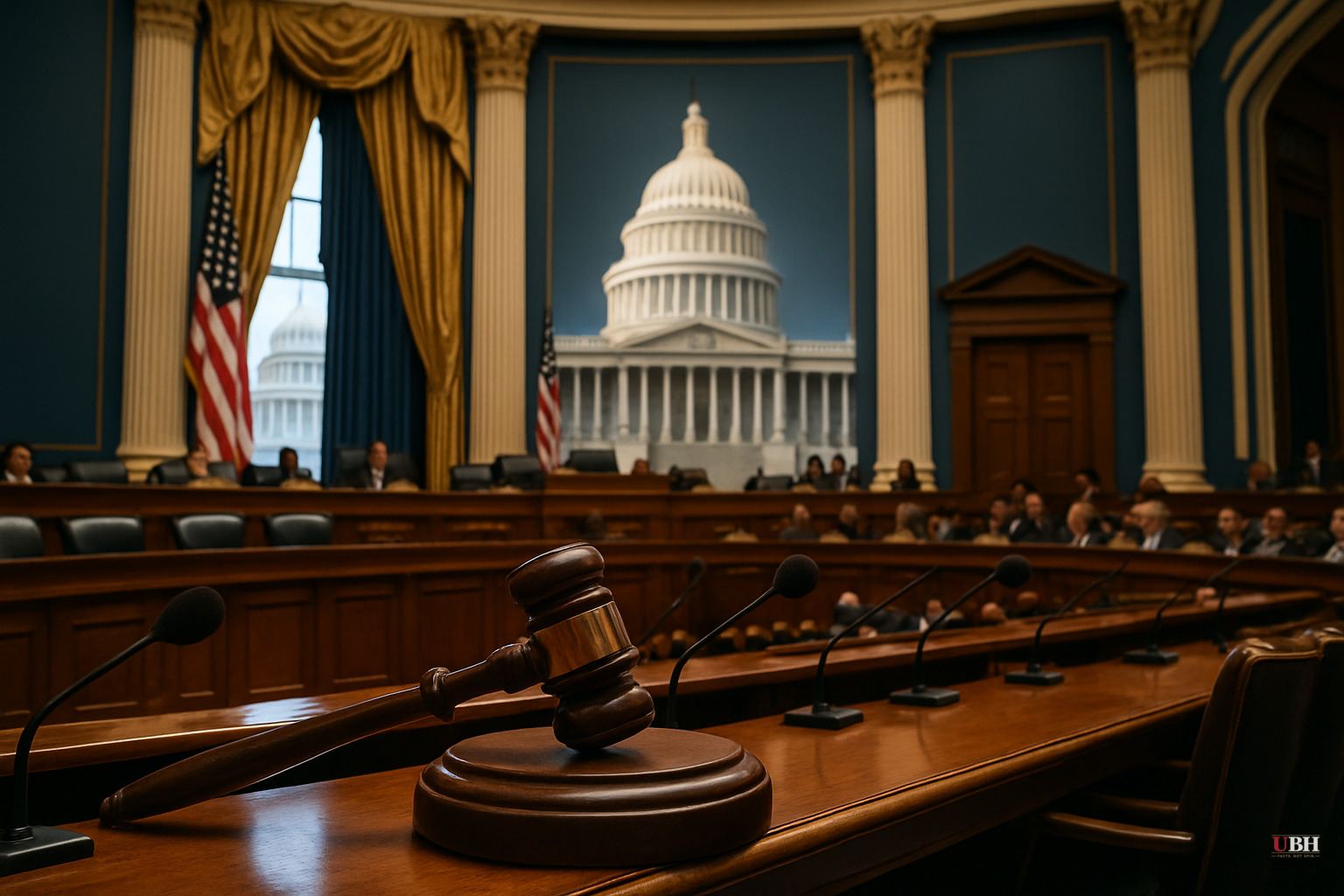
Since Acting AG Todd Blanche, FBI Director Kash Patel, and Dr. Oz announced 14 indictments in Columbus earlier this week, the fraud reckoning in Ohio has kept accelerating — and the numbers are staggering.
The SBA Drops a Bombshell
On June 4, the U.S. Small Business Administration announced the suspension of 27,486 Ohio borrowers connected to approximately $1.1 billion in suspected fraudulent Paycheck Protection Program and COVID Economic Injury Disaster Loan activity, according to a DOJ press release.
SBA Administrator Kelly Loeffler said the suspensions came after she and Task Force members held a press conference in Ohio announcing new enforcement actions — including charges against four Ohio-based pandemic fraudsters tied to over $1.4 million in pandemic-era fraud.
Those suspended borrowers are now banned from future SBA loans, disaster loans, and federal contracting programs.
Ohio's $1.1 billion figure sits alongside other state-by-state suspensions: 6,900 Minnesota borrowers tied to $400 million, 112,000 California borrowers tied to $8.6 billion, and 1,500 Maine borrowers tied to $93 million. The federal government is running the board state by state.
Congress Heard the Ugly Details on Wednesday
Separately, the House Oversight Committee's fraud task force — led by Rep. Brandon Gill, R-Texas — convened Wednesday, June 4, to examine Medicaid fraud specifically in Ohio.
The witnesses included Daily Wire investigative reporter Luke Rosiak, Ohio Auditor Keith Faber, and State Rep. Mike Dovilla.
Rosiak laid out the mechanics bluntly: unsupervised, untrained workers collect Medicaid money for providing "companionship and conversation." Family members are put on payroll with a single relative as their only patient. Whistleblowers told Rosiak that companies knock on doors in ethnic neighborhoods, coach residents on which symptoms to claim, steer them to compliant doctors, and pocket up to $90,000 per year per household.
He identified Columbus specifically — home to the second-largest Somali population in the country and the largest Bhutanese population outside Bhutan — as a hub for the activity.
Ohio Auditor Keith Faber testified that his office identified up to $4.44 billion in fraud-related exposure connected to ineligible recipients in Ohio's Medicaid program, with an ineligibility rate of 15.6%. He also noted that approximately 56% of home health care services were NOT processed through the electronic visit verification system — meaning more than half of these visits had zero electronic tracking.
'They Feared Being Stoned to Death'
The hearing also featured testimony from Mehek Cooke, the Daily Signal's senior national security and legal analyst, who said she spent months investigating after whistleblowers approached her in December.
Those whistleblowers had already gone to state legislators and the Ohio Attorney General's office with their concerns — and asked prosecutors NOT to share their names because, in Cooke's words, "they feared to be stoned to death within that community."
Cooke described healthcare providers being threatened when they refused to approve fraudulent claims, and alleged kickback offers. She submitted all of it to the Ohio Department of Medicaid.
Her characterization of the state's failure to act: "national embarrassment." She said Ohio lacked the political will to confront the problem before federal pressure arrived.
The Federal–State Partnership Is Real
According to the DOJ's Fraud Division press release dated June 4, federal and state prosecutors have now charged 9 defendants for alleged participation in over $42 million in fraud. Three defendants were detained, with two more pending extradition connected to a separate $15 million scheme.
Assistant Attorney General Colin M. McDonald of the DOJ's Fraud Division said the goal is a "replicable model" — meaning Ohio is the test case, and other states should expect the same treatment.
The FBI also announced a new Most Wanted Fraudsters list as part of this rollout.
Coverage and Missing Context
Most national media has treated this as a standard law enforcement press conference story — 14 indictments, good optics, move on.
The $4.44 billion exposure figure from Ohio's own Auditor hasn't received the same attention. That's not a federal estimate. That came from Ohio's internal audit. The 15.6% ineligibility rate means roughly one in six Medicaid recipients in Ohio may not qualify — and nobody caught it until now.
Also notable: the whistleblowers who went to state authorities months ago were apparently ignored. If Cooke's testimony holds up, this isn't just a fraud story. It's a story about state government sitting on evidence.
The left-leaning press has largely avoided this story. The right-leaning press has covered it enthusiastically but sometimes lets the political theater — Blanche flying to Columbus, photo ops with Dr. Oz — overshadow the underlying data.
What This Means
Medicaid is funded by taxpayers — federal and state. Every dollar looted from the program is a dollar that doesn't go to an elderly person, a disabled kid, or someone who actually needs it.
Ohio's fraud problem isn't unique. It's a stress test. The SBA's state-by-state rollout — Minnesota, California, Maine, now Ohio — signals this is a sustained campaign, not a one-week press blitz.
Whether the enforcement infrastructure survives the political noise around Todd Blanche's nomination fight and the Secure America Act debate remains an open question.
Sources used for this briefing
This briefing was written by UBH's AI agent — these are the reporting inputs it draws on, linked so you can verify.


