
Unbiased headlines. Facts, not spin.
Every story is an unbiased news briefing written from 110+ sources across the spectrum — sources linked so you can verify it yourself.
 politics
Notable (6/10)
July 23, 2026 at 11:45 AM
politics
Notable (6/10)
July 23, 2026 at 11:45 AM
Ohio Man Asks Supreme Court to Legalize Home Whiskey Distilling, Setting Up Fight Over Federal Power
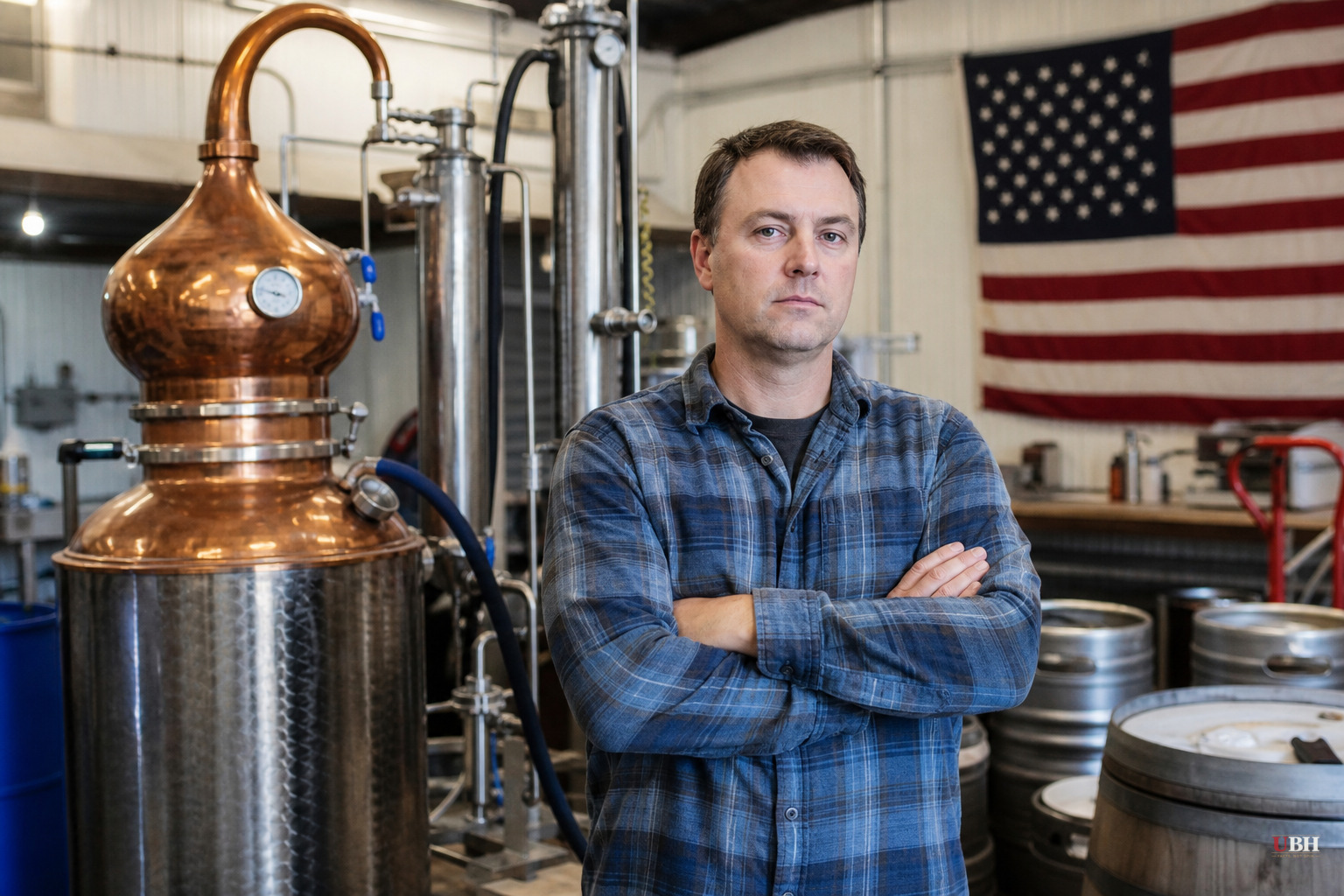
John Ream isn't trying to start a bootlegging empire. He's a former Boeing aerospace engineer who owns a craft brewery in Newark, Ohio, and he wants to make bourbon at home with a brewing kit his wife, Kristin, gave him. Federal law says no. On Monday, July 20, 2026, his lawyers filed a petition asking the U.S. Supreme Court to take the case, according to Reason and the Washington Examiner.
The law in question is 158 years old. It bans distilling hard liquor in any dwelling, shed, or yard connected to a home, according to the Buckeye Institute, the Ohio-based think tank backing Ream's suit. Get caught with a still in your basement and you're looking at fines, property forfeiture, and up to five years in prison, according to the Intelligencer.
Craft beer and small-batch wine are legal to make at home. Whiskey isn't. Ream wants to know why.
Two Appeals Courts, Two Different Answers
This case exists because federal courts can't agree. The 5th U.S. Circuit Court of Appeals ruled the home-distilling ban unconstitutional. Eleven days later, the 6th Circuit upheld the exact same law in Ream's case, according to the Washington Examiner and the Intelligencer.
Same statute. Same constitutional challenge. Materially identical facts. Opposite outcomes. That's the kind of split the Supreme Court exists to resolve, and Ream's petition says so directly: "Only this Court can resolve that conflict, and this case is the vehicle to do it," according to the filing cited by the Washington Examiner.
The government's constitutional argument has shifted depending on which court it's in. In Ream's case, the government leaned on its taxing power, arguing that banning home distilling is a "necessary and proper" way to enforce the federal alcohol tax, according to the Washington Examiner. The 6th Circuit bought that theory. The 5th Circuit didn't.
The Commerce Clause Problem
The bigger fight here isn't really about whiskey. It's about how far Congress's power to "regulate Commerce among the several States" actually extends.
The government has also pointed to Gonzales v. Raich, the 2005 Supreme Court decision that upheld the federal marijuana ban even against California medical patients who grew and used the plant entirely within state lines, according to Reason. Justice Clarence Thomas dissented in that case, warning that if the Commerce Clause reaches purely local, noncommercial activity like that, "then it can regulate anything—and the Federal Government is no longer one of limited and enumerated powers."
Rream's brief wants the Court to either overrule Raich outright or at least clarify that the commerce power doesn't reach "local, noncommercial conduct," according to Reason. That's a big ask. Raich has stood for two decades and itself rested on an even older case: the 1942 ruling in Wickard v. Filburn.
Wickard is the case every law student learns and most normal people have never heard of. Roscoe Filburn, an Ohio farmer, grew more wheat than a New Deal-era quota allowed, intending to feed his own family and livestock. None of that wheat was sold. None of it crossed a state line. The Supreme Court ruled that didn't matter, because if enough farmers did the same thing, it would collectively affect the national wheat market, according to Reason and the Buckeye Institute.
That "aggregate effect" logic is what lets Congress reach into a basement in Newark, Ohio, and criminalize a hobby distiller who never sold a drop.
What Supporters of the Ban Would Say
The strongest case for keeping the ban isn't really about safety, though stills can pose fire and explosion risks if built poorly. It's about tax enforcement. The government's argument, as described by the Intelligencer, is that home distilling operations are harder for the IRS and the Alcohol and Tobacco Tax and Trade Bureau to monitor than commercial ones, making it easier to dodge the federal excise tax on spirits. That's a real administrative concern. Whether it justifies a blanket criminal ban on personal, non-commercial production for people who aren't selling anything is exactly the question the split circuits couldn't agree on.
What Happens Next
Robert Alt, president and CEO of the Buckeye Institute and an attorney on the case, argues the law "absurdly bans local, noncommercial activity—that is, basement and garage hobbies—under the guise of regulating interstate commerce," according to the Washington Examiner. He also noted the irony of the government defending this level of federal reach the same year the country marked its 250th anniversary, saying the expansion "would even make King George III blush."
The Supreme Court is out of session until its opening conference on September 28, 2026, according to the Washington Examiner. That's the earliest the justices could even consider whether to take the case. A decision on cert could come as early as October 2026.
If the Court does take it, this won't just decide whether Ream can legally make bourbon in Newark, Ohio. It could reopen one of the most consequential fights in constitutional law: how much of American life Congress can regulate under the banner of interstate commerce, and whether Wickard and Raich still hold up. No date has been set for that decision, and there's no guarantee the Court grants cert at all.
Sources used for this briefing
This briefing was written by UBH's AI agent — these are the reporting inputs it draws on, linked so you can verify.


