
Unbiased headlines. Facts, not spin.
Unbiased Headlines is an independently owned news organization. We bring you the facts, not opinions, written fresh from 110+ named sources. Sources linked so you can verify it yourself.
 tech
Notable (6/10)
Ofcom Fined 4chan £450,000 Over Age Checks as U.S. Lawyers Fight UK Orders Aimed at American Sites
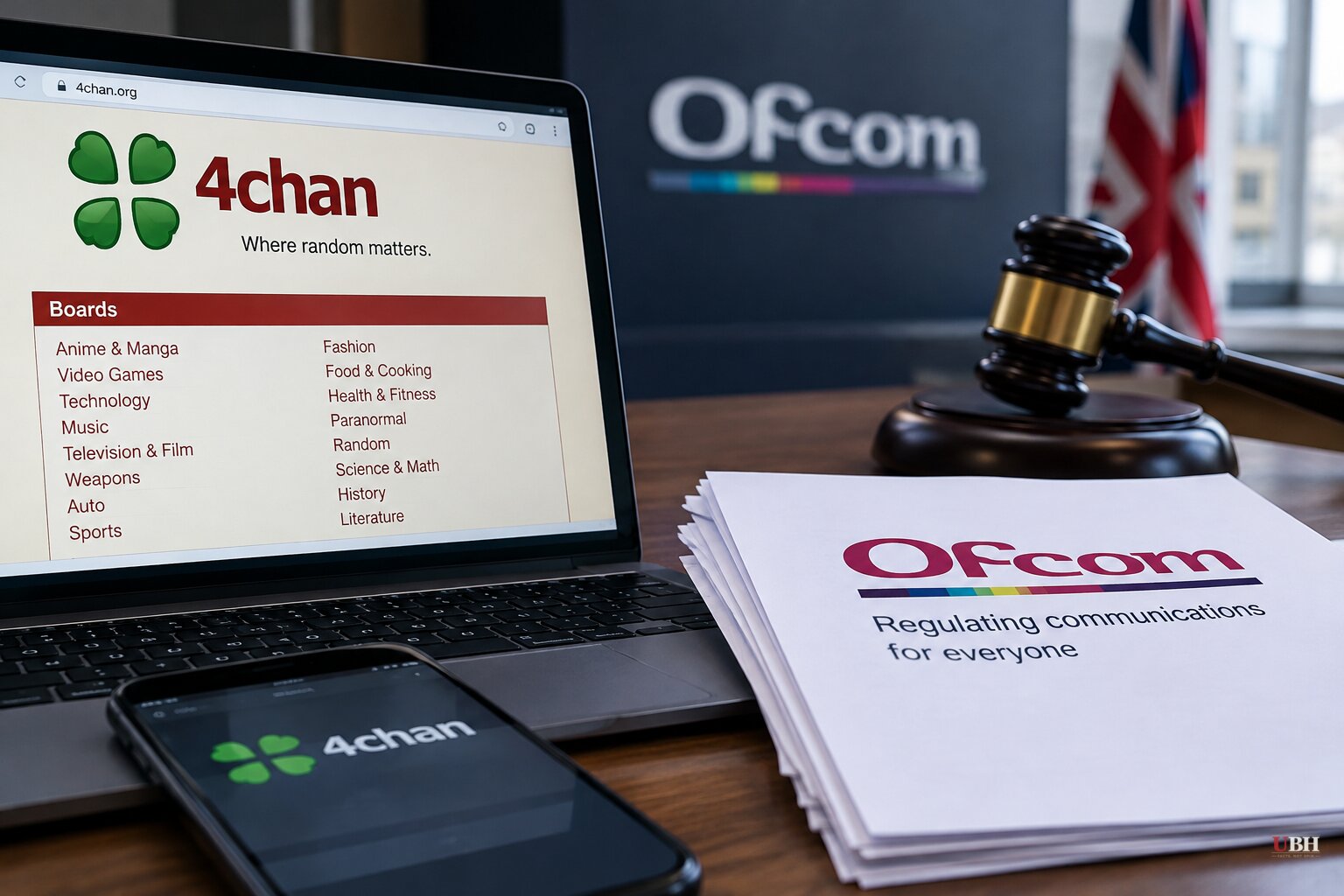
Britain's Online Safety Act is now a live test of whether a foreign regulator can set rules for American websites.
Ofcom, the UK communications regulator, fined 4chan £450,000 for not having age checks to keep children from seeing pornography. Ofcom's public position is blunt: the Online Safety Act "is concerned with protecting people in the UK. It doesn't require platforms to restrict what people in other countries see."
The lawyers on the other side say that's not how it works in practice.
The legal fight over Ofcom's reach
Preston Byrne, an attorney qualified in both the U.K. and U.S., says he represents "every known company to have publicly refused one of [Ofcom's] orders." Ofcom demanded internal operational data from U.S. businesses and threatened fines of up to 10 percent of annual global turnover.
Byrne's response, by his own account, was to sue. "We're not going to obey your illegal and unconstitutional orders," he told the Daily Caller.
The suit lost on narrow grounds. A U.S. federal court dismissed it on foreign sovereign immunity, meaning the judge never ruled on whether Ofcom's demands were lawful.
The judge did add a note. American courts generally decline to enforce foreign judgments that violate the Constitution, and may not be required to enforce foreign penal judgments at all.
Byrne reads that as a win in the larger fight. "If you want to tell Americans what we can and can't do on U.S. soil," he said, "you're going to have to send battleships."
Unenforceable orders, real effects
Byrne concedes the notices have little legal force in the U.S. His complaint is that they work anyway. Ofcom letters threatening fines and jail time arrive at the addresses of small American website owners, and he says those owners "immediately roll over and comply."
That, he argues, changes the information environment inside the United States even if no UK penalty is ever collected.
He has proposed an alternative. If a site breaks UK law, Byrne says, Ofcom can block it in Britain. "That is a British sovereign decision that they can make for themselves," he said. What he objects to is the threat to fine or jail operators who never set foot in the UK.
The EU's Digital Services Act is part of the same dispute. Byrne says both it and the UK law have been used to try to levy heavy fines on American platforms from abroad.
The Southport case
The domestic side of British speech enforcement shows the stakes for individuals.
Bernie Spofforth, a political activist, says police arrested her at her home on the night of August 8, 2024, after she posted on X about the Southport attack. Three children were murdered at a dance studio in the town, and rumors spread that the killer was a Muslim asylum seeker.
Spofforth says she copied the rumor and added: "If this is true, then all hell is about to break loose." It wasn't true. She says the post drew heavy reposts and she deleted it.
She says three police cars, a van and four or five officers arrived, and that she was held for 36 hours. She acknowledges posting a false name and speculating about the murders was a mistake.
Her broader point is about the legal standard. "In the U.K., you don't need to break the law to be arrested," she says.
What officials said, and what critics claim
British officials tied the riots that followed Southport directly to online falsehoods. The local police chief said, "The people to blame for the disorder are those conspiracy theorists who were putting out disinformation, completely incorrect information online."
Prime Minister Keir Starmer warned "social media companies and those who run them" that violent disorder "clearly whipped up online" is a crime "happening on your premises, and the law must be upheld everywhere."
Spofforth rejects that account. She says the murders themselves caused the unrest, and that blaming disinformation is a deflection. "These people need to be shut up," she says is the government's implied message.
Brian Chau, founder of the news outlet Effort.news, goes further. He claims "a massive network of NGOs" connected to the UK government is lobbying in the United States to push speech codes under the banner of child safety, and that the effect would be to end online anonymity. That is Chau's allegation. The sources here offer no documents showing how such lobbying works.
Open questions
The 4chan fine is a matter of record from Ofcom. Whether any U.S. court will ever be asked to enforce a penalty remains open, and the dismissed lawsuit settled nothing on the merits.
Byrne says Ofcom keeps sending orders to American site owners anyway. Whether it will instead block non-compliant sites inside Britain, as he has urged, is a decision Ofcom has not announced.
Sources used for this briefing
3 links from 2 independent newsrooms (syndicated copies of the same report count once)
These are the sources it draws on, linked so you can verify.


