
Unbiased headlines. Facts, not spin.
Unbiased Headlines is an independently owned news organization. We bring you the facts, not opinions, written fresh from 110+ named sources. Sources linked so you can verify it yourself.
 politics
Major Story (7/10)
politics
Major Story (7/10)
OCC report finds all nine largest national banks used vague reputation-risk standards, announces no penalties
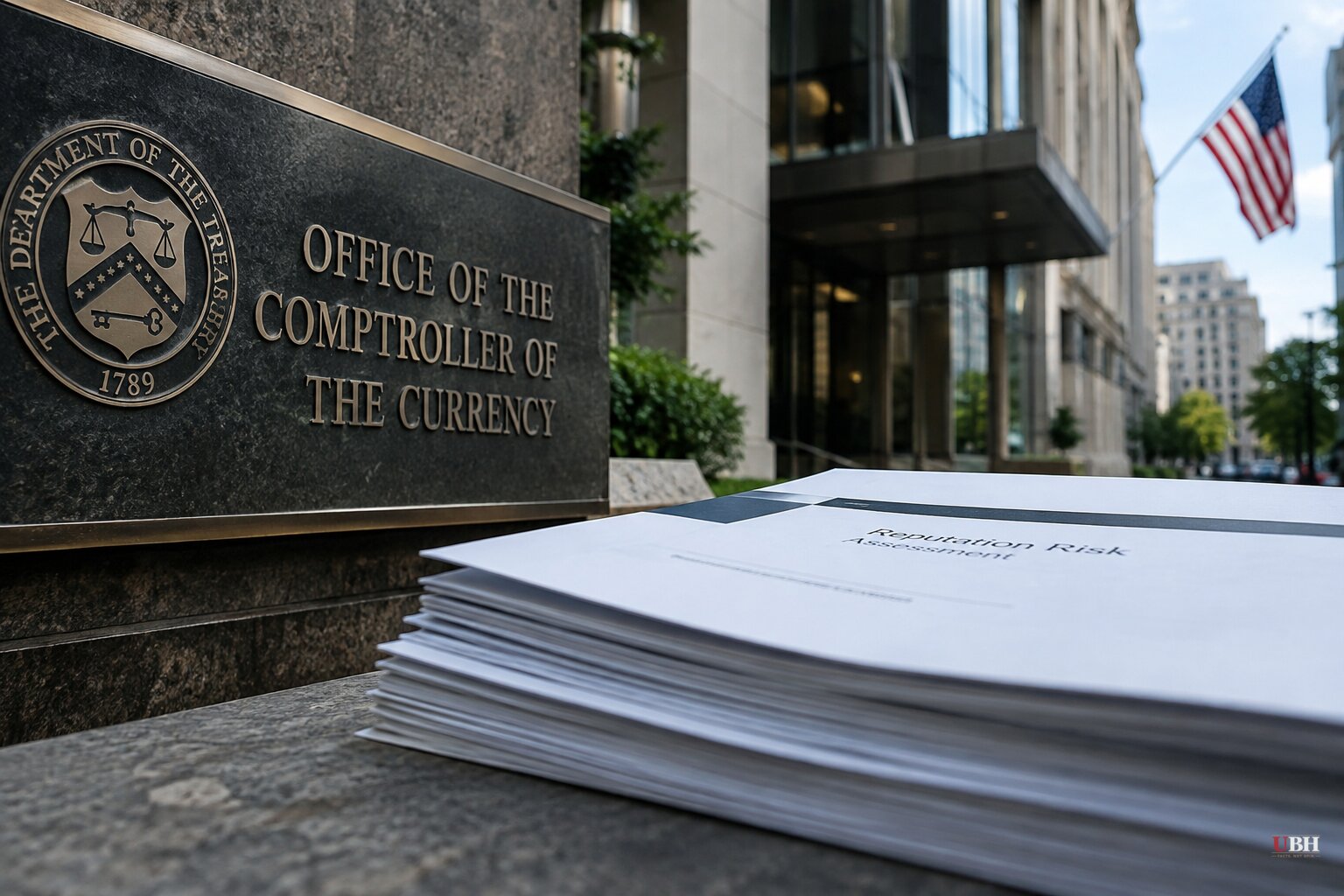
The Office of the Comptroller of the Currency released a report today, Oct. 14, concluding that all nine of the largest national banks it supervises used "reputation risk" policies without clear, objective standards. The OCC said those policies could disadvantage customers over political or religious views or lawful business activities.
The banks reviewed are JPMorgan Chase, Bank of America, Citibank, Wells Fargo, U.S. Bank, Capital One, PNC Bank, TD Bank and BMO Bank. Together they held a majority of assets at OCC-supervised commercial banks when the review began.
What the OCC examined
The review started in September 2025 under a Trump executive order directing scrutiny of alleged debanking. It covered decisions made between 2020 and September 2025.
The OCC said it went through nearly 100,000 complaints and about 420,000 pages of documents. It built on preliminary findings it released in December.
The agency found banks generally lacked measurable, risk-based criteria for judging the reputational cost of a customer relationship. It also found that concerns about public opinion led at least one bank to distance itself from customer affiliations that could be viewed as partisan.
The report documents cases involving both conservative and liberal organizations, according to Axios.
The WePay example
The most specific case the OCC highlighted involves WePay, a JPMorgan subsidiary. It closed accounts belonging to merchants selling Trump and conservative merchandise.
An internal screening list included terms such as "MAGA," "Make America Great" and "America First." The OCC found that neither WePay nor JPMorgan had formal written standards for deciding when flagged material amounted to prohibited hate or violence.
JPMorgan told CNBC its policies prohibit discrimination based on political or religious views. It said WePay's process "did not meet our expectations," that it fixed the issue, and that it has since shut down the business.
Gould's language
Comptroller of the Currency Jonathan Gould issued a statement with sharp wording. "Americans should have access to financial services regardless of their beliefs, affiliations, or political views. Fair access to financial services is not a mantra — it is a mandate," he said.
Gould also said the report "provides irrefutable evidence that the nation's largest banks have denied, debanked and discriminated against customers and lawful businesses."
That is a strong claim, and the report itself is more limited. The OCC acknowledged it could not comprehensively quantify debanking or the costs to affected customers. Officials could not determine how widespread the practice was.
The banks' position
The banks dispute the political-motive reading. They say they close accounts or deny services because of legal, financial or reputational risks, not politics.
Large banks have also argued that years of aggressive regulatory pressure discouraged them from serving certain sectors. They have urged Washington to set clearer rules on who they can and cannot serve.
Banks are also legally required to screen customers for financial-crime risk. A decision that looks political from the outside can overlap with anti-money-laundering compliance.
The OCC says it is looking at that overlap. Its report said the agency will keep working with regulatory partners to assess how money-laundering and terrorist-financing program requirements have contributed to debanking, and will "take appropriate action as needed."
JPMorgan said its policies prohibit political or religious discrimination and that it has improved its practices after past incidents. The Bank Policy Institute also responded to the report.
No penalties yet
The OCC announced no fines or sanctions. It said it may consider additional rules aimed at preventing political or religious discrimination.
Since the executive order, regulators and banks have moved to eliminate reputation risk as a factor in assessing clients. The issue remains contentious.
Conservative politicians and business groups have accused banks of cutting off companies in fossil fuels, firearms and cryptocurrency.
The Trump lawsuit
President Trump has made the issue a priority of his second term. He has said he was personally debanked after the Jan. 6, 2021, Capitol breach, a claim banks have denied.
Earlier this year Trump filed a $5 billion lawsuit against JPMorgan Chase and CEO Jamie Dimon. It alleges the bank closed several of his accounts for political reasons. JPMorgan denies closing accounts on political or religious grounds and filed a motion to dismiss on Tuesday, Oct. 13.
The OCC report is a regulatory finding about policies at nine banks. It is not a ruling in that case, and the OCC has not announced any enforcement action against any named bank over the report's findings.
Rulemaking is next. The OCC has not said what additional rules it would propose, when, or whether any bank faces action once its AML review is finished.
A federal judge will also decide whether Trump's suit against JPMorgan survives the motion to dismiss.
Sources used for this briefing
7 links from 6 independent newsrooms (syndicated copies of the same report count once)
These are the sources it draws on, linked so you can verify.


