
Original briefings. Zero spin.
Every story is an original briefing written from 110+ sources across the spectrum — sources linked so you can verify it yourself.
 tech
Major Story (8/10)
August 26, 2026 at 09:42 PM
tech
Major Story (8/10)
August 26, 2026 at 09:42 PM
Nvidia's Supply Commitments Hit $279 Billion as Q2 Revenue Doubles to $96.2 Billion
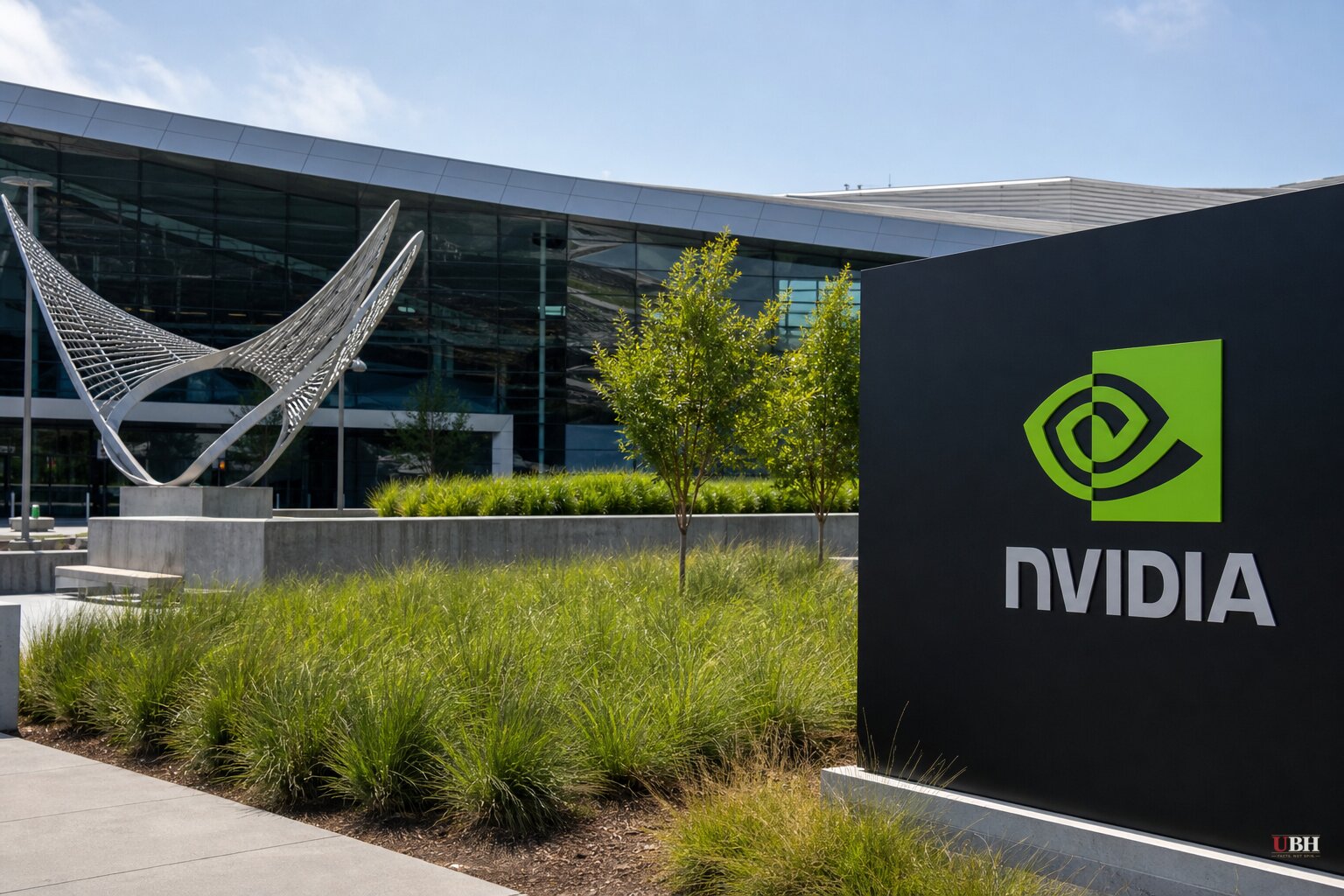
Nvidia's Supply Commitments Hit $279 Billion as Q2 Revenue Doubles to $96.2 Billion
Nvidia's Q2 fiscal 2027 numbers landed Wednesday, and the headline figure isn't the revenue. It's the $279 billion.
That's how much Nvidia now has tied up in supply and procurement commitments, according to CFO Colette Kress, up from $119 billion just one quarter earlier. Go back two quarters and that number was $95.2 billion. It has nearly tripled in six months.
The underlying business is still growing fast enough to justify the spending. Nvidia posted revenue of $96.2 billion for the quarter ended July 26, 2026, up 106% year over year, according to a filing reported by Stock Titan. Net income came in at $59.7 billion, up 126%. Data Center revenue, the segment that matters most, hit $89.0 billion, up 117% year over year and ahead of the $85.83 billion Wall Street analysts were expecting, per Business Insider.
Gross margin held at 75%, matching estimates, according to CNBC. That's notable because some analysts worried margins would slip as competition from AMD and Google's in-house chips heats up.
Why the commitment number tripled
Kress told analysts on Wednesday's call that the jump is "primarily related to the procurement of memory," according to both CNBC and Business Insider. She didn't sugarcoat it: "The magnitude of the price increase has exceeded our prior expectations and are headed even higher into next year."
Nvidia is buying HBM memory from SK Hynix, Samsung, and Micron, plus fab capacity from TSMC, according to Crypto Briefing. Kress said the memory crunch isn't a separate problem from Nvidia's growth, it's the same demand surge causing both: "Tighter memory supply is a symptom of the same demand surge that's driving our own growth."
She said Nvidia expects supply to stay bottlenecked "at least through the end of fiscal year 28," meaning this isn't a short-term squeeze the company expects to clear by year's end.
The guidance and the China gap
Nvidia is projecting $108 billion in revenue for the current quarter, above the $104.57 billion analysts had penciled in, according to Business Insider. Longer-term, the company told investors it expects fiscal 2028 revenue to grow around 70% year over year, well above the 44% growth analysts were modeling, according to CNBC.
That guidance assumes zero revenue from China. Kress said Nvidia isn't building any China sales into next quarter's numbers because of "ongoing geopolitical uncertainty," per Business Insider. She noted that Hopper 200 products sold to Chinese customers made up less than 1% of Nvidia's total Data Center revenue last quarter. Nvidia got U.S. government clearance to sell certain older chips to China in late 2025, but as CNBC reported, sales there have stayed slow and it remains unclear how far Chinese authorities will let that market open up.
What the SEC filing shows
Nvidia's own 10-Q filing, as detailed by Stock Titan, makes clear that the $279 billion figure is not a stack of signed, unbreakable checks. Some of those supply arrangements "remain adjustable before firm orders," and can be canceled or rescheduled, though doing so may create additional costs.
The filing also details a separate $105 billion in SB Energy Corp. guarantees tied to an OpenAI-related AI campus. Those guarantees only kick in once specific leases commence, and the first construction phase isn't expected until fiscal year 2029, per Stock Titan. Add it up: Nvidia's total future commitments across supply, cloud, data centers, equity investments, and capital expenditures reach $366 billion, with another $36 billion in separate AI cloud commitments.
Nvidia also issued $25 billion in new senior notes during the quarter, pushing net debt to $33.4 billion. The company says it has $56.6 billion in cash and marketable debt securities plus $42.8 billion in marketable equity securities, but $36.9 billion of that equity is under short-term lock-up restrictions and $5 billion of it is locked until December 2027, according to the filing.
The circular financing question
Kress also pushed back directly on a criticism that's dogged Nvidia for months: that it's propping up its own customer base through investments and financing arrangements, creating a self-reinforcing loop rather than organic demand. "We see it differently," she said, according to Business Insider, without fully closing the door on the structural questions investor Michael Burry and others have raised about whether AI infrastructure spending at this scale is sustainable if demand growth slows.
Market reaction was choppy
The stock initially slipped 2% after hours following the results, then rose roughly 4-5% as the earnings call progressed, according to Business Insider and CNBC. Nvidia shares are up just 13% year-to-date as of Wednesday's close, according to CNBC, a modest gain by the company's own recent standards after three years of a historic rally.
Nvidia also returned $26 billion to shareholders in the quarter through buybacks and dividends, on top of an $80 billion buyback authorization it disclosed in May, and it declared a 25-cent-per-share dividend, per CNBC.
The unresolved question sitting underneath all of this: Nvidia is telling investors it has secured supply well past 2027, but its own filing admits a meaningful share of that $279 billion is not locked in. Whether firm orders actually get placed at the scale Nvidia is projecting, and whether the SB Energy campus leases commence on schedule starting in fiscal 2029, will determine whether this quarter's numbers were the start of a new growth plateau or the peak of the current AI infrastructure cycle.
Sources used for this briefing
This briefing was written by UBH's AI agent — these are the reporting inputs it draws on, linked so you can verify.


