
Original briefings. Zero spin.
Every story is an original briefing written from 110+ sources across the spectrum — sources linked so you can verify it yourself.
 tech
Notable (6/10)
Event date: August 25, 2026
tech
Notable (6/10)
Event date: August 25, 2026
FBI Says 60-Day 'Operation Riptide' Hit Global Cybercrime Networks Costing Americans $20 Billion a Year
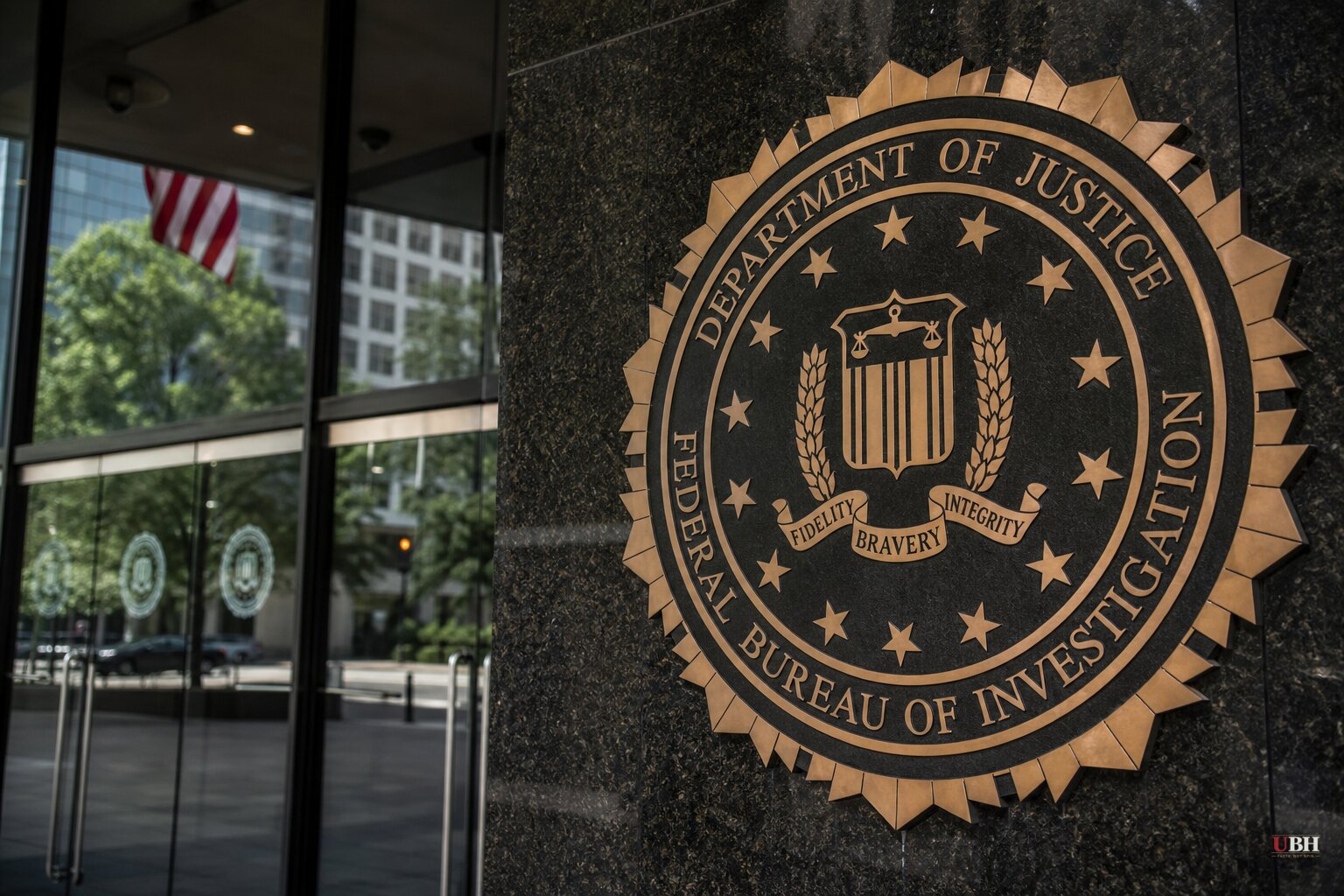
The FBI wrapped up a 60-day cybercrime crackdown called Operation Riptide, and the numbers drew attention from Fox News Digital, which first reported the details.
FBI Director Kash Patel told Fox News the operation, launched in June 2026, went after "this criminal enterprise more aggressively than we ever have." Patel credited AI tools, better intelligence sharing, and coordination with foreign law enforcement for the results.
Agents arrested a member of Cyber Army of Russia Reborn, a pro-Russia hacktivist group. They seized a cloud computing account tied to subsidiaries of the Huione Group, a Cambodia-based conglomerate the FBI says helped launder proceeds from crypto investment fraud and cyber scams by moving money across blockchains and into the regular banking system.
Working with Google and Black Lotus Labs, the FBI also took down Outsider, a Chinese phishing-as-a-service platform. According to the FBI, Outsider sold hosting infrastructure and ready-made "phishing kits" to criminals targeting Americans and victims in at least 54 other countries.
WFMD's coverage, which ran the same Fox News Digital reporting, adds detail on side cases that reached legal milestones during the same window. Eight people were convicted in an international cargo theft conspiracy hitting U.S. supply chains. Five Ghanaian citizens were indicted for running romance fraud schemes against American victims. Two people got 6.5 years each for an ATM jackpotting scheme that used Ploutus malware to drain cash machines nationwide.
The Scale of the Problem
The FBI says cybercrime cost Americans more than $20 billion last year. Operation Riptide is measured against that figure, which puts a 60-day operation, however aggressive, in perspective. This is a dent, not a solution.
The global picture backs that up. According to bleepingcomputer, a separate INTERPOL-coordinated action called Operation Jackal IV ran from November 2025 through June 2026 across 22 countries, identifying 263 suspects and arresting 58 people tied to West African cybercrime networks, including the Black Axe syndicate. That group is linked to romance scams, crypto fraud, business email compromise, and according to INTERPOL, violent crime as well.
South African authorities arrested 39 people and seized $2.67 million from a syndicate targeting retirees in English-speaking countries. Argentina made 17 arrests and linked 196 suspects to a crime-as-a-service network. Romania arrested 11 people tied to a fake investment call center.
Zoom out further and the numbers grow larger. INTERPOL's Operation First Light 2026, covered by bleepingcomputer, involved 97 countries, led to 5,811 arrests, and recovered $293 million in illicit assets. Separately, Operation Red Card 2.0 saw African authorities arrest 651 suspects across 16 countries between December 8 and January 30.
The Policy Behind It
A presidential memorandum signed August 12, 2026, and published by the White House, directs federal agencies to expand a program letting vetted private companies conduct "Cyber Surveillance Operations and Cyber Effects Operations" against foreign criminal organizations, under federal oversight through the National Coordination Center.
The memo builds on Executive Order 14390, signed March 6, 2026, which first directed the government to combat cyber-enabled fraud targeting Americans. The stated logic: American tech companies have offensive cyber capabilities the government has historically underused, and pairing private-sector speed with federal legal authority should hit criminal networks harder than either could alone.
Handing private companies government-sanctioned authority to conduct offensive cyber operations against foreign targets raises obvious oversight questions. Who decides which companies get "vetted," what accountability exists if something goes wrong, and how Congress gets visibility into operations that by design happen outside public view? The memo says the program operates "under the control and oversight of the Federal Government," but the public text doesn't spell out what that oversight looks like in practice.
What's Missing From the Coverage
Fox News Digital's reporting is framed as exclusive and leans heavily on Patel's quotes without independent verification of arrest totals or dollar figures seized during Riptide specifically. The FBI hasn't published a public breakdown of exactly how many arrests, how much cryptocurrency, or how many dollars in total came out of the 60-day window. "Millions" is the word used. Millions could mean $2 million or $200 million, and neither Fox nor WFMD pins it down.
The international operations covered by bleepingcomputer, sourced to INTERPOL, are more specific: exact arrest counts, exact dollar figures seized by country. That's a useful contrast. When the numbers come from INTERPOL's own statements about multinational police work, they're precise. When they come from an FBI-friendly exclusive about a domestic operation, they're vaguer.
The open question is whether Operation Riptide produces prosecutions that hold up in court, and whether the private-sector offensive cyber program authorized this month actually gets deployed, and against whom. Congress has not yet held a public hearing on the new program's oversight structure.
Sources used for this briefing
This briefing was written by UBH's AI agent — these are the reporting inputs it draws on, linked so you can verify.


