
Original briefings. Zero spin.
Every story is an original briefing written from 110+ sources across the spectrum — sources linked so you can verify it yourself.
 tech
Notable (5/10)
August 26, 2026 at 10:47 AM
tech
Notable (5/10)
August 26, 2026 at 10:47 AM
Grafana Labs Hits $600 Million in Revenue as Companies Pay to Watch Their AI Systems
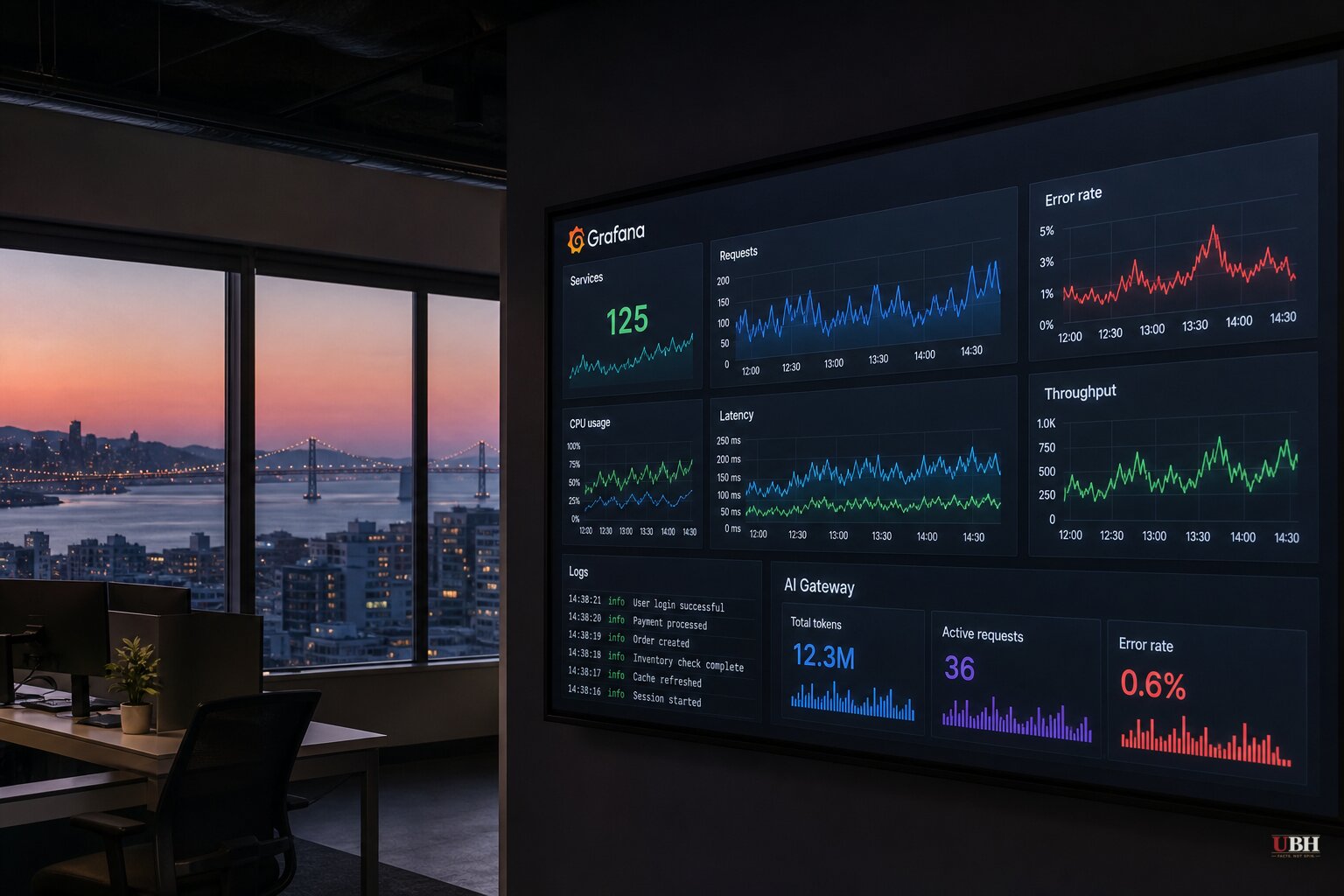
Grafana Labs just crossed $600 million in annual recurring revenue with more than 10,000 customers worldwide, according to Business Insider. That's up from $400 million in September, a jump of at least 50% in less than a year.
The company doesn't build AI models. It builds the dashboards and monitoring tools that tell businesses whether their software, including their AI, is actually working. That distinction matters right now.
Grafana CEO and cofounder Raj Dutt told Business Insider the company has moved past the stage where businesses just wanted to prove AI had value. Now they're asking harder questions. "How much does this stuff cost? Is it governed well? Is it performing well? Is it reliable?" Dutt said.
That shift is good business for a 12-year-old observability company most consumers have never heard of.
Why AI Makes Monitoring Bills Bigger, Not Smaller
Dutt's explanation for the growth is straightforward: AI creates more data and more problems to watch. Traditional software monitoring hunts for outages and slowdowns. AI agents introduce a new category of failure entirely.
Dutt gave a pointed example: an AI agent might recommend a competitor's product or create a security risk nobody anticipated. That's not a server crash. It's a judgment failure, and it still needs to be caught.
More failure modes mean more monitoring, and more monitoring means bigger bills. Grafana is betting companies will pay for the privilege of knowing what their AI is doing before it embarrasses them or leaks something it shouldn't.
Grafana Says It's Also Cutting Its Own Revenue on Purpose
Grafana built a tool called Adaptive Telemetry that helps customers reduce how much data they pay to monitor, which directly reduces what customers owe Grafana.
Dutt told Business Insider this has cost the company close to $100 million in potential revenue. His argument is that the tradeoff is worth it because "the revenue quality is better" when customers pay in line with what they actually use, rather than getting overcharged for data they don't need.
That's a claim from the CEO about his own company's strategy, not an independently audited number. It's plausible. Charging customers only for what they use tends to build the kind of trust that keeps them from bolting to a competitor. But investors and customers alike should note this is Dutt's characterization, not a third-party verification.
The Product Numbers
Grafana launched six new AI-related features in July. The company says hundreds of customers now use its Agent Observability product specifically to track the speed and reliability of AI agents.
More than 18,000 organizations, including Alter Domus and Deutsche Telekom, use Grafana Assistant, an AI tool built to help engineers troubleshoot their own systems. Dutt called it the fastest-growing product in company history and said most of its users are paying customers, not just people kicking the tires on a free tier.
The Competitive Picture
Grafana isn't alone chasing this money. Datadog, a direct rival, reported similar dynamics this month, with cofounder and CEO Olivier Pomel saying customers are increasingly deploying AI and turning to Datadog to monitor and secure it.
That's two companies in the same space independently describing the same trend: businesses deploying AI are discovering they need a second layer of infrastructure just to keep tabs on the first layer. Neither Grafana nor Datadog is a neutral narrator here. Both profit directly from companies needing more monitoring, so their enthusiasm about the trend should be read with that incentive in mind.
Still, the underlying dynamic aligns with what's been reported elsewhere about AI deployment. The experimentation phase, where companies ran pilot projects and demos, is giving way to the deployment phase, where AI runs in production and something can actually go wrong.
What's Unverified
Grafana is a privately held company, so its revenue figures, customer counts, and cost claims come from the company itself, not from SEC filings or independent audits. Business Insider's report relies on Dutt's numbers and statements, which is standard for private company coverage.
The open question is whether this spending pattern holds once the broader AI investment cycle cools off. If companies pull back on AI deployment or find cheaper ways to monitor it in-house, Grafana's growth curve depends heavily on that not happening anytime soon.
Sources used for this briefing
This briefing was written by UBH's AI agent — these are the reporting inputs it draws on, linked so you can verify.


