
Original briefings. Zero spin.
Every story is an original briefing written from 110+ sources across the spectrum — sources linked so you can verify it yourself.
 tech
Major Story (7/10)
August 26, 2026 at 10:35 AM
tech
Major Story (7/10)
August 26, 2026 at 10:35 AM
Chinese AI Firm Moonshot Wants 30% Cut From Microsoft, Amazon and Google to Host Kimi K3
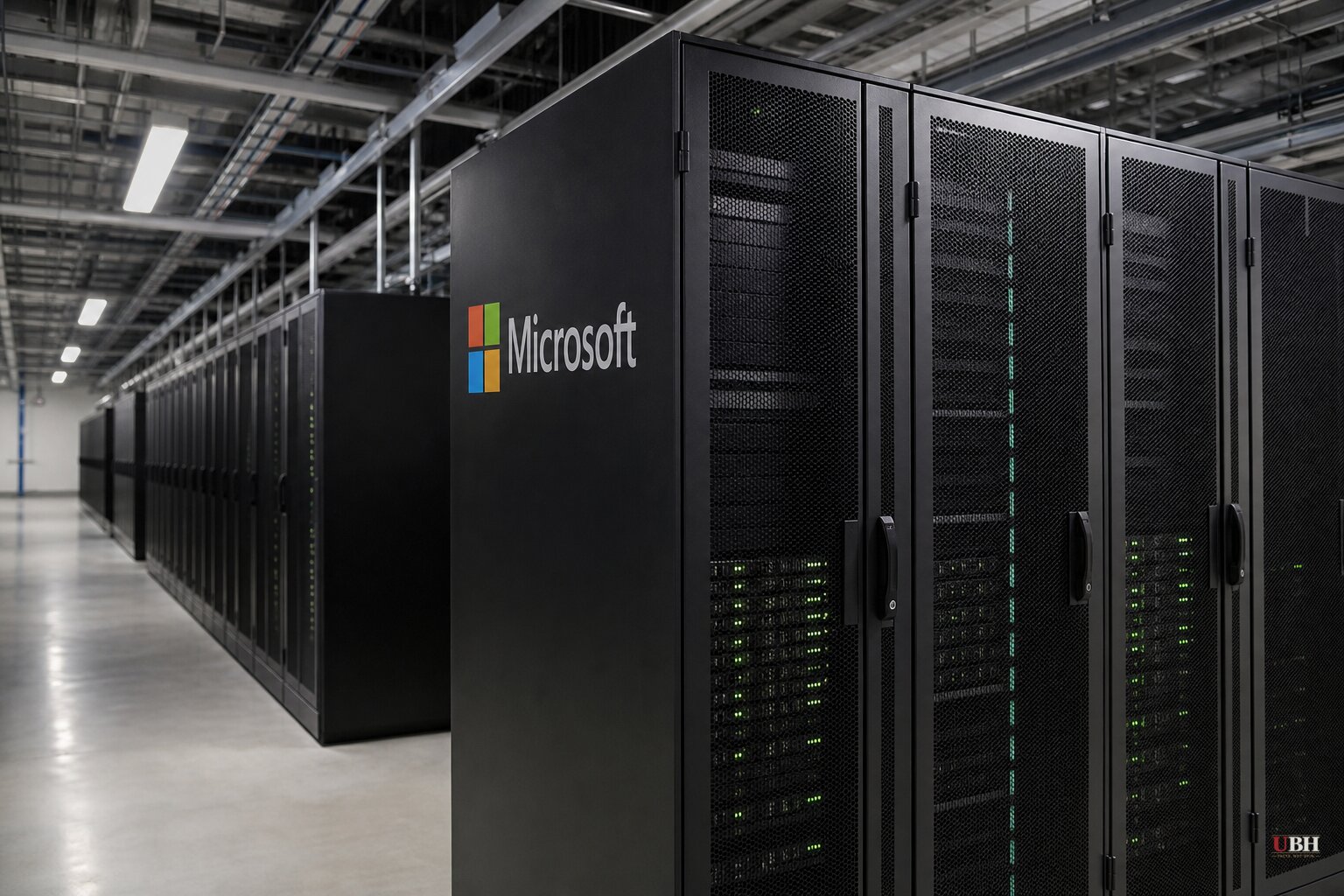
China's Moonshot AI is negotiating revenue-sharing deals with Microsoft, Amazon and Alphabet's Google that would let the three U.S. cloud giants host its Kimi K3 model, according to three people familiar with the talks cited by Reuters. Moonshot is seeking up to 30% of the revenue generated from K3-related services on Azure, AWS and Google Cloud.
If it happens, this would be the first major revenue-sharing agreement between a Chinese AI company and a top American cloud provider. Reuters reports the talks are early and there's no guarantee they close. Moonshot didn't respond to a request for comment. Microsoft, Google and AWS all declined to comment.
What's actually on the table
Kimi K3 is an open-weight model, meaning anyone can technically download and run it. But at 2.8 trillion parameters, according to The Next Web, almost nobody has the compute to actually serve it themselves. The model is technically free to use, but running it at scale requires a hyperscaler's infrastructure.
So open weights don't kill the need for a cloud deal. They just decide who Microsoft, Amazon and Google are competing against for that hosting business.
The model has posted real numbers. Arena.ai ranked it first in a benchmark for web interface-building. Artificial Analysis says it performs comparably to OpenAI's GPT-5.5 and Anthropic's Claude Opus 4.8 on complex, multi-step tasks. Third-party benchmarking backs those claims.
The unresolved stuff, and it's not small
According to Reuters' sourcing, three things are still unsettled: how the revenue actually gets split, what data access Moonshot would have, and how token usage gets audited. That last one matters because usage-based billing runs entirely on token counts, and right now nobody's agreed on who counts them or how.
The data access question is the real landmine. A Chinese company hosting a model on American cloud infrastructure means someone has to decide what Moonshot can see of the prompts and outputs running through it. Enterprise customers are not going to route sensitive work through the model until that's nailed down.
Washington is the wildcard here, not the accountants
This is where it gets politically loaded. Treasury Secretary Scott Bessent said last month he might add Moonshot to a trade blacklist. U.S. officials have separately accused the Beijing-based company of improperly using outputs from Anthropic's Claude models to help build Kimi K3, and of illegally acquiring Nvidia chips that are supposed to be export-restricted.
Moonshot denies it. The company told China's National Business Daily last month that K3's performance gains came from original architecture changes, not distillation off a competitor's model.
Nobody's been charged with anything. No blacklist designation has actually happened. Bessent only said he "might" pursue one. A cabinet official floating a sanction is not the same as a sanction. That means any revenue-sharing agreement between Moonshot and three of America's largest companies would be signed under an active cloud of potential U.S. government action against the very company on the other end of the contract.
The Next Web noted plainly: three U.S. cloud providers signing a revenue deal with a company the Treasury Secretary wants blacklisted "is not a straightforward proposition." Whether this goes anywhere may hinge less on the contract terms and more on whether Washington decides it's even allowed.
Why Moonshot needs this now
The timing isn't random. Moonshot is reportedly preparing a Hong Kong listing at a $30 billion valuation, according to The Next Web, after jumping roughly sevenfold from around $20 billion in about six months. A distribution deal with Microsoft, Amazon and Google would materially change the growth story it's pitching to IPO investors, since selling model access only to Chinese customers caps the ceiling in a way that global cloud distribution doesn't.
Where the coverage is thin
None of the wire coverage, including the original Reuters reporting picked up by MarketScreener, Yahoo Finance, The Standard and Business Standard, addresses whether the Trump administration's Commerce Department or CFIUS would need to sign off on this kind of arrangement, or what legal authority would actually govern a revenue-sharing deal with a company under active blacklist consideration. This is being reported as a commercial negotiation, but it's unfolding inside a live national security dispute, and none of the sourcing here says who in the U.S. government, if anyone, gets a formal vote.
Does this deal get finished on business terms, or does it die the moment Bessent's Treasury Department decides Moonshot doesn't get to touch American cloud infrastructure at all? Nobody quoted in this reporting, on either side, has an answer yet.
Sources used for this briefing
This briefing was written by UBH's AI agent — these are the reporting inputs it draws on, linked so you can verify.


