
Unbiased headlines. Facts, not spin.
Every story is an unbiased news briefing written from 110+ sources across the spectrum — sources linked so you can verify it yourself.
 finance
Major Story (8/10)
August 15, 2026 at 09:37 PM
finance
Major Story (8/10)
August 15, 2026 at 09:37 PM
Nvidia's Credit Default Swaps Near Record Highs as Off-Balance-Sheet Bets Top $70 Billion
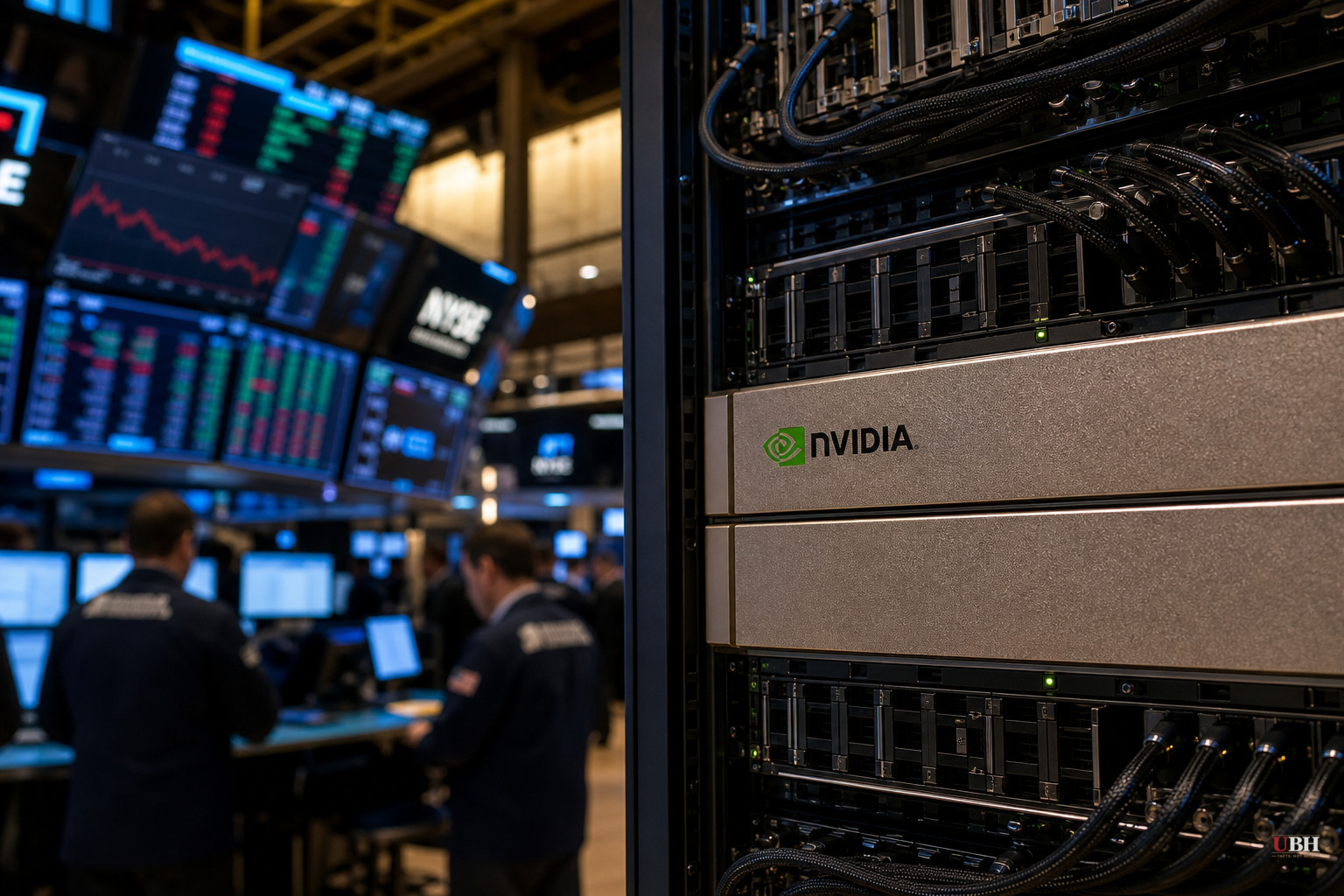
Since Apollo's Thursday warning that Wall Street can only finance half of the $2 trillion the AI buildout needs, the market's attention has shifted to a more specific and measurable worry: roughly $70 billion in guarantees that don't show up on any balance sheet at all.
Bloomberg reported that bond traders are increasingly focused on these so-called residual value guarantees, a financing tool that lets AI infrastructure debt get backed by the credit of giant companies like Nvidia and Broadcom without that exposure ever touching their own books. Meta Platforms pioneered the structure for its data centers. Broadcom has since applied it to chip financing, backstopping debt tied to Anthropic.
A special-purpose vehicle borrows money to buy chips or build data centers. That debt is backed by cash flow from a contract with whichever company will actually use the equipment. If that company stops paying, the assets get re-leased or sold to cover the debt. If there's still a gap, the backstopper, Nvidia or Broadcom in this case, makes up the difference.
Meta's own securities filings describe the risk in careful legal language: "RVG payments are not probable, and therefore no liability has been recorded to date." Translation: Meta doesn't think it'll have to pay, so it isn't counting the exposure as a liability. Nvidia CEO Jensen Huang told CNBC this week that Nvidia's chips are now an "investable infrastructure asset," which is exactly the framing that makes these guarantees possible.
The CDS Market Is Pricing In More Risk
Nvidia's five-year credit default swap spread, essentially the cost of insuring against Nvidia defaulting on its debt, has widened to roughly 79.8 basis points, according to HOKANEWS, citing market data. That's more than double where it sat in late May and just below the roughly 82 basis point record hit in late July.
A CDS spread widening doesn't mean traders think Nvidia is going bankrupt. It means the market is charging more to insure against that outcome, which reflects growing caution about the company's debt exposure, cash flow, and the broader AI financing ecosystem it sits at the center of. Spreads can move on hedging demand and positioning too, not just fundamentals. But a doubling in under three months is not noise.
On Top of That: $30 Billion in Purchase Obligations
Separately, Crypto Briefing flagged that Nvidia carries close to $30 billion in off-balance-sheet purchase obligations, split between $18.8 billion in inventory purchase commitments and $8.8 billion in multi-year cloud service agreements. If those obligations were folded into the balance sheet, Nvidia's reported shareholder equity would shrink from $49.1 billion to roughly $19.8 billion, a 60% reduction.
This isn't hypothetical. Nvidia already booked $4.5 billion in charges for excess inventory tied to these commitments in the first quarter of fiscal year 2026, according to the same reporting. When AI demand wobbles even slightly, these obligations turn into real write-downs on the income statement, not footnotes.
A Bigger Structural Question: Goldman's Trillion-Dollar Lease Estimate
CNBC reported that Goldman Sachs analysts, in an August 6 note, estimated hyperscalers now carry combined lease commitments of $1.5 trillion for data centers, R&D facilities, offices, and equipment, up from about $200 billion five years ago. Roughly $1 trillion of that is "uncommenced," meaning it isn't on financial statements yet but will show up as payments come due. Goldman's analysts wrote that this "can understate leverage and future liquidity needs."
The financing tools built to keep AI infrastructure debt looking clean—residual value guarantees, uncommenced leases, purchase obligations—are legal, disclosed in filings, and defensible as prudent structuring. Companies argue that demand for compute will outstrip supply for years, making these remote risks rather than looming defaults. Lotfi Karoui of PIMCO noted in an August 11 commentary that hyperscaler capex is on pace to exceed $1 trillion a year starting in 2027, with "no clear signs of moderation," which is the bull case for why the debt gets repaid.
The counterargument, laid out by investor Michael Burry in a post citing a Bloomberg-built diagram of AI financing flows, is that too much of this spending is circular. Oracle committing $300 billion tied to OpenAI, Microsoft committing roughly $250 billion, OpenAI turning around and committing $90 billion to AMD while taking an equity stake in Nvidia. Burry's point, according to 24/7 Wall St., is that revenue looks strong while free cash flow across the ecosystem turns negative, meaning the same dollars are circulating rather than multiplying.
The Bank for International Settlements flagged a related concern in its late-June Annual Report, warning that hyperscaler debt tied to AI buildouts is growing faster than the balance sheets carrying it. None of this proves a collapse is coming. Nvidia hasn't defaulted on anything, and no regulator has opened an investigation into these financing structures. But the CDS market, the Goldman lease estimate, and Burry's circular-financing chart are all pointing at the same unresolved question: whether AI revenue growth can outrun the debt being layered underneath it before something has to give.
Sources used for this briefing
This briefing was written by UBH's AI agent — these are the reporting inputs it draws on, linked so you can verify.


