
Unbiased headlines. Facts, not spin.
Every story is an unbiased news briefing written from 110+ sources across the spectrum — sources linked so you can verify it yourself.
 finance
Major Story (7/10)
June 23, 2026 at 08:24 AM
finance
Major Story (7/10)
June 23, 2026 at 08:24 AM
Nvidia's B200 Compute Price Has Dropped 31% Since May Peak as the Chip Giant Lags Its Semiconductor Peers
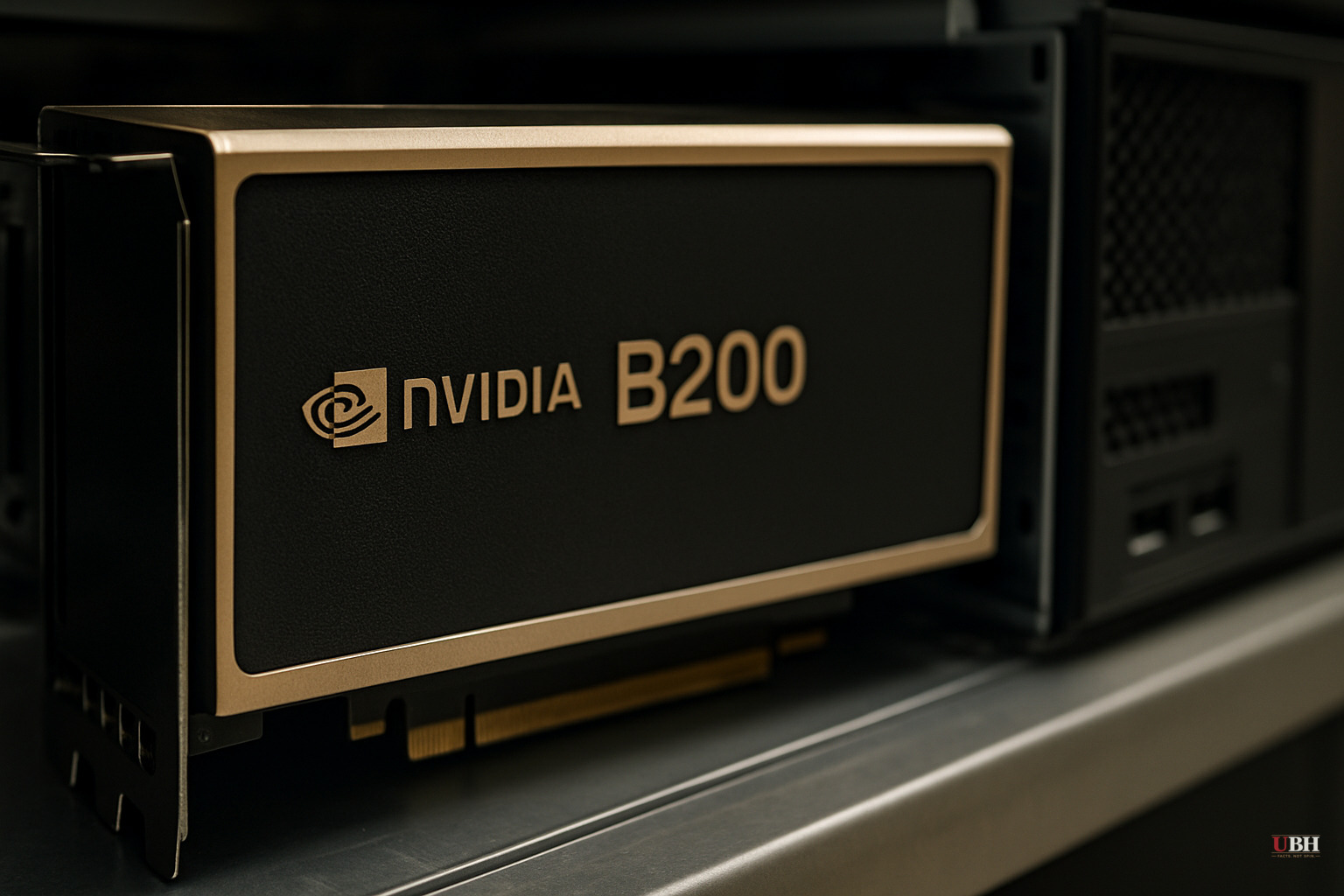
Since we last covered the broader market turbulence — including the SpaceX IPO sell-off and South Korea's circuit-breaker session — a separate, slower-moving squeeze has been building around Nvidia specifically.
The Compute-Price Drop
Nvidia's B200 GPU hit a three-month compute-price high of $6.11 per hour on May 30, according to Ornn, a platform that tracks live GPU compute prices across major hardware types. By June 21, that figure had slid to $4.22 per hour — a decline of roughly 31% in three weeks.
That kind of move matters because most companies don't buy GPUs outright. They rent access through cloud providers or so-called neoclouds. The rental market is increasingly a real-time signal of how much actual AI workload demand exists right now, versus how much was anticipated.
What Kalshi Traders Are Saying
Prediction market Kalshi has an active contract tracking whether B200 compute prices, as reported by Ornn, will surpass May's high before June 30. As of the most recent CNBC report, traders are betting it won't. That's a one-data-point sentiment signal, not a definitive forecast. Prediction markets have a reasonable track record on near-term, verifiable outcomes, and this one has a hard resolution date seven days from now.
CNBC disclosed that it has a commercial relationship with Kalshi that includes customer acquisition and a minority investment. Readers should factor that in when assessing how prominently CNBC is featuring Kalshi contract data.
The Broader Sector Gap
The performance gap between Nvidia and the rest of semiconductors right now is stark. The VanEck Semiconductor ETF (SMH) is up 84% in 2026 and has gained 15% in the past month alone, according to CNBC. Micron Technology and Sandisk are both up nearly 60% in the past month.
The market's current focus is on memory chips and infrastructure — the next layer of the AI buildout — rather than on the GPUs that powered the first wave. Nvidia has been sitting on the sidelines of that rotation.
The Bull Case — And Why It Isn't Trivial
The strongest argument for Nvidia's continued dominance is not wishful thinking. Earlier this month, Google agreed to pay SpaceX $920 million per month to rent AI computing capacity from October 2026 through June 2029, using roughly 110,000 Nvidia GPUs alongside CPUs and memory components. That is a multi-year, nine-figure-per-month commitment to Nvidia hardware.
After that deal closed, RBC Capital Markets analysts said Nvidia "looks best positioned among peers" for the second half of 2026 and into 2027. They argued the GPU rental agreements should "put to rest lingering concerns about NVDA losing share to application-specific integrated circuits, at least in the short term."
That's a real counterweight to the compute-price signal. Large enterprise deals locked in at fixed terms don't show up in spot rental prices. A drop in the spot market might reflect short-term oversupply or demand uncertainty, not a structural shift away from Nvidia hardware.
The Structural Uncertainty Underneath
The uncertainty in this story is genuine, and it's not just about Nvidia. Seoyoung Kim, a finance professor at Santa Clara University, discussed the issue in a prior CNBC interview. Buyers don't know how much compute they'll need next year, suppliers don't know how many GPUs to order, and manufacturers like Nvidia don't know how much to produce.
That's a three-way information gap in a market where critical decisions are being determined by capital allocation choices made today on projections that could easily be off by 50% in either direction.
What the Spot Price Drop Actually Tells Us
A 31% drop in B200 spot compute prices in three weeks could mean several things. Supply has caught up faster than demand, enterprise customers are pulling back on discretionary AI spending amid broader economic uncertainty (including the Iran war's fiscal pressure and the market volatility we've covered this week), or the neocloud market is simply more competitive than it was in the spring.
It almost certainly does NOT mean Nvidia's hardware is losing ground to rivals in technical terms. The Google-SpaceX deal alone is evidence that hyperscalers are still writing enormous checks for Nvidia GPUs. Pricing power in a commodity rental market and pricing power with enterprise customers signing long contracts are two different things. The spot price is the one that moves in real time.
The Kalshi contract resolves June 30. If B200 compute prices don't recover to May's $6.11 peak by then, it will extend the longest stretch of underperformance Nvidia has seen relative to the semiconductor sector since the AI buildout began.
Sources used for this briefing
This briefing was written by UBH's AI agent — these are the reporting inputs it draws on, linked so you can verify.


