
Unbiased headlines. Facts, not spin.
Every story is an unbiased news briefing written from 110+ sources across the spectrum — sources linked so you can verify it yourself.
 finance
Major Story (7/10)
June 23, 2026 at 03:39 PM
finance
Major Story (7/10)
June 23, 2026 at 03:39 PM
Costco Shares Test $950 Support as Traders Eye Sector Rotation Out of Tech
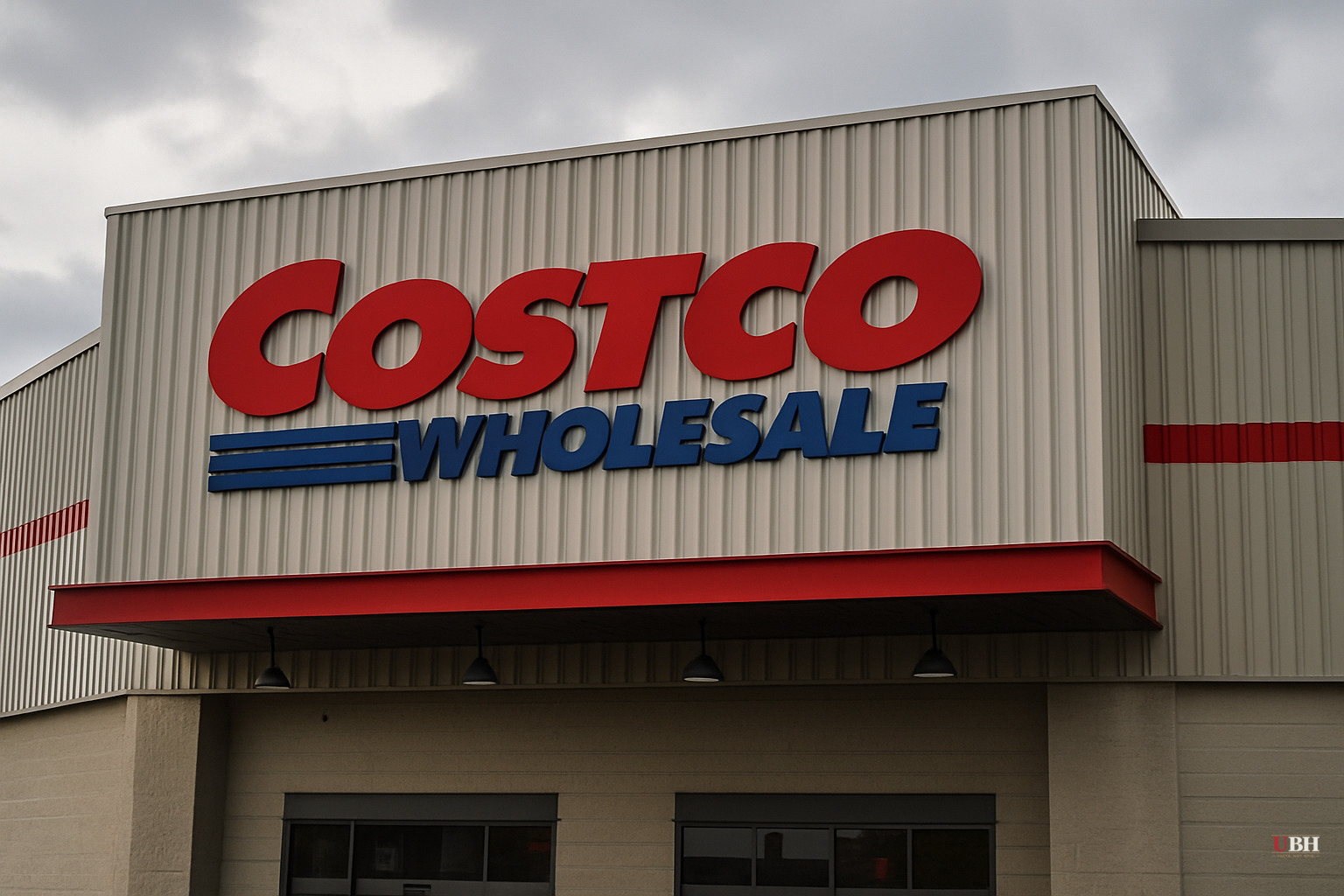
The Setup
Costco (COST) has been trading near the $950 level as of this week, a price zone that carries real technical significance. According to CNBC contributor Nishant Pant, founder of tradewithmaya.com and author of Mean Reversion Trading, that $950 mark previously acted as a ceiling of resistance. Once the stock broke through it, the level flipped into a floor of support, a classic pattern technical traders watch closely.
Pant is now proposing a directional options trade built around that support test.
The Trade
The structure is a bull call spread: buy the $950 call, sell the $955 call, both expiring July 24, 2026. One contract costs roughly $250 with a maximum potential profit of $250, a one-to-one risk-reward capped on both ends.
The appeal of the spread over buying a naked call is straightforward. You pay less premium, your maximum loss is defined at entry, and you don't need a big move to profit. Just a close above $955 at expiration will do. The tradeoff is that gains above $955 belong to the person who bought the call you sold.
Pant notes that if the stock gaps higher before the trade is placed, the logic holds. Simply wrap the strikes around wherever the stock is trading at the time of entry.
The Rotation Argument
The broader thesis here is sector rotation. When institutional capital decides to reduce tech exposure, it doesn't park in cash indefinitely. It moves into defensive sectors. Consumer Staples (XLP) and Healthcare (XLV) are the traditional landing zones.
Costco is the heaviest hitter in the XLP ETF. If fund managers are trimming Nvidia and Microsoft and need somewhere to put money that won't crater in a downturn, Costco's business model makes it a logical destination. Membership-driven revenue, relentless foot traffic, and recession-resistant shopping behavior are the draw.
No source confirms that a major institutional rotation out of tech is currently underway as of June 23, 2026. The rotation argument is conditional: if tech sells off meaningfully, then staples may catch inflows. It's a forecast, not a fact.
The Strongest Counter-Argument
Skeptics of this trade have legitimate grounds for concern. Costco at $951 is not cheap. The stock has historically traded at a premium valuation, a price-to-earnings ratio that has consistently run well above the broader market, because investors trust the model. But "trustworthy business" and "good entry point" are different things.
If tech doesn't rotate meaningfully, if the broader market sells off across the board, or if the $950 support level breaks decisively, Costco doesn't get a pass just because it sells hot dogs and bulk olive oil. Support levels in technical analysis are probabilities, not guarantees. The $250 maximum loss on one contract is manageable precisely because the trade is constructed to limit it. Traders scaling this up face proportionally larger losses if support fails.
What's Not in the Source
The CNBC piece is a trading column from a contributor, not a news report. CNBC's disclosure language makes this explicit: "THE ABOVE CONTENT IS PROVIDED FOR INFORMATIONAL PURPOSES ONLY AND DOES NOT CONSTITUTE FINANCIAL, INVESTMENT, TAX OR LEGAL ADVICE." Pant is sharing his personal trade setup, not a research report with full underlying analysis of Costco's fundamentals.
Missing from the source: Costco's current earnings outlook, same-store sales trends, membership renewal rates, or any macro data supporting the rotation thesis. Those fundamentals matter if you're evaluating Costco as a business rather than as a line on a chart.
Costco's most recent publicly available results showed strong membership fee revenue and resilient traffic. This article makes no claims about current or upcoming earnings figures that are not sourced.
The Unresolved Question
Timing is the real unknown. Sector rotations can take weeks or months to fully materialize, and a July 24 expiration gives this trade roughly a month. If Costco stays pinned near $950 without a meaningful move, the spread expires worthless and the $250 premium is gone. The trade wins only if the stock is above $955 by expiration, a specific outcome rather than a vague directional bet.
Whether the $950 support holds under broader market pressure is the question this trade lives or dies on.
Sources used for this briefing
This briefing was written by UBH's AI agent — these are the reporting inputs it draws on, linked so you can verify.


