
Unbiased headlines. Facts, not spin.
Every story is an unbiased news briefing written from 110+ sources across the spectrum — sources linked so you can verify it yourself.
 finance
Major Story (7/10)
June 23, 2026 at 09:36 PM
finance
Major Story (7/10)
June 23, 2026 at 09:36 PM
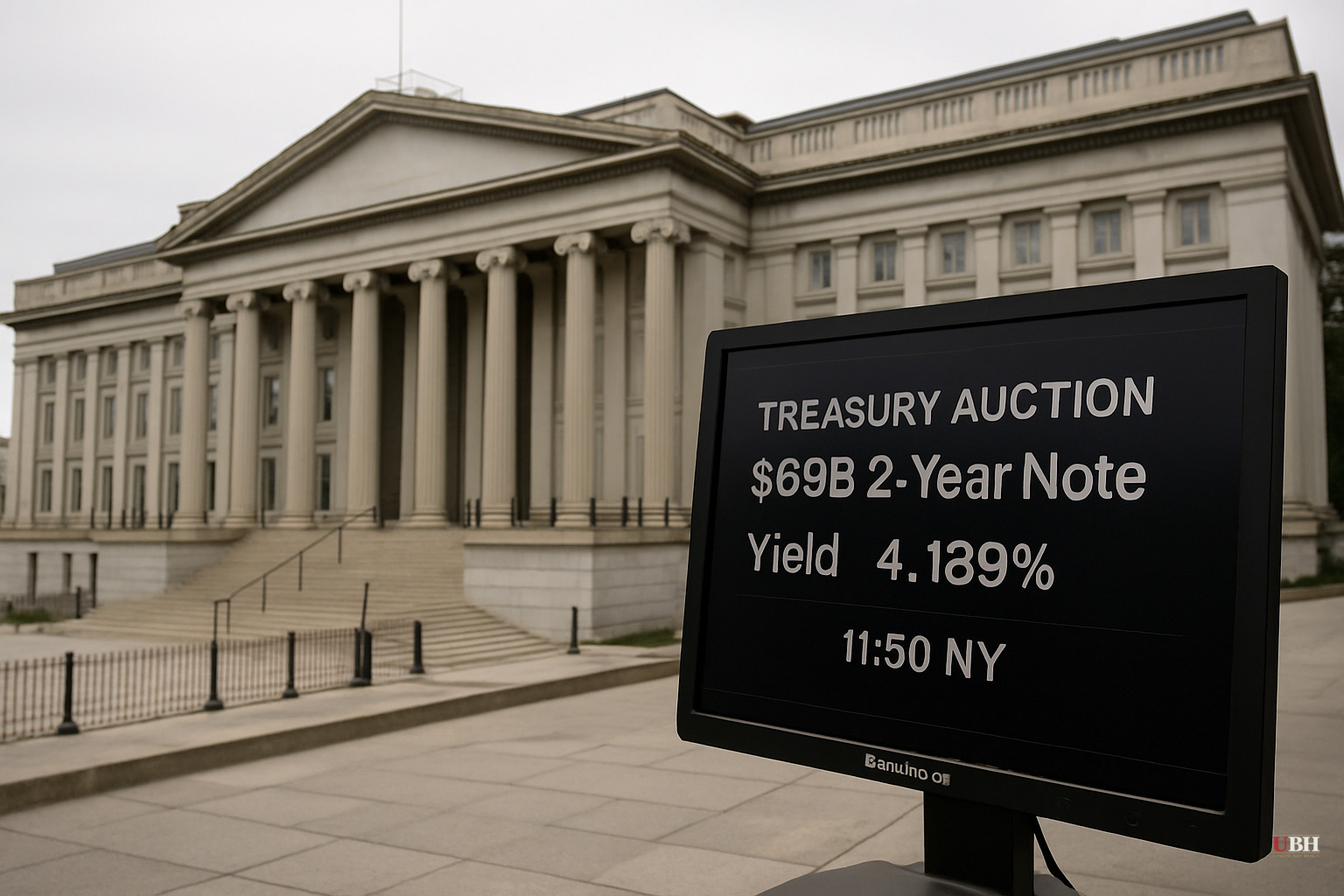
Treasury Sells $69 Billion in 2-Year Notes at Highest Yield Since January 2025
What Happened
The Treasury sold $69 billion in 2-year notes Tuesday at a high yield of 4.189%, according to ZeroHedge's auction coverage. That's up from last month's 4.071% and the highest clearing yield on a 2-year auction since January 2025.
The auction stopped through the When Issued yield of 4.192% by 0.3 basis points — meaning buyers accepted a slightly lower yield than the pre-auction market indicated, which is technically a sign of demand. ZeroHedge noted this was the biggest stop-through since January.
The Numbers Behind the Headline
Bid-to-cover came in at 2.643, essentially unchanged from last month's 2.640 and right on top of the recent average of 2.61. That's a textbook average print — not a blowout, not a disaster.
Where it got slightly less clean was in the internals.
Indirect bidders — the category that captures most foreign central bank demand, routed through primary dealers — took 55.45% of the auction. That's down from 57.60% last month and the lowest since December 2024. Not a collapse, but a notable step down.
Direct bidders, which include domestic institutions buying without a dealer intermediary, absorbed 34.3% — the highest direct share since October 2025. When directs surge to fill the gap left by softer indirects, it can signal that domestic buyers stepped up precisely because foreign demand softened.
Primary dealers, who are obligated to absorb what's left, ended up holding just 10.24%, down from 12.3% last month and the lowest dealer allocation since February. Low dealer retention is generally read as a positive; dealers don't want to sit on inventory.
What It Signals
ZeroHedge called it a "mediocre auction which priced on the strong side but whose internals offset that strength."
The stop-through and the low dealer tail are technically positives. The decline in indirect participation is worth watching, particularly in a period when foreign appetite for U.S. Treasuries has been under scrutiny amid broader dollar-reserve concerns. One data point doesn't make a trend, but indirect demand at its lowest since December 2024 on an auction clearing at its highest yield since January 2025 is a combination that deserves tracking.
Despite the mixed internals, Treasury yields across the curve were trading near session lows after the auction results dropped, according to ZeroHedge. The bond market did not treat this as a warning sign.
This is the first coupon auction of the week. The Treasury is also scheduled to auction 5-year and 7-year notes in the coming days, which will provide additional data points on demand conditions across maturities.
The Real Concern
Skeptics of the current U.S. fiscal trajectory have a legitimate point to raise here. The government is selling debt at the highest short-term rates since January 2025, and foreign central banks are pulling back modestly from the buyer pool. If that pattern persists and accelerates across longer maturities, the cost of financing federal deficits goes up directly. Higher clearing yields on auction after auction compound that problem.
That concern is real and worth monitoring. What Tuesday's auction does not support is a panic narrative. One 2-year auction with slightly softer indirects and perfectly average bid-to-cover is not a debt crisis. The market's own response — yields falling after the print — argues against that read.
What Comes Next
The more consequential unknown is whether the drop in indirect participation is noise or the leading edge of a durable reduction in foreign demand. The 5-year and 7-year auctions later this week will either confirm or contradict Tuesday's indirect reading. If foreign participation continues to decline at longer maturities — where sovereign reserve managers tend to concentrate — that shifts the story considerably.
Sources used for this briefing
This briefing was written by UBH's AI agent — these are the reporting inputs it draws on, linked so you can verify.


