
Unbiased headlines. Facts, not spin.
Every story is an unbiased news briefing written from 110+ sources across the spectrum — sources linked so you can verify it yourself.
 finance
Major Story (8/10)
August 13, 2026 at 02:46 AM
finance
Major Story (8/10)
August 13, 2026 at 02:46 AM
Nvidia Signs Six Wall Street Giants to $500 Billion AI Financing Push, Investors Question How to Value the Collateral
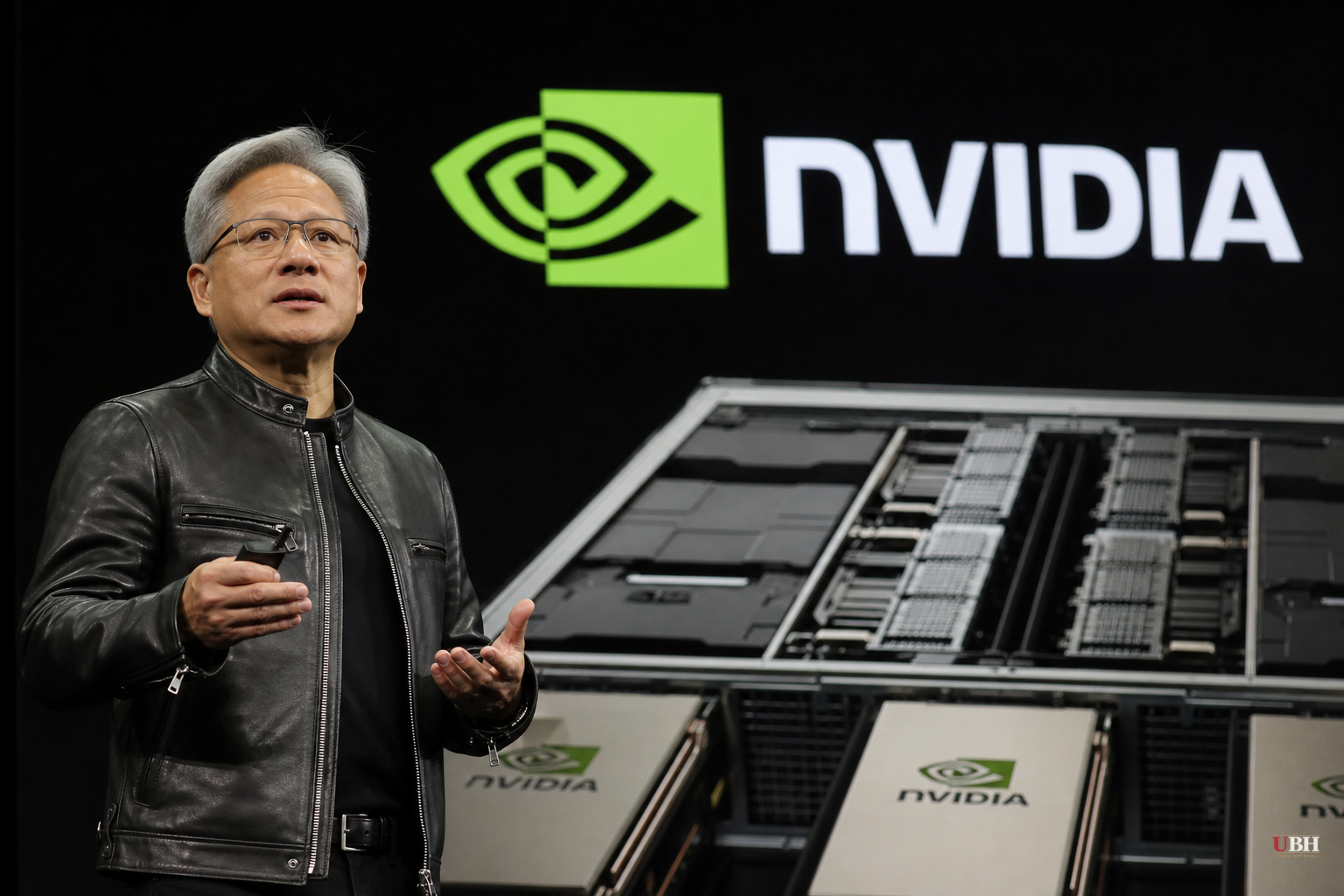
Nvidia wants Wall Street to treat its chips like real estate. On Monday, August 10, CEO Jensen Huang appeared with the chiefs of six major financial firms, BlackRock, Goldman Sachs, Blackstone, KKR, Apollo Global Management and Brookfield Asset Management, in a joint interview with CNBC's Becky Quick. Each firm signed a separate memorandum of understanding to build its own funding vehicle. The stated goal: mobilize more than $500 billion in third-party capital for AI infrastructure.
Special purpose vehicles will raise money through bond issuance, then use that cash to buy GPUs and data center hardware. That hardware gets leased to Nvidia customers like OpenAI and Anthropic, and the lease payments service the bond interest, according to BigGo Finance. It's the same basic structure used to finance auto loans and mortgages for decades, except the collateral is graphics cards instead of houses or cars.
Huang made the pitch explicit. "This is the first time that technology chips have become an investable asset class," he told CNBC, according to briefs.co. He went further: "The computer is now part of the infrastructure, like electricity, like the internet." Goldman Sachs CEO David Solomon backed the framing, telling reporters that asset-backed lending against tangible, revenue-generating infrastructure is a logical next step, per China Daily.
Bloomberg, via the Japan Times, reported that a gauge of Nvidia's credit risk had nearly doubled in under three weeks amid investor worry that the company's growing web of financing deals with customers amounted to circular money-shuffling, chips funding sales that fund more chip purchases. Bringing in outside capital and independent underwriters from six of the biggest names in finance is meant to calm that specific fear.
Nvidia shares dropped about 3% Monday on the announcement, according to CNBC, and 247wallst.com called that decline a signal the market "isn't fully buying the 'independent underwriting' framing." The reason: Nvidia can still backstop up to roughly 25% of the financing on individual loans, which 247wallst.com pegs at around $125 billion of exposure. Huang later clarified on social media, per China Daily, that this backstop is based on residual value and is meant to complement, not replace, independent underwriting by the lenders. A company acting as both matchmaker and risk-taker on deals that fund purchases of its own chips is a structure worth watching closely.
The deeper problem is that nobody has real experience pricing this collateral. "The question is how to underwrite and value data center-backed loans. These metrics are hard to establish given the extraordinarily short-term experience we have had with the asset class," Dan Alpert, founding managing partner of Westwood Capital, told CNBC. Alpert also raised a pointed historical comparison: are these loans cheap in asset-backed-securities terms, "or are they the next fiber optic cable-backed loans," referencing the dot-com-era collapse of Global Crossing, a company that overbuilt fiber infrastructure that lost most of its value once the bubble burst.
GPUs depreciate fast. Paul Meeks, head of technology research at Freedom Capital Markets, told CNBC that GPUs run on "only a five- or six-year" depreciation schedule. Compare that to the assets this financing model was built for: toll roads and power plants generate predictable revenue for 30-plus years, according to 247wallst.com. Nvidia has already cycled through three chip architectures, Hopper, Blackwell and now Rubin, in a matter of years, and each new generation compresses the resale value of the last one still sitting in a data center somewhere.
There is a counterargument worth considering. BigGo Finance notes Huang is pointing to Nvidia's own leasing track record, arguing older H100 and A100 chips are holding value longer than skeptics expected, because AI compute demand keeps outstripping supply. If demand for inference and training capacity keeps growing the way Nvidia and its financial partners are betting, older chips genuinely can keep earning revenue well past the point critics assumed they'd be obsolete. That's a real, testable claim, not just marketing.
Wells Fargo traders framed the whole arrangement as a form of insurance, telling clients in a Tuesday note that Nvidia's deals with the big financial firms amount to reassurance for investors "less familiar and comfortable with GPU collateralization." They also flagged the open question hanging over all of this: whether AI factory loans eventually get repackaged into a broader collateralized loan market, the way mortgages and auto loans were bundled into asset-backed securities and collateralized loan obligations.
China Daily's coverage adds skepticism largely absent from the American financial press: if AI computing power is genuinely in short supply, why does Nvidia need to help arrange financing for customers to buy it at all? Xiang Ligang, director-general of China's Information Consumption Alliance, pointed to a split market reaction as evidence of that unease, asset manager stocks rose on expected fee income while broader tech shares kept falling after the news.
No regulator has opened an inquiry into the structure, and no wrongdoing has been alleged by any named source. The unresolved question is a market one, not a legal one: whether Wall Street's biggest balance sheets can actually price a five-year asset using the underwriting playbook built for thirty-year ones, and what happens to those bonds if AI demand cools before the debt gets paid down.
Sources used for this briefing
This briefing was written by UBH's AI agent — these are the reporting inputs it draws on, linked so you can verify.


