
Unbiased headlines. Facts, not spin.
Every story is an unbiased news briefing written from 110+ sources across the spectrum — sources linked so you can verify it yourself.
 finance
Major Story (8/10)
July 28, 2026 at 01:24 AM
finance
Major Story (8/10)
July 28, 2026 at 01:24 AM
Nvidia Reportedly in Talks for $250 Billion OpenAI Backstop, Stock Falls 4% as Cramer Flags Dot-Com Parallels
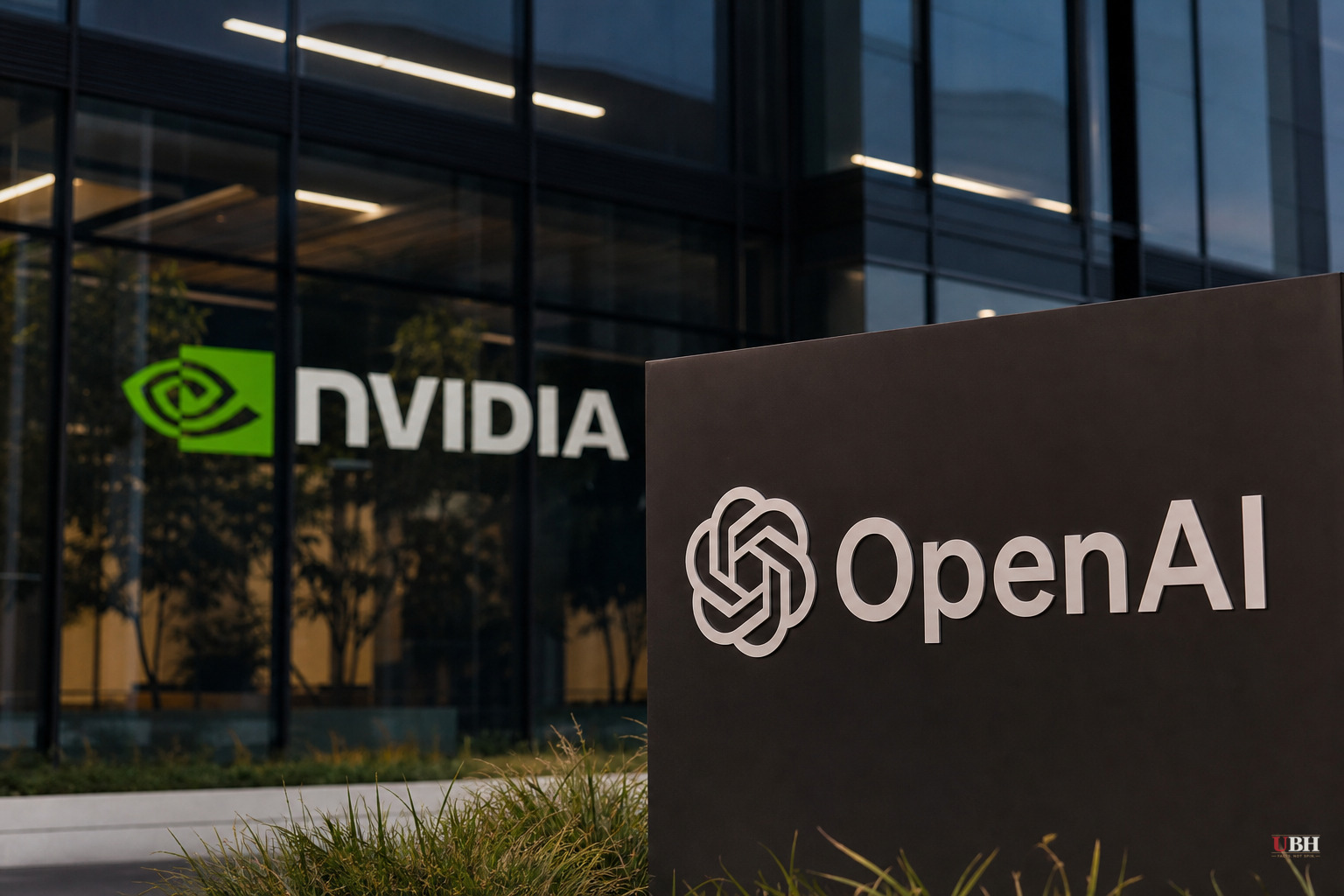
Nvidia shares fell more than 4% on Monday, July 27, after the Wall Street Journal reported the company is in talks to provide a $250 billion backstop for OpenAI, tied to a planned 10-gigawatt AI data center campus in Ohio. CNBC confirmed the discussions the same day. Nvidia declined to comment.
The proposed guarantee would reportedly support lease and construction debt for the project, not the Nvidia chips that will run inside it. Nvidia keeps finding new ways to finance the same customers who buy its hardware.
Nvidia invested $30 billion in OpenAI in March. It put $10 billion into Anthropic last year. It has also backed multiple "neocloud" providers, smaller companies that rent out Nvidia-powered computing capacity to other customers. Nvidia has said these investments support growth across the AI ecosystem and offer strong long-term returns.
Cramer's Warning
CNBC's Jim Cramer used his Monday "Mad Money" broadcast to draw a direct line between this arrangement and the dot-com collapse of 2000. "I lived through 2000," Cramer said. "I don't want the sequel."
Cramer pointed to the late-1990s telecom industry, where equipment makers financed their own customers' purchases to juice sales numbers. It worked until it didn't. When cash-strapped telecom buyers couldn't pay their bills, the losses hit suppliers and investors hard. "What we learned in 2000 is that you don't lend to companies who buy your goods," Cramer said.
Cramer was careful to say he isn't predicting a crash and still considers Nvidia an exceptionally strong company. His point was narrower: when a supplier becomes financially entangled with the customers whose spending drives its own revenue, confidence can evaporate fast if that customer's ability to pay comes into question. "There are so many companies counting on the data center for their earnings," Cramer said. "If the market decides it doesn't want to fund [it]..."
The Case for Nvidia's Position
Nvidia isn't handing OpenAI cash with no strings attached. A loan guarantee or backstop on data center financing is a different instrument than a direct equity check or vendor financing of chip purchases. Nvidia is betting that AI infrastructure demand is real and durable, not manufacturing demand that wouldn't otherwise exist.
Nvidia has also argued publicly that these investments support the broader AI ecosystem and are structured to deliver attractive long-term returns, not just prop up a single customer's balance sheet. If OpenAI's revenue growth continues and the company eventually goes public, as its confidential IPO filing in June suggests it may, Nvidia's backing could look like an early, profitable bet rather than a circular financing trap.
Cramer himself acknowledged this. "If the buyer, in this case, OpenAI, can actually afford to pay for these chips, perhaps because it comes public... then Nvidia's in terrific shape," he said. The risk isn't the arrangement itself. It's what happens if OpenAI's spending outpaces its ability to generate cash.
What's Known
OpenAI was valued at more than $800 billion by private investors in March. It confidentially filed for an IPO in June but hasn't set a timeline for going public. The company is racing to build out computing infrastructure to power its models while competing against Alphabet and Meta, both of which are spending tens of billions on their own AI infrastructure without needing supplier-backed guarantees on the same scale.
No regulatory investigation into these financing arrangements has been announced. No wrongdoing has been alleged by any named party. This is a business structuring question, not a legal one, at least for now.
What's Unresolved
The Nvidia-OpenAI talks reported by the Journal are still just that: talks. No final terms have been disclosed, and Nvidia has not confirmed the $250 billion figure publicly. Whether the deal closes, what conditions attach to it, and how it would be structured against OpenAI's IPO timeline remain open questions.
The bigger unresolved question is the one Cramer raised: how much of the current AI infrastructure buildout, across Nvidia, OpenAI, the neoclouds, and the hyperscalers, depends on continuous fresh capital rather than existing revenue. That's answerable only when OpenAI's actual financials become public, either through an IPO prospectus or otherwise. Until then, Monday's 4% drop in Nvidia shares reflects a market pricing in uncertainty, not a verdict on whether the arrangement will work.
Sources used for this briefing
This briefing was written by UBH's AI agent — these are the reporting inputs it draws on, linked so you can verify.


